Belarus is constructing a sprawling academy complex for its state security agency, the KGB, on the grounds of a historic Catholic cemetery in the capital Minsk, reportedly using a secret decree to bypass legal protections for heritage sites, according to an investigation by Radio Free Europe/Radio Liberty (RFE/RL).
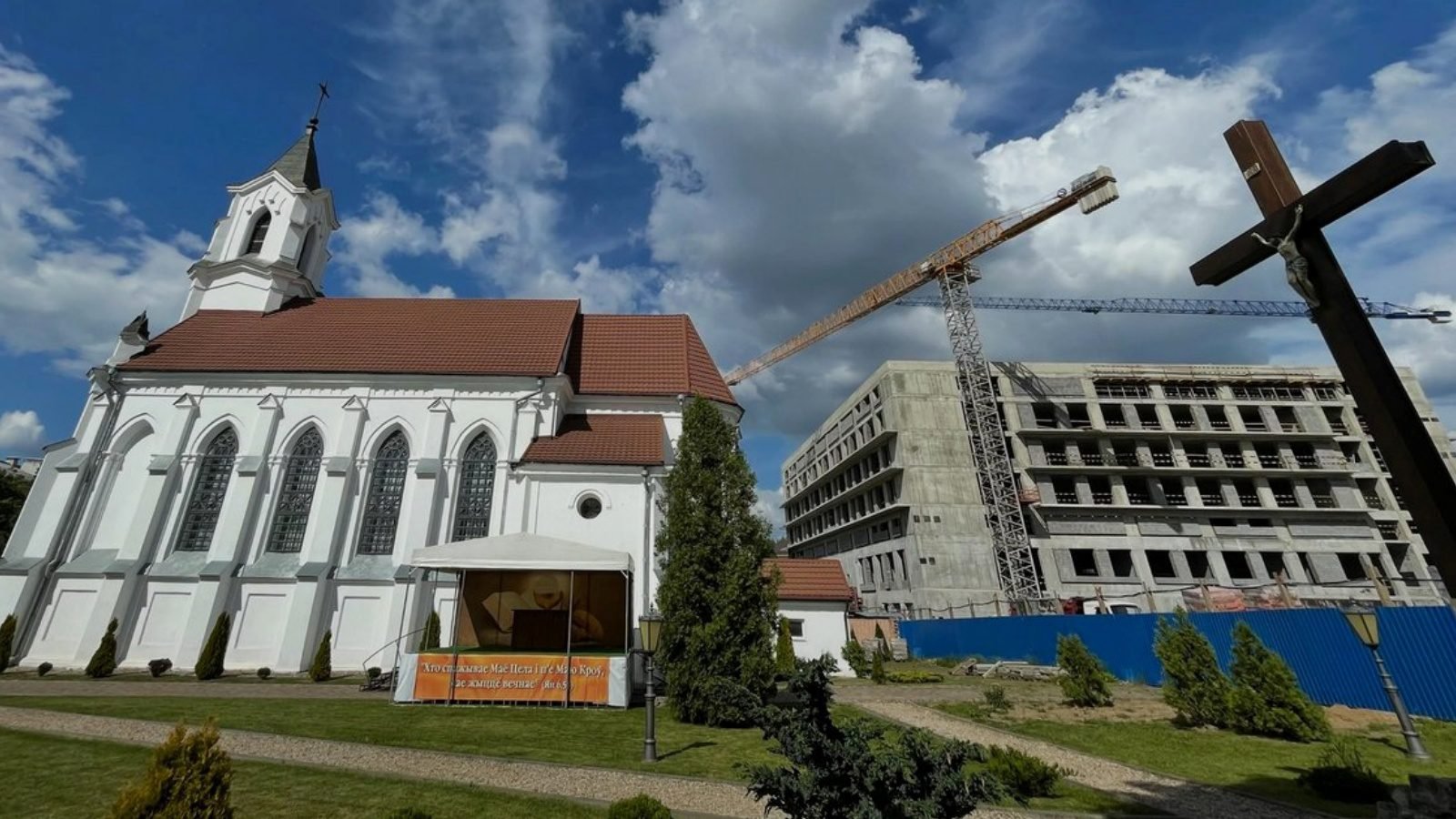
The investigation, published by RFE/RL’s Belarusian-language service Svaboda, found that a construction site now covers a substantial part of the cemetery beside the Church of St Roch.
The project has attracted criticism over the treatment of a historic religious site and the fate of human remains reportedly uncovered during construction. The government of Belarusian President Aleksandr Lukashenko has disclosed little information about the development.
According to RFE/RL, official documents describe the project vaguely as a “multifunctional building”, while other records make no mention of it. By examining design documents and speaking to people connected with the project, the investigative team identified the development as a National Security Academy complex intended for the KGB.
The report said the project relies on a decree issued secretly by Lukashenko, which reportedly allows construction to proceed despite legal protections intended to preserve historic sites.
36,000-square-metre complex
Design documents reviewed by RFE/RL describe a complex comprising three sections with a combined area of approximately 36,000 square metres.
One section, designated Block A, is a six-storey academic building with dormitory facilities designed to accommodate 1,250 students. The building includes beds for 627 people.
Its underground level is planned to contain a shooting gallery covering nearly 600 square metres, alongside separate storage facilities for weapons, radiation, chemical and biological protection equipment, and other supplies associated with military operations.
The documents also outline facilities reserved for the institution’s management, including two suites measuring approximately 100 square metres each. Both are designed to contain a manager’s office, reception area, relaxation room and bathroom with a shower.
Sports facilities and accommodation
Block B will house a canteen with three dining halls capable of accommodating a total of 340 people. The section will also include a sports complex, with rooftop running tracks and courts for mini-football, basketball, volleyball, badminton and tennis.
Block C is designed to contain a gymnasium, a 25-metre swimming pool, locker rooms, showers and two saunas.
The scale and range of facilities outlined in the documents indicate that the development is intended to serve as a substantial training and accommodation centre for the security agency.
RFE/RL said the authorities had provided limited public information about the project, leaving key details of the development and the process through which the site was selected unclear.
Outcry over historic graves
The construction has also raised concerns among members of the local Catholic community over the disturbance of a historic burial site.
A parishioner quoted in the investigation called for a memorial to be established and for Christian reburial of people whose remains were found during excavation.
“There should be a clear memorial, and there should be a Christian reburial of those people who were found beneath the excavator buckets,” the parishioner said, describing the situation as shameful and unacceptable.
The reported use of the cemetery for a major state security project has prompted questions about the protection of historic religious sites and the handling of human remains during construction.
The investigation did not establish the full number of graves affected or provide a comprehensive account of the authorities’ arrangements for protecting or relocating remains.
The findings add to scrutiny of the Belarusian government’s handling of the project, particularly the reported use of a secret decree and the limited information made available to the public.
The authorities’ position on the cemetery’s heritage protections and the concerns raised by parishioners was not detailed in the supplied report.