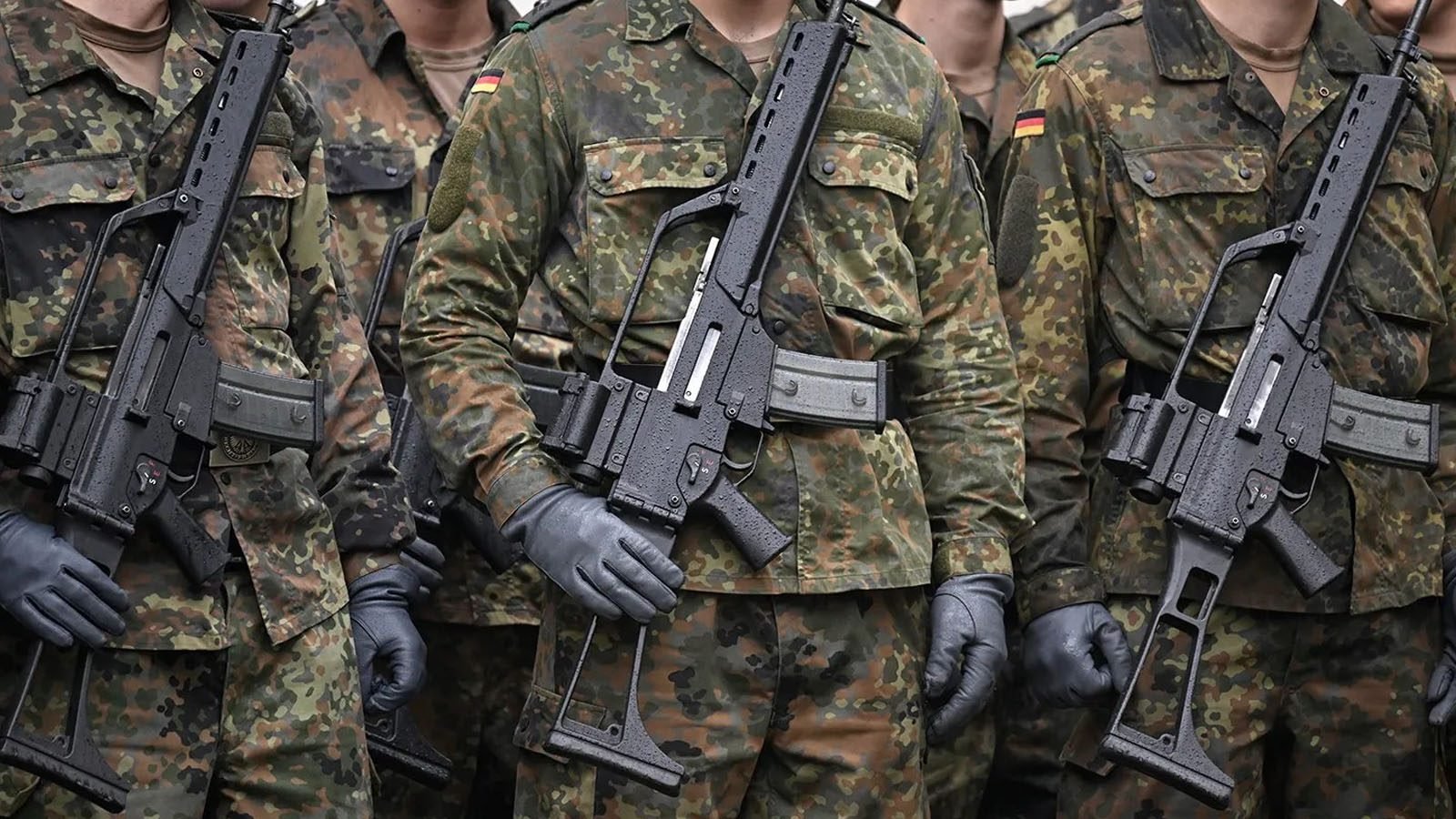
BERLIN: Germany is on course to become Europe’s dominant military spender, with its planned defence budget for 2029 projected to exceed the current combined military expenditure of France and the United Kingdom, raising major questions about the future balance of power within the continent.
In an analysis published in Foreign Policy magazine, Theodore Bunzel argues that Germany’s rapid military expansion could reshape European security, but warns that the benefits may be limited if Berlin pursues rearmament primarily through national rather than continent-wide defence arrangements.
European defence spending has risen sharply in recent years. According to the figures cited by Bunzel, expenditure increased in real terms from €242 billion in 2020 to €454 billion in 2026, nearly doubling in six years.
Germany has been a major driver of that increase, having doubled its own military spending since 2021 and accounting for more than a quarter of the European Union’s overall rise.
Berlin plans to allocate approximately €649 billion to defence between 2025 and 2029, with annual military expenditure expected to reach 3.5 per cent of gross domestic product (GDP). Reuters has also reported that Germany’s annual defence spending is projected to rise to around €162 billion by 2029.
The scale of the proposed expansion reflects a fundamental shift in Germany’s security and fiscal policies. The government has relaxed constitutional borrowing restrictions to make additional defence investment possible, allowing military expenditure above a specified threshold to be financed through borrowing.
A stronger Germany, but what about Europe?
Bunzel argues that Germany has the economic capacity to sustain the expansion, given the size of its economy and its comparatively manageable public debt.
However, he identifies a major strategic risk: Germany could build up its military capabilities largely outside an integrated European defence structure.
Much of the proposed investment is expected to be channelled through national procurement programmes and German defence manufacturers. According to Bunzel, this could weaken cooperation between European countries, fragment the continent’s defence-industrial base and give Berlin greater influence over its neighbours.
The political consequences could also be significant.
Bunzel points to the growing electoral support for the Alternative for Germany (AfD), which has advocated higher defence expenditure while favouring closer relations with Russia and China. He warns that a future government could inherit one of Europe’s most powerful military establishments, potentially creating uncertainty over how that military strength would be used.
Defence spending on a historic scale
The broader European challenge is equally significant. NATO allies have committed to reaching a core defence spending target of 3.5 per cent of GDP by 2035, alongside a further 1.5 per cent for broader security-related investment.
Bunzel argues that if European countries meet the 3.5 per cent target, the resulting annual increase in military expenditure, measured against the size of their economies, could rival the scale of the post-Second World War Marshall Plan.
As additional context, the Stockholm International Peace Research Institute (SIPRI) ranked Germany as the world’s fourth-largest military spender in 2025, with expenditure reaching $114 billion — a 24 per cent increase from the previous year.
To prevent Germany’s growing military strength from becoming a source of division, Bunzel proposes making its rearmament a genuinely European project.
His recommendations include shared military platforms, integrated command structures, joint financing and a more coordinated continental defence industry.
The central argument is that Germany’s military expansion should strengthen Europe collectively rather than create a powerful national force operating separately from its neighbours.