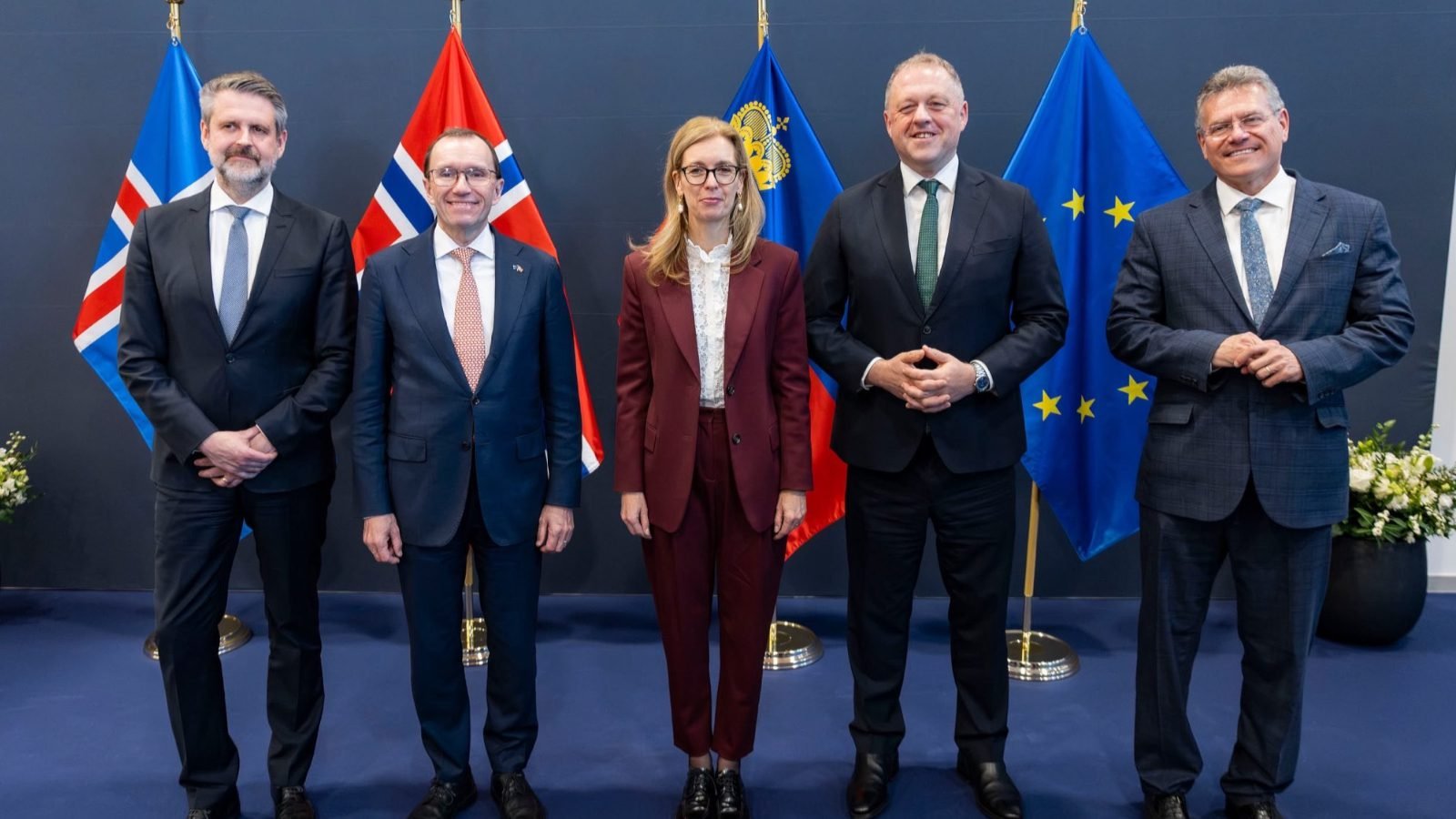
BRUSSELS: Ireland has called for stronger European partnerships and closer cooperation on economic and security challenges as Minister of State for European Affairs and Defence Thomas Byrne co-chaired the 63rd meeting of the European Economic Area (EEA) Council in Brussels on November 17.
Byrne jointly chaired the meeting alongside Liechtenstein’s Deputy Prime Minister and Minister for Foreign Affairs, Sabine Monauni, bringing together representatives of the European Union, Norway, Iceland and Liechtenstein to discuss the future of their economic partnership.
The EEA Agreement connects the three European Free Trade Association (EFTA) countries – Norway, Iceland and Liechtenstein – with the EU’s single market, allowing them to participate in its economic framework while maintaining their status outside the European Union.
Speaking ahead of the meeting, Byrne said reliable partnerships with countries sharing common values and secure economies had become increasingly important amid geopolitical uncertainty.
He described Norway, Iceland and Liechtenstein as some of the EU’s closest and most like-minded partners, highlighting the EEA Agreement’s contribution to the security and prosperity of European societies and economies.
The minister also emphasised the importance of maintaining shared democratic values through continued cooperation between the EU and its EEA partners.
During the meeting, ministers reviewed the overall functioning of the EEA Agreement and discussed ways to strengthen European competitiveness.
Foreign and security policy developments also featured on the agenda, including continued support for Ukraine amid Russia’s ongoing war against the country.
The discussions provided an opportunity for participating countries to examine how closer cooperation could help address emerging economic and geopolitical challenges while maintaining the strength of the European single market.
Following the Council meeting, Byrne was scheduled to participate in a panel discussion with EEA ministers focusing on strengthening democratic resilience.
The discussions come as European countries seek to reinforce economic security, protect democratic institutions and maintain cooperation with partners amid an increasingly complex international environment.