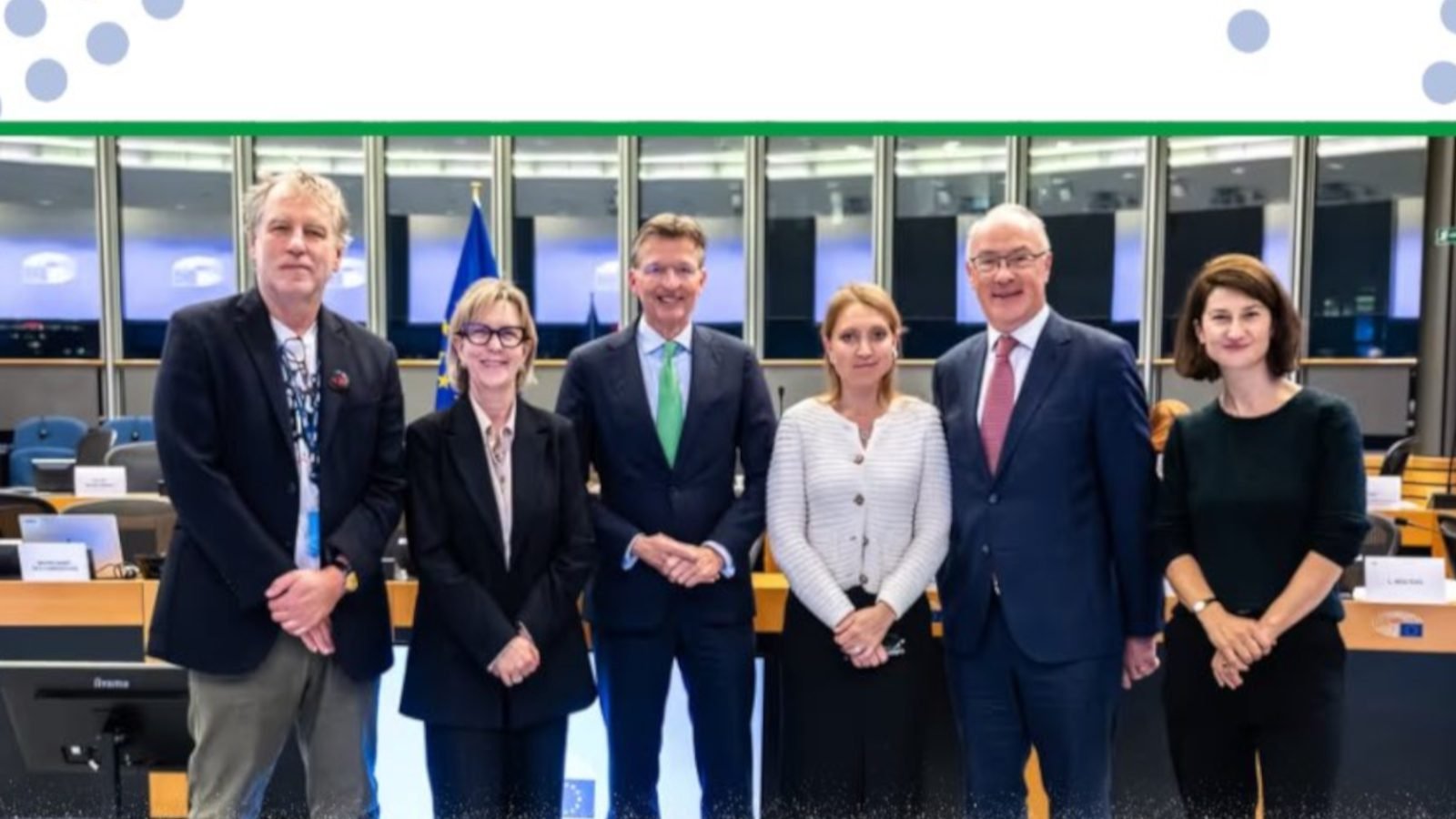
The European Union has reached a provisional agreement to overhaul its sustainable finance disclosure framework, introducing new investment categories and simplified reporting requirements in a move aimed at strengthening investor confidence and directing more private capital towards sustainable projects.
The Council of the European Union and the European Parliament announced the agreement on revisions to the Sustainable Finance Disclosure Regulation (SFDR), which governs how financial market participants communicate the environmental, social and governance (ESG) characteristics and risks associated with their investment products.
The reforms are designed to make sustainability-related financial products easier for investors to understand and compare, while reducing administrative requirements for financial institutions and investment providers.
Ireland’s Tánaiste and Minister for Finance, Simon Harris, welcomed the agreement, describing it as an important step towards making European financial rules simpler and more practical.
“Europe’s financial sector needs simpler and more workable rules. That is what we have delivered,” Harris said, adding that clearer categories and reduced requirements would make investment products more trustworthy and easier to develop and market.
Three new investment categories
One of the central changes is the introduction of three categories for financial products: sustainable, transition and ESG basics.
The sustainable category will cover products that contribute to defined sustainability objectives, while the transition category will include investments directed towards companies and projects working towards more sustainable operations.
The ESG basics category will cover products that incorporate environmental, social or governance considerations but do not satisfy the stricter requirements for the other two classifications.
The new categories are intended to replace existing concepts that have contributed to confusion in the market. EU policymakers hope the clearer structure will help investors distinguish between genuinely sustainable investments and products that make environmental or social claims without sufficient evidence.
Products seeking categorisation will generally have to meet a minimum 70 per cent investment threshold aligned with their stated sustainability strategy. They will also face exclusions covering certain harmful industries and activities.
Under the agreement, environmental, social and governance claims in product names and marketing materials will be reserved for categorised products, strengthening safeguards against greenwashing and misleading investment claims.
Fossil fuel companies could qualify for transition category
The agreement also recognises that companies operating in the fossil fuel sector may have a role in the transition towards a lower-carbon economy.
Such companies could qualify for the transition category if they demonstrate a clear, time-bound greenhouse gas emissions reduction strategy aligned with the Paris Agreement.
They must also allocate at least 20 per cent of their capital expenditure to activities aligned with the EU Taxonomy, the bloc’s classification system for environmentally sustainable economic activities, and demonstrate an increasing share of investment in those activities over time.
The provision reflects the EU’s approach of recognising certain transition investments rather than limiting the framework exclusively to businesses already operating within sustainable sectors.
Stronger transparency on environmental and social impacts
The revised framework will also require financial market participants seeking the sustainable or transition categories to identify and disclose the principal adverse impacts their investments may have on the environment and society.
These impacts will be assessed using measurable indicators drawn from a common list established by the European Commission.
For transition products, two indicators must relate to fossil fuel use and greenhouse gas emissions. Other areas include biodiversity damage and poor labour practices, while biodiversity and greenhouse gas emissions are mandatory indicators for the sustainable category.
The common approach is intended to give investors a more consistent basis for comparing the sustainability performance of different financial products.
Reduced reporting burden for professional investors
The agreement also introduces flexibility for certain alternative investment funds offered exclusively to professional investors. Financial market participants may choose not to apply the categorisation provisions to these products, recognising that professional investors generally have different information requirements from retail customers.
Safeguards have been included to prevent retail investors from indirectly acquiring products intended exclusively for professional investors under this exemption.
The revised rules will also allow certain general-purpose issuances by EU-established public sector bodies to be included in the transition category, subject to specific conditions.
What happens next?
The agreement remains provisional and must be formally confirmed by both the Council and the European Parliament before the updated legislation can be published in the EU’s Official Journal.
Once formally adopted, the new rules are scheduled to begin applying two years after publication, giving financial institutions and other market participants time to prepare for the revised requirements.
The SFDR has been in application since March 2021. A review by the European Commission found that the existing framework had generated lengthy and complex disclosures, making it difficult for retail investors to compare products and understand their sustainability characteristics.
The regulation had also increasingly been used as a de facto labelling system, contributing to confusion and raising concerns about greenwashing and the mis-selling of financial products.
The latest agreement seeks to address those shortcomings while supporting the EU’s wider ambition to mobilise private investment for its sustainability objectives and strengthen the competitiveness of European financial markets.