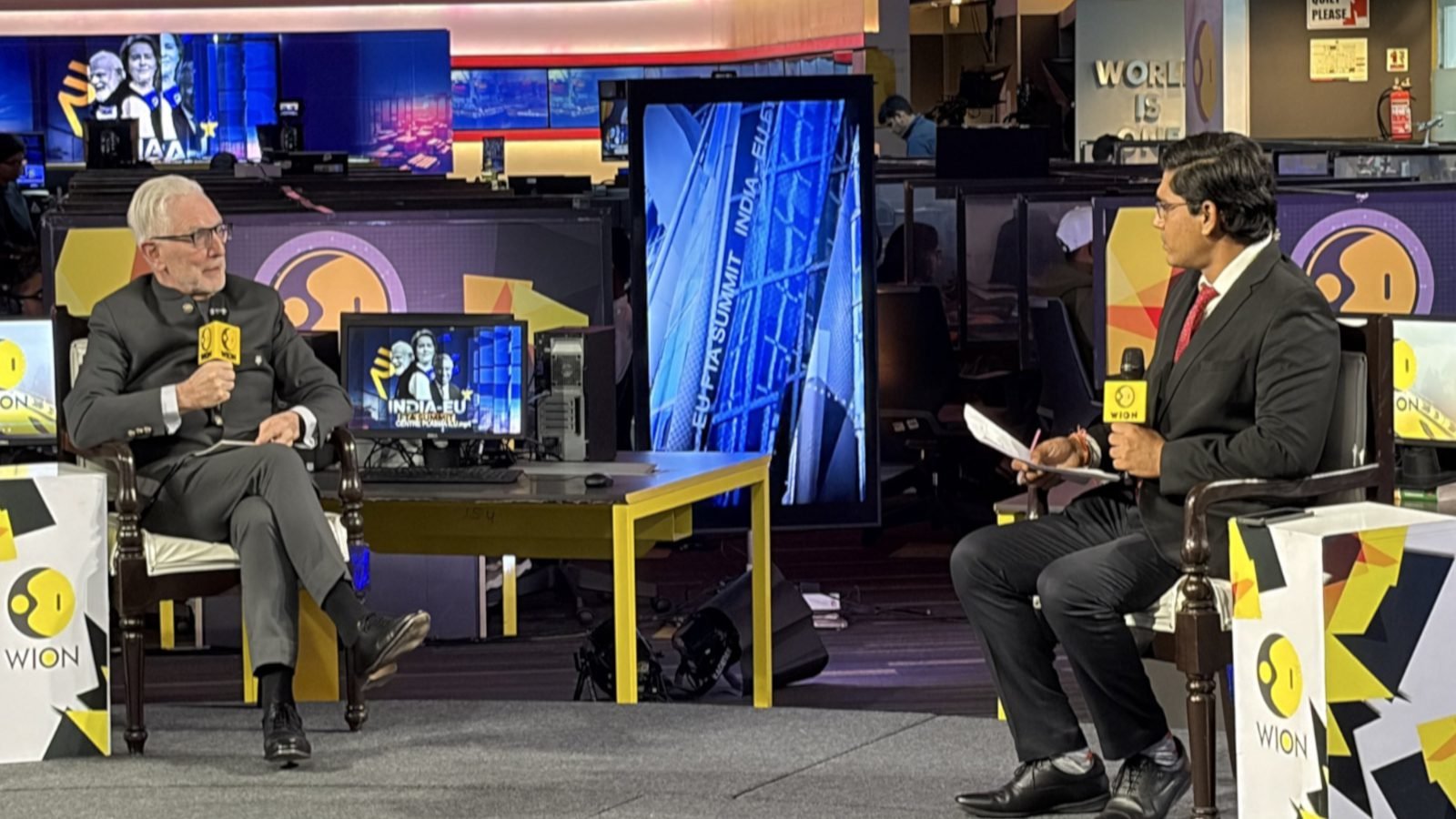
NEW DELHI: Ireland has played an important role in advancing the landmark India-European Union Free Trade Agreement (FTA) towards signature, with Irish Ambassador to India Kevin Kelly highlighting his country’s contribution during its Presidency of the Council of the European Union.
Speaking at an India-EU FTA summit, Kelly discussed Ireland’s role in coordinating European efforts and supporting the work required to move the ambitious trade agreement closer to its formal signing.
Describing the proposed agreement as the “mother of all trade deals”, the ambassador said the pact has the potential to bring India and the European Union closer than ever, opening new opportunities for trade, investment and economic cooperation.
Ireland assumed the rotating Presidency of the Council of the European Union on July 1, 2026, with strengthening the EU’s strategic partnership with India among its key priorities.
During its six-month presidency, Ireland has worked to advance cooperation between the 27 EU member states, facilitate negotiations and build consensus on important policy issues, including the India-EU trade agreement.
The negotiations for the FTA were formally concluded at the 16th India-EU Summit in New Delhi on January 27, 2026, attended by Indian Prime Minister Narendra Modi, European Commission President Ursula von der Leyen and European Council President António Costa.
The agreement represents a major milestone after negotiations that began in 2007, were suspended in 2013 and resumed in 2022.
Together, India and the European Union represent approximately two billion people and around 25 per cent of global gross domestic product (GDP), making the proposed agreement one of the most significant trade partnerships between major economic blocs.
According to the European Commission, bilateral trade in goods and services already exceeds €180 billion annually, while the agreement is expected to eliminate or reduce tariffs on approximately 90 per cent of traded products.
The proposed deal is expected to create new opportunities for businesses, manufacturers, exporters and investors on both sides by reducing trade barriers, simplifying customs procedures and improving access to markets.
For European businesses, India offers access to one of the world’s largest consumer markets, while Indian exporters stand to benefit from improved access to European markets, particularly in manufacturing, textiles, pharmaceuticals, engineering and other sectors.
The agreement also aims to strengthen cooperation in services, supply chains and sustainable development, providing a broader framework for economic engagement beyond traditional merchandise trade.
Ireland’s contribution comes at a significant stage in the process. Following the conclusion of negotiations in January, the European Commission submitted proposals in September 2026 seeking approval for the agreement’s signature and conclusion. The next steps involve the necessary EU institutional approvals and formal signing.
The Irish Presidency has also prioritised wider cooperation between India and the EU in technology, research, connectivity, maritime security, digital development and resilient supply chains.
Kelly has previously described India as one of the European Union’s most important strategic partners, emphasising that closer relations between the two sides could deliver substantial economic and geopolitical benefits.
The proposed FTA is widely regarded as a major opportunity to deepen the partnership between two of the world’s largest democratic economies, strengthening commercial links while creating new avenues for investment, employment and innovation.