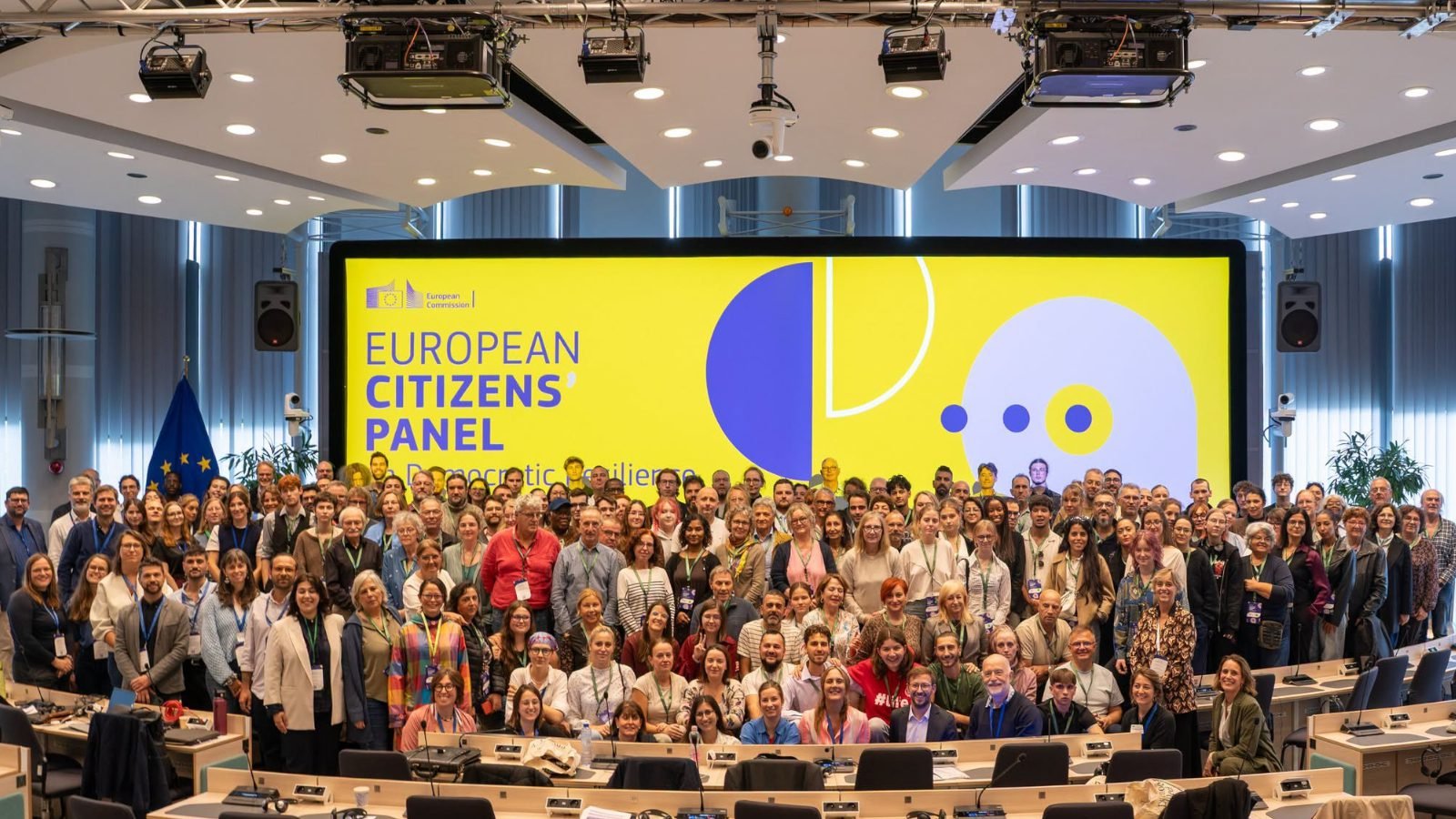
BRUSSELS: Two Irish citizens, Mikayla from County Kildare and John from County Waterford, have joined 150 participants from across the European Union in a major initiative aimed at strengthening democracy and giving citizens a greater voice in shaping Europe’s future.
The pair took part in the European Citizens’ Panel on Democratic Resilience, an initiative organised by the European Commission that brings together randomly selected citizens from all 27 EU member states to discuss challenges facing democracy and develop recommendations for future European policies.
The final session of the panel is taking place in Brussels from November 20 to 22, bringing together participants to complete their discussions and agree on recommendations for strengthening democratic participation and resilience across Europe.
The initiative seeks to ensure that ordinary citizens have a meaningful opportunity to influence policymaking, rather than leaving discussions about Europe’s democratic future exclusively to political leaders and institutions.
During the discussions, participants examined ways to make democratic systems stronger, improve public participation in decision-making and ensure that citizens’ concerns are reflected in European policies.
The panel has also considered the challenges posed by geopolitical tensions, technological developments, online disinformation, political polarisation and declining public trust in democratic institutions.
The European Commission said the participants would finalise and vote on their recommendations during the concluding session before formally submitting them to the Commission for consideration in future policymaking.
The participation of Mikayla and John highlights Ireland’s contribution to the EU-wide initiative, bringing perspectives from local communities in Kildare and Waterford into discussions involving citizens from across Europe.
The selection process is designed to reflect the diversity of European society, taking account of factors including age, gender, education, occupation and geographical background.
The panel provides participants with an opportunity to exchange experiences, discuss different viewpoints and work collectively towards practical recommendations.
Alongside the face-to-face discussions, the European Commission has opened an online debate through its Citizens’ Engagement Platform, allowing people across the EU to contribute their views without travelling to Brussels.
The platform enables citizens to share ideas, comment on contributions from others and participate in discussions about strengthening democracy and increasing public involvement in European decision-making.
Contributions can be submitted in any of the EU’s 24 official languages, making the initiative accessible to a wider range of citizens.
The current online debate, running from May to December 2026, focuses on democratic resilience, including access to reliable information, media literacy, citizens’ rights and participation in political and public life.
The European Commission has emphasised that citizens’ contributions will help inform discussions and recommendations on future democratic policies, with follow-up actions expected from November 2026 and feedback on outcomes planned for 2027.
The initiative forms part of the EU’s wider European Democracy Shield efforts, which aim to protect democratic institutions, strengthen public trust and ensure that citizens can participate meaningfully in democratic life.
By bringing together 150 citizens from different backgrounds and providing an additional online platform for public participation, the European Commission aims to make democracy more inclusive, responsive and resilient across the European Union.