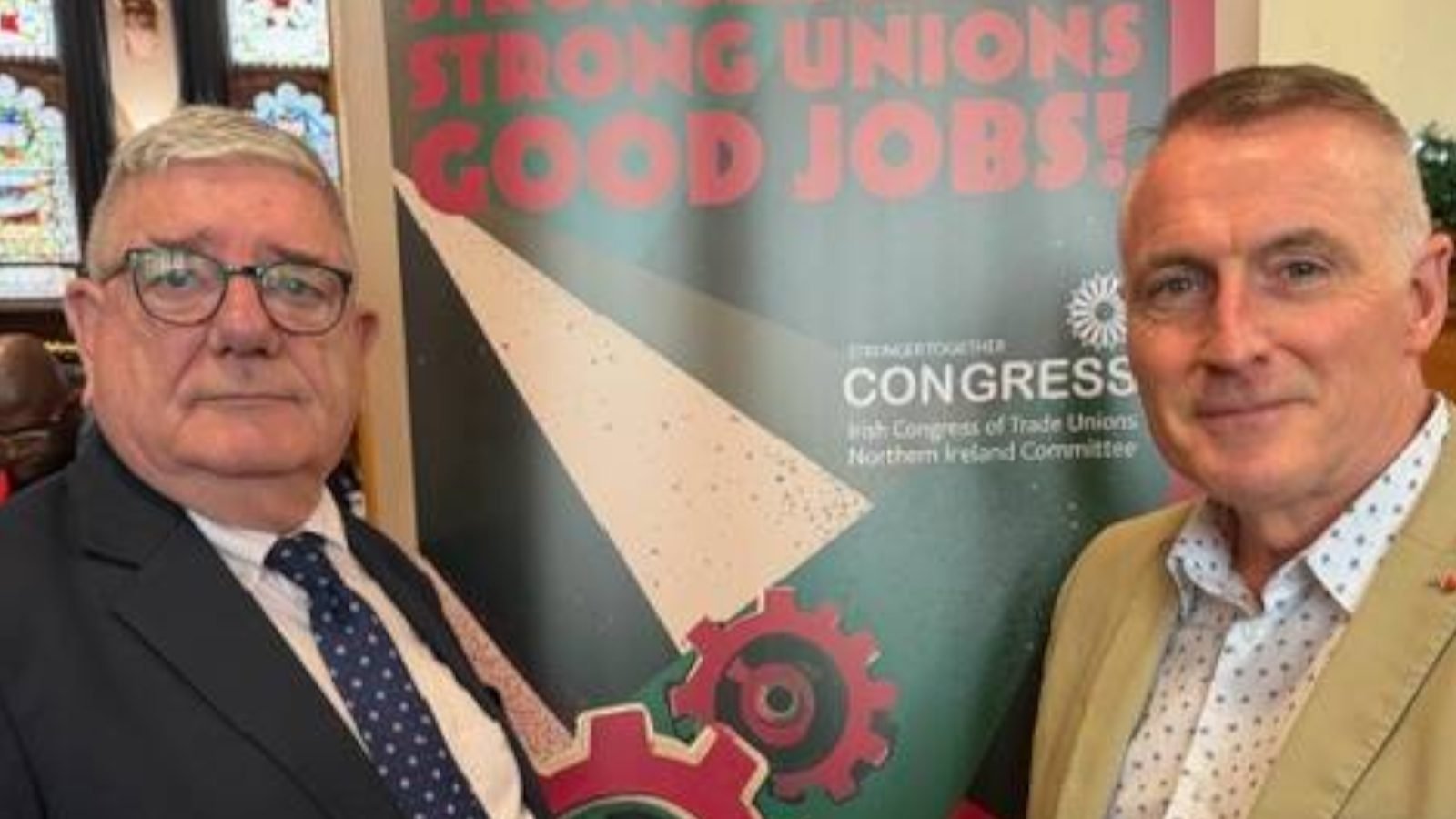
Kearney, Sinn Féin’s spokesperson on workers’ rights, made the remarks following his attendance at the Irish Congress of Trade Unions (ICTU) Northern Ireland Committee’s Biennial Delegate Conference in Derry, held on November 25 and 26.
The conference brought together trade union representatives, affiliated organisations and trades council delegates from across Northern Ireland to discuss employment conditions, workers’ protections and the future of workplace rights.
Two motions concerning good jobs were unanimously adopted, reaffirming the trade union movement’s support for the proposed Good Jobs Employment Rights Bill and its campaign to secure stronger statutory protections for workers.
The proposed legislation aims to address several longstanding employment concerns, including insecure contracts, inadequate pay, the retention of tips, work-life balance and stronger trade union representation.
Kearney welcomed the conference’s position, particularly its commitment to continue campaigning for employment legislation despite the political obstacles facing the proposed reforms.
He also highlighted remarks by ICTU Assistant General Secretary Gerry Murphy, who reiterated that the trade union movement would not abandon its campaign following the DUP’s opposition to the legislation.
The Good Jobs Bill was developed as a package of employment reforms intended to improve workplace protections and bring Northern Ireland’s employment rights framework into line with developments elsewhere in the UK and Ireland.
The ICTU has argued that stronger employment protections are particularly important for workers in low-paid and insecure jobs, who can face difficulties accessing stable working hours, fair pay and adequate workplace representation.
Kearney accused the DUP of obstructing the legislation and denying workers the opportunity to benefit from the proposed improvements.
He said good jobs and strong employment rights were essential components of a modern economy and insisted that the campaign would continue through cooperation between Sinn Féin and the wider trade union movement.
The MLA added that his party would continue pressing for fair wages, secure employment and decent working conditions, despite the setback facing the legislation.
The ICTU conference also considered wider workplace issues, including artificial intelligence, manufacturing policy, violence against women and the future of public services, reflecting the trade union movement’s broader priorities for Northern Ireland.