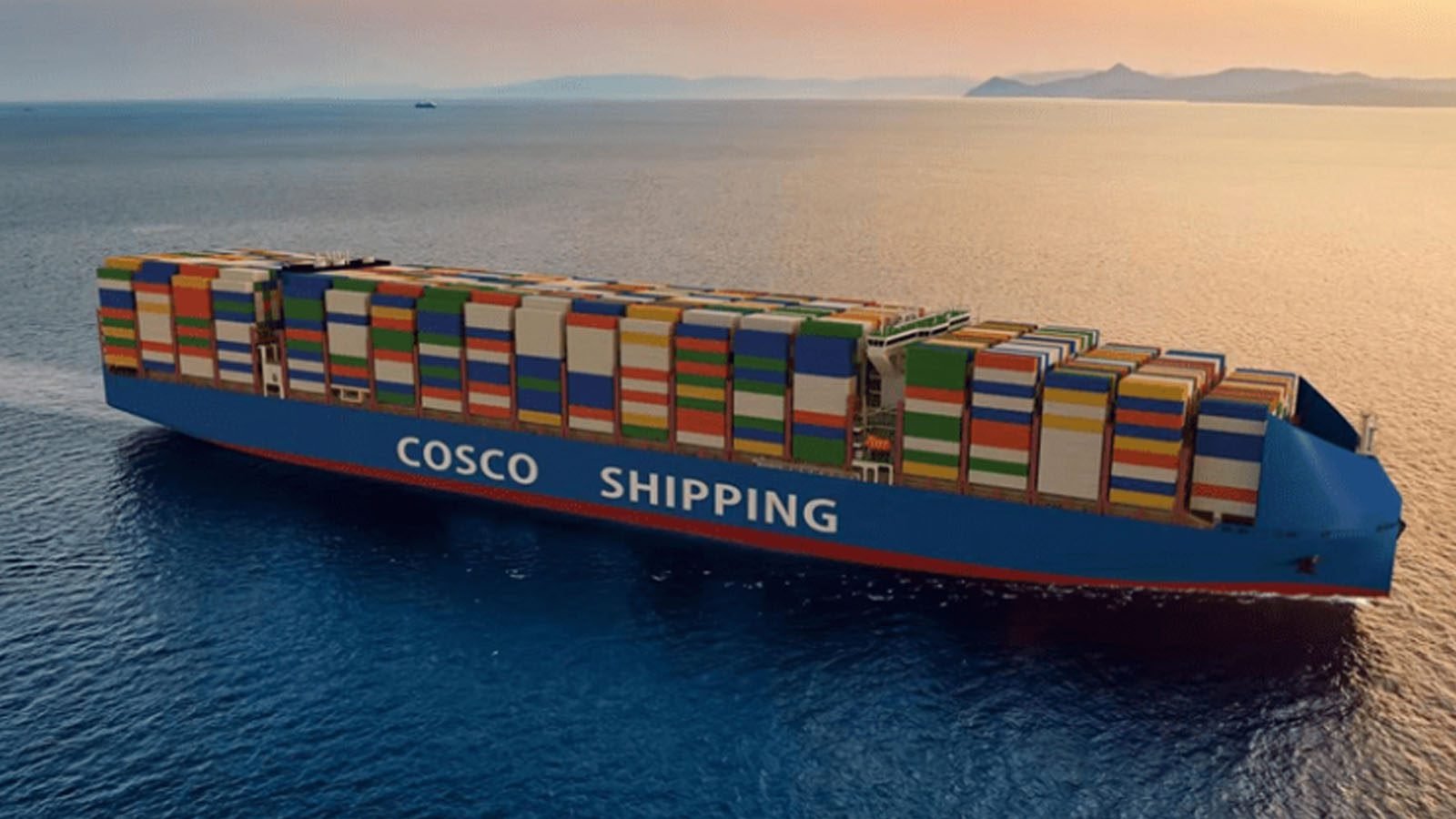
US lawmakers have raised concerns over alleged espionage activities involving Chinese state-owned shipping giant COSCO, urging the Department of Homeland Security to review the eligibility of its vessels for a US Coast Guard programme that offers certain regulatory benefits.
In a letter dated October 14 to Homeland Security Secretary Markwayne Mullin, members of Congress warned that COSCO vessels could pose counterintelligence risks near US coastlines, citing reports that the ships use concealed onboard equipment capable of intercepting military communications and encryption-related information.
The lawmakers called on the department to revoke the vessels’ enrolment, refuse renewals and impose additional scrutiny on companies they believe operate on behalf of China’s People’s Liberation Army (PLA) or form part of its defence industrial base.
The letter focuses on COSCO’s participation in the US Coast Guard’s Quality Shipping for the 21st Century (Qualship 21) programme, administered by the Port State Control Division of the Office of Commercial Vessel Compliance. The programme provides qualifying vessels with certain benefits, including reduced frequency of port state control examinations.
According to the congressional letter, the House Select Committee on China had been informed that at least 10 COSCO vessels were enrolled in the programme as of July 15, 2026. An accompanying list identifies 11 vessels, including COSCO Development, COSCO Faith, COSCO Fortune, COSCO Harmony, COSCO Hellas, COSCO Hope, COSCO Malaysia, COSCO Philippines, COSCO Pride, COSCO Thailand and COSCO Vietnam.
The list provides certificate numbers, International Maritime Organization (IMO) numbers and enrolment expiration dates. Several entries carried expiration dates in August 2026, while others were listed with dates extending into December 2025 or August 2027.
The lawmakers argued that the issue warranted particular attention because the US Department of War had designated COSCO among Chinese military companies operating in the United States under Section 1260H of the William M. “Mac” Thornberry National Defense Authorization Act for Fiscal Year 2021. The letter cited the designation announced on January 31, 2026.
It also pointed to COSCO’s reported ownership and control links with China’s state-owned Assets Supervision and Administration Commission, its alleged affiliation with the PLA and its contributions to military-civil fusion — Beijing’s strategy of integrating civilian industry and technological development with military objectives.
Citing public reporting, the letter alleged that COSCO vessels use sophisticated and concealed equipment to intercept military communications and encryption developments off the US coast. It described the reported activity as a serious counterintelligence threat and part of a longstanding espionage partnership with the Chinese state.
The lawmakers asked the Department of Homeland Security to clarify whether the Coast Guard, including its intelligence division, had received information from the Department of War, the wider US intelligence community or other federal agencies about potential national security risks linked to COSCO and its vessels before September 1, 2026.
They also sought information on whether such intelligence had been considered when determining the vessels’ continued eligibility for Qualship 21.
A second request asked whether the Coast Guard had received similar intelligence concerning other vessels owned or operated by Chinese or Hong Kong-based companies that were listed or had previously applied for enrolment in the programme.
The letter further questioned whether the Coast Guard had initiated a review of COSCO vessels’ eligibility following the company’s inclusion on the Section 1260H list.
The lawmakers’ demands place renewed scrutiny on the intersection of maritime commerce, national security and the US government’s efforts to address concerns over Chinese state-linked companies operating near American shores.