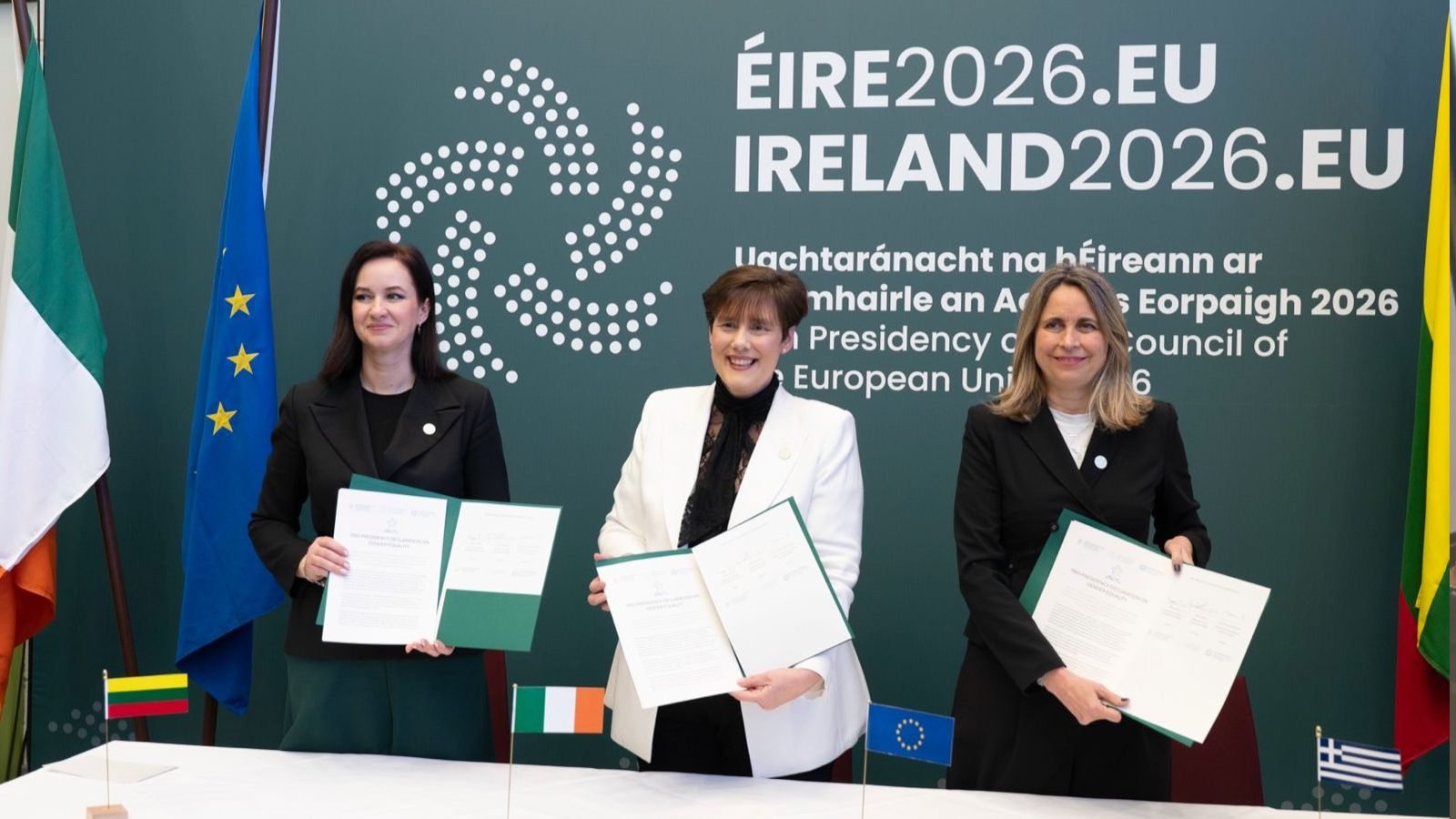
Ireland, Lithuania and Greece have signed two major joint declarations aimed at advancing disability rights and gender equality across the European Union over the next 18 months, marking an important outcome of Ireland’s EU Presidency.
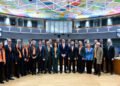
The declarations were signed during the Informal Meeting of EU Equality Ministers, held in Tralee, County Kerry, on November 22 and 23. The meeting was hosted by Ireland’s Minister for Children, Disability and Equality, Norma Foley, and brought together ministers and senior representatives from all 27 EU member states.
The agreements establish shared priorities for the three countries, which form the current EU Presidency Trio. Ireland holds the Presidency from July to December 2026, followed by Lithuania from January to June 2027 and Greece from July to December 2027.
A significant milestone is the signing of the first-ever Trio Presidency Declaration specifically dedicated to disability rights. It reaffirms the three countries’ commitment to advancing the rights of persons with disabilities and ensuring the full implementation of the United Nations Convention on the Rights of Persons with Disabilities (UNCRPD).
The declaration aims to strengthen accessibility, inclusion and equal participation, ensuring that people with disabilities have a meaningful role in decisions affecting their lives.
The second agreement, the Trio Presidency Declaration on Gender Equality, establishes a coordinated programme of political priorities and commitments to advance women’s equality across Europe. Such declarations have been adopted by successive EU Presidency Trios since 2007.
Equality, economic competitiveness and care services
The Tralee meeting also examined how equality policies can contribute to Europe’s economic competitiveness, social resilience and long-term prosperity.
Discussions focused on three main areas: equality and competitiveness, gender equality and the care economy, and participation and representation of persons with disabilities.
Ministers considered how removing barriers to education, employment and leadership could enable more people to contribute to Europe’s economy.
The discussions also highlighted the unequal distribution of unpaid care responsibilities, which continue to affect women’s employment opportunities and career progression. Ministers examined the importance of investing in accessible, affordable and high-quality care services to support families and improve gender equality.
Another major focus was Article 29 of the UN Convention on the Rights of Persons with Disabilities, which addresses participation in political and public life. The discussions considered how people with disabilities can have a stronger voice in public decision-making and community activities.
Speaking after the meeting, Minister Foley said equality and competitiveness were not competing objectives, arguing that Europe becomes stronger when everyone has the opportunity to participate and contribute.
She said removing barriers and investing in inclusion could improve individual opportunities while strengthening Europe’s productivity, innovation and resilience.
Assistive technology and disability inclusion
The meeting also featured a showcase of digital and assistive technologies supported through Ireland’s CREATE Fund, administered by the Health Service Executive.
The exhibition demonstrated how innovative technologies can improve communication, education, employment, mobility and independent living for people with disabilities.
Minister of State for Disability Emer Higgins welcomed the new declaration, noting that 2026 marks 20 years since the adoption of the UN Convention on the Rights of Persons with Disabilities.
She stressed that people with disabilities must not only have their rights protected but should also be actively involved in shaping policies and decisions affecting their lives.
The declarations represent a shared commitment by Ireland, Lithuania and Greece to maintain disability inclusion and gender equality as priorities throughout their successive EU Presidencies.
The outcome of the Tralee meeting is expected to guide cooperation between the three countries as they work towards a more inclusive, accessible and equal European Union.