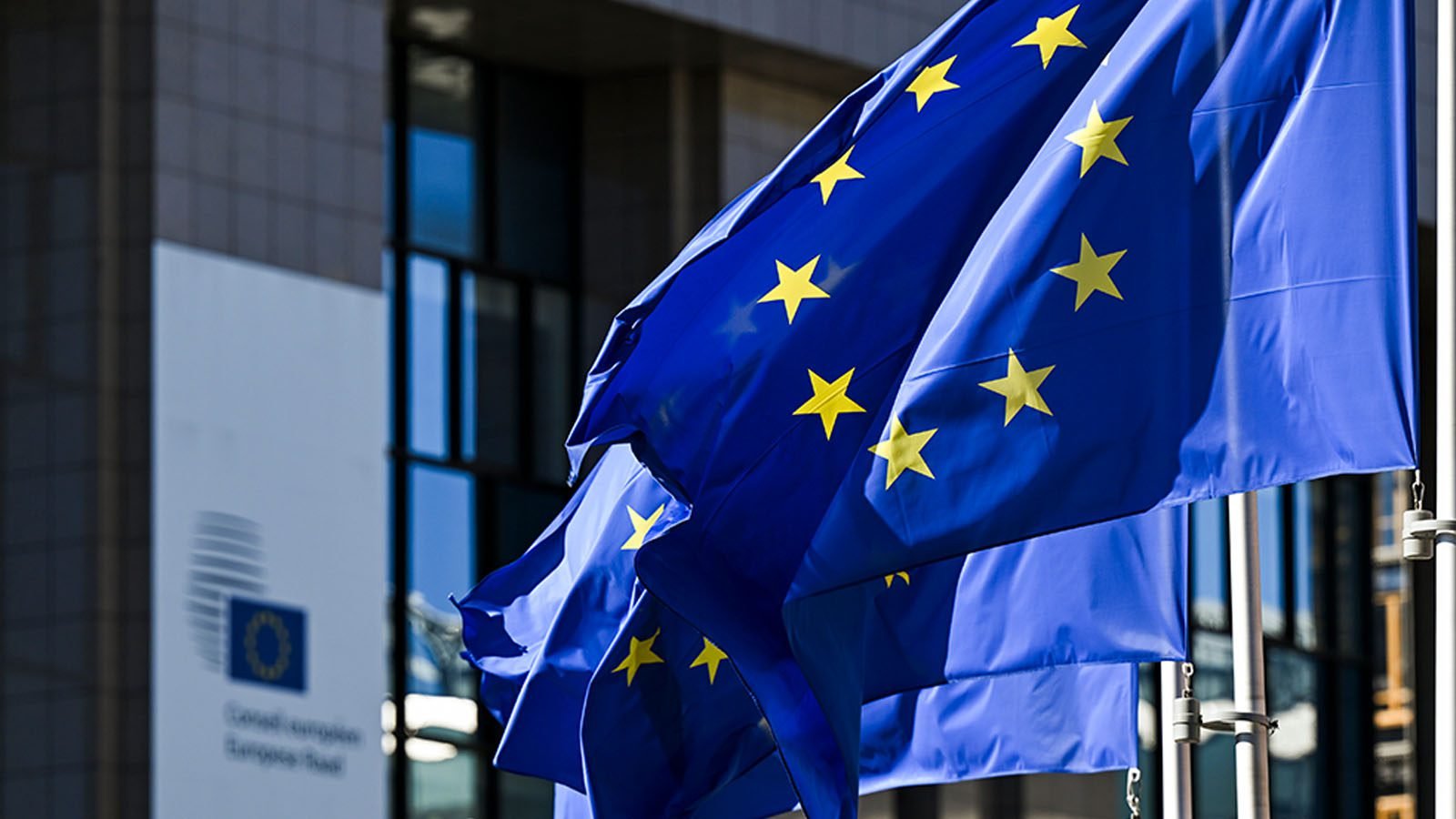
BRUSSELS: European Union leaders, who met for a two-day summit on October 15 and 16, called for stronger action against Russia’s escalating hybrid attacks and sabotage, tighter sanctions enforcement and accelerated defence cooperation, as the bloc seeks to strengthen its security and economic competitiveness amid mounting geopolitical challenges.
The leaders condemned what they described as Russia’s increasingly reckless behaviour, citing intensified hybrid campaigns and repeated violations of member states’ airspace and territorial waters.
They urged the bloc to strengthen its defence readiness, close critical military capability gaps and accelerate work on drone and counter-drone security. Leaders also called for further efforts to curb hostile activities through existing EU instruments, including the hybrid toolbox, while considering additional sanctions and tighter visa requirements for Russian nationals.
The summit also addressed soaring energy prices, industrial competitiveness, migration, Ukraine, the EU’s next long-term budget and the protection of international institutions.
On Russia, EU leaders welcomed the adoption of the 21st sanctions package and additional listings targeting nearly 1,600 individuals and entities. They called for further measures, in coordination with international partners, to reduce Moscow’s energy revenues, close sanctions loopholes and curb circumvention.
They also demanded stronger action against Russia’s shadow fleet, including coordinated measures along shipping routes to address security, environmental and maritime safety risks.
The leaders condemned Russia’s organisation of so-called elections in temporarily occupied Ukrainian territories and denounced the deployment of North Korean troops against Ukraine, as well as military support provided to Moscow by Iran, Belarus, North Korea and other countries.
They reaffirmed their commitment to accountability for crimes linked to the war, backed efforts to establish an international claims commission and a special tribunal for the crime of aggression, and called for the safe and unconditional return of unlawfully deported Ukrainian children and other civilians.
The leaders also expressed regret over Washington’s decision to temporarily lift sanctions on Russian diesel.
Defence readiness and European security
The EU leaders stressed the urgency of strengthening Europe’s defence capabilities in response to growing security threats and hybrid attacks.
They encouraged continued work on the Eastern Flank Watch project and other initiatives aimed at protecting the bloc’s borders. Member states were urged to reduce strategic dependencies, address critical capability gaps and expand cooperation through joint defence projects.
The leaders welcomed the European Defence Agency’s first annual defence readiness report and called for an agreement on the military mobility proposal by the end of 2026.
They also encouraged governments to channel more defence investment into joint development projects, improve access to financing for the defence industry and deepen industrial cooperation with Ukraine.
EU moves to ease energy and industrial pressures
Economic competitiveness featured prominently at the summit, with leaders calling for faster implementation of the bloc’s ‘One Europe, One Market’ agenda and measures to reduce regulatory burdens on businesses.
Key priorities include the proposed EU Inc. framework for company law, the Industrial Accelerator Act, the European Grids Package and digital and environmental simplification measures.
The leaders called on EU lawmakers to conclude negotiations on several legislative packages, including reforms concerning food and feed safety, market integration and supervision, and the automotive sector, by the end of 2026.
They also urged the European Commission to accelerate planning and permitting procedures, reduce administrative requirements and cut reporting obligations, particularly for small and medium-sized enterprises.
Amid rising energy costs, the leaders invited the Commission to examine further short-term measures to address soaring prices while taking account of differences among member states.
They welcomed plans to extend temporary state aid provisions for industries most exposed to economic pressures, improve EU refinery capacity and efficiency, and voluntarily pool energy demand.
The summit also highlighted the need to accelerate electrification and the deployment of renewable and low-carbon energy, electricity grids and energy storage.
Leaders stressed that the energy transition was essential to reducing dependence on volatile fossil fuel markets, strengthening strategic autonomy and improving economic resilience.
On the EU emissions trading system, they called for a predictable carbon market that supports industrial competitiveness, limits carbon leakage and reduces excessive price volatility.
Long-term budget negotiations
EU leaders discussed the next multiannual financial framework, covering 2028 to 2034, and the key elements required for a balanced compromise.
Based on an updated negotiating framework presented by the Irish presidency, the leaders tasked European Council President António Costa with advancing negotiations towards a timely agreement.
They said a deal before the end of 2026 would allow the necessary legislation to be adopted in 2027, ensuring that EU funding could reach beneficiaries without interruption from January 2028.
Migration and online safety
Migration was another key item on the agenda, with leaders reviewing progress on previous commitments and welcoming the Commission’s intention to work closely with member states on an emergency framework and measures addressing the instrumentalisation of migration.
The issue will be discussed again at a forthcoming meeting.
On digital security, the leaders called for stronger protection against foreign information manipulation and interference, urging the Commission to finalise revised guidelines under the Digital Services Act to mitigate systemic risks to electoral processes.
They also called for effective enforcement of existing online safety rules to protect minors and urged lawmakers to examine the proposed EU KIDS Act, including its proposed minimum age for social media access.
EU defends international courts
The summit also saw EU leaders reaffirm their support for international law and institutions, with particular concern over US sanctions announced against the International Criminal Court (ICC).
The leaders urged Washington to reverse the measures, saying the delay in their implementation provided an opportunity for diplomacy to prevent further action undermining the court’s independence and integrity.
They called for international courts and their officials to be protected, including through continued access to financial and other services, and asked the European Commission to help shield the ICC from the impact of sanctions, particularly on European companies providing services to the court.
The leaders also discussed the Middle East, the Republic of Moldova, EU enlargement and reforms, the Arctic region, Spain’s Ceuta and Melilla territories.