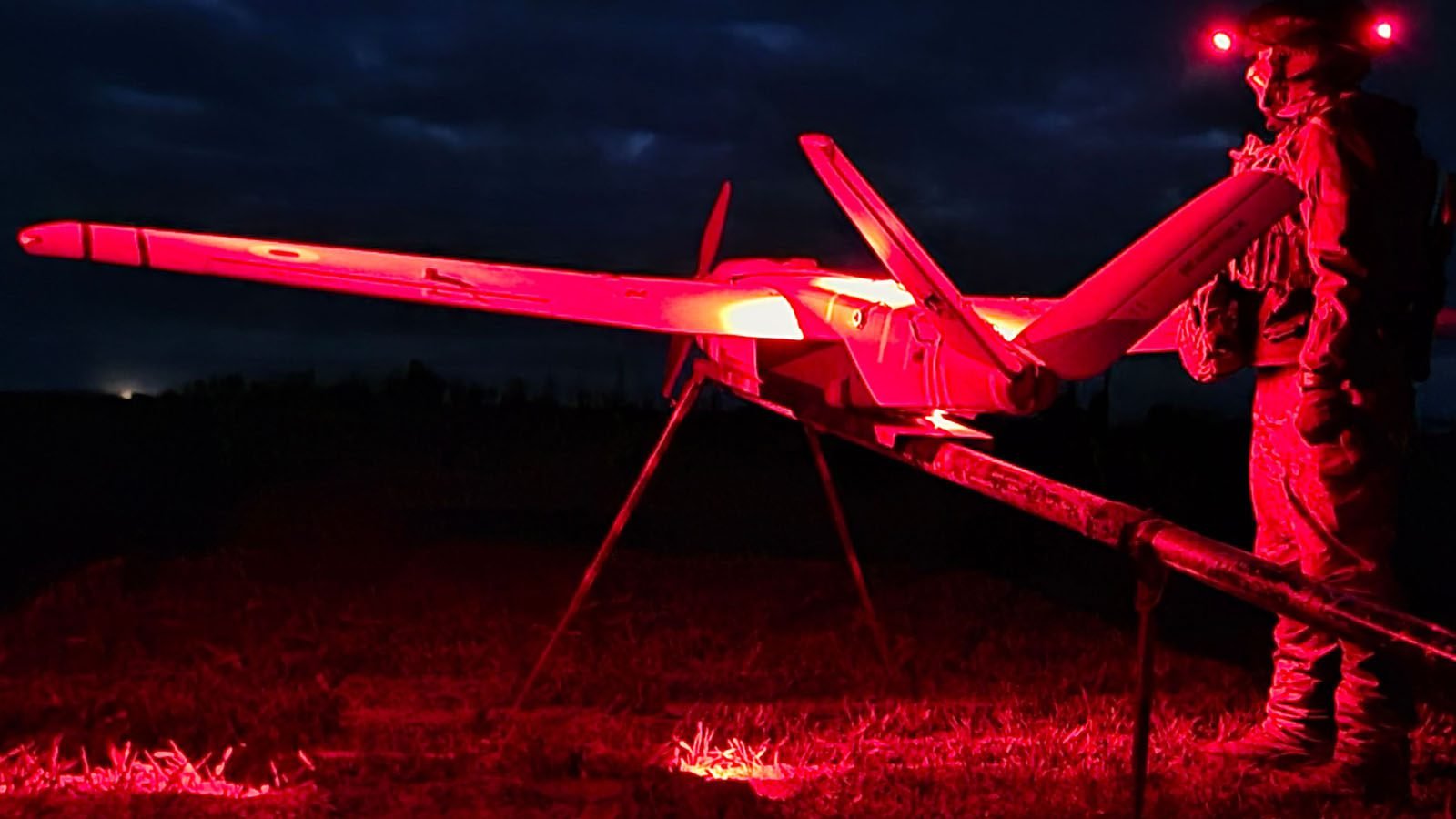
WASHINGTON: Russia is building a drone force involving more than 160,000 personnel, raising concerns that Moscow could be learning lessons from the war in Ukraine faster than the United States and its allies, according to a US military expert.
In an analysis for the Centre for Strategic and International Studies (CSIS), Lieutenant General Curtis Buzzard warns that Western militaries risk falling behind their adversaries unless they accelerate the development, testing and deployment of drone technology.
He argues that Ukraine’s experience on the battlefield offers valuable lessons for future warfare, particularly in the use of unmanned systems, electronic warfare, artificial intelligence and real-time intelligence sharing.
Ukraine’s drone network transforms battlefield operations
A major factor behind Ukraine’s drone capabilities is its DELTA battlefield management system, which now connects more than 200,000 users.
The platform enables drone teams and military units to share intelligence, identify targets and coordinate attacks in near real time, helping commanders make faster decisions based on information gathered from the battlefield.
Buzzard describes DELTA as a central component of Ukraine’s drone effectiveness, allowing different military units to operate through a connected information network.
The system demonstrates how modern warfare increasingly depends not only on the number of drones available but also on the speed at which information can be collected, shared and converted into military action.
Electronic warfare becomes essential training
Ukraine has also placed greater emphasis on preparing soldiers to operate in environments where electronic systems are disrupted.
According to Buzzard, Ukrainian troops receive more than 30 hours of electronic warfare training, learning how to function under GPS jamming, detect enemy signals and operate jamming and direction-finding equipment.
The training reflects the growing importance of electronic warfare in conflicts where both sides rely heavily on drones, satellite navigation and communications networks.
Rapid innovation gives Ukraine battlefield advantage
Another important lesson identified by Buzzard is the close relationship between Ukrainian soldiers and defence technology developers.
Frontline personnel regularly communicate operational problems directly to engineers and manufacturers. Companies then modify drones, software and other equipment before returning improved systems to military units for further testing.
This creates a continuous feedback process in which equipment is tested, adjusted and redeployed based on battlefield experience.
According to the analysis, this cycle can take weeks rather than the years traditionally associated with military procurement and development.
The approach allows Ukraine to adapt its technology to changing battlefield conditions while responding to weaknesses identified by soldiers operating on the front lines.
Ukraine’s combat data could shape future AI weapons
Buzzard also highlights the enormous volume of modern combat information generated during the war.
Ukraine has accumulated extensive battlefield data, including drone footage, electronic warfare signals, targeting information, missile defence engagements, equipment failures and operational results.
He describes this collection as one of the world’s most valuable sources of modern combat data, with potential applications in training artificial intelligence systems and developing autonomous weapons.
Such information could help military developers understand how weapons and defence systems perform under actual combat conditions rather than relying exclusively on simulations and controlled testing.
US urged to deepen defence cooperation with Ukraine
Buzzard argues that Washington should move beyond providing military assistance and establish a broader drone partnership with Kyiv.
His recommendations include joint development, production, testing and procurement of unmanned systems.
He also proposes that American defence companies test their weapons alongside Ukrainian frontline units before the US military commits to large-scale purchases.
Such cooperation, he argues, would allow the United States to benefit directly from Ukraine’s battlefield experience while helping American manufacturers develop systems suited to modern warfare.
Russia and other adversaries studying Ukraine
The analysis warns that the United States and its allies are not the only countries drawing lessons from the conflict.
Russia, China, Iran and North Korea are also studying developments on the Ukrainian battlefield and examining how drone warfare, electronic systems and artificial intelligence can be incorporated into their own military capabilities.
Buzzard cautions that if these countries adapt faster than Western militaries, the consequences could be significant in a future conflict.
Ukraine’s experience, he argues, is giving Western governments an opportunity to prepare for the changing nature of warfare. However, that opportunity could be lost if the lessons are not translated into faster innovation, procurement and military training.