Dublin: Ireland and the United Kingdom have held high-level discussions on Northern Ireland’s political stability, paramilitary threats and unresolved legacy issues, with recent New IRA attacks on police stations featuring prominently on the agenda.
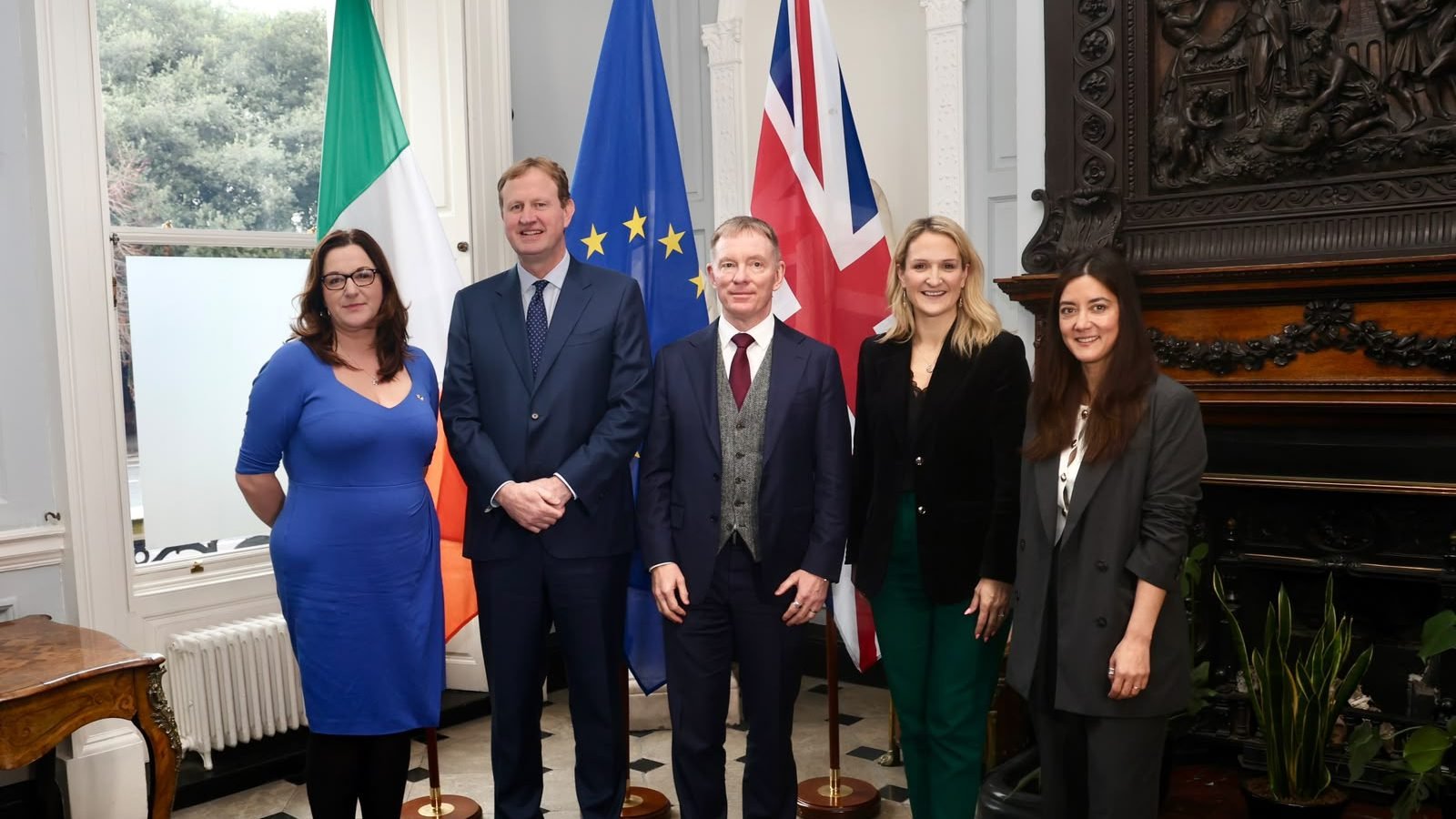
The British-Irish Intergovernmental Conference took place at Iveagh House in Dublin on November 19, bringing together senior ministers from both governments to review security cooperation and the implementation of commitments under the Good Friday Agreement.
Ireland was represented by Minister for Foreign Affairs and Trade and Defence Helen McEntee and Minister for Justice, Home Affairs and Migration Jim O’Callaghan. The UK delegation included Northern Ireland Secretary Sir Chris Bryant, Sarah Owen and Baroness Ruth Anderson.
New IRA attacks raise security concerns
Security developments in Northern Ireland and across the island of Ireland featured prominently in the discussions. Ministers addressed New IRA attacks on police stations in Dunmurry and Lisburn earlier this year, associated arrests and security operations in counties Monaghan and Louth.
Both governments welcomed cooperation between the Police Service of Northern Ireland (PSNI) and An Garda Síochána in tackling terrorism, paramilitarism and related criminal activity.
Ministers also examined an independent report by expert Fleur Ravensbergen on the transition of paramilitary groups towards disbandment. They agreed to direct officials to consider the report’s principal recommendation and present possible next steps at the conference’s next meeting.
The discussions coincided with the 25th anniversary of the establishment of the PSNI. Ministers recognised the transformation in policing over the past quarter-century while acknowledging that significant challenges remain.
Good Friday Agreement and political stability
The two governments also discussed measures to support the effective functioning of institutions established under the Good Friday Agreement.
The UK Government provided an update on its efforts to support the Northern Ireland Executive, including issues surrounding its budget. Ministers also reviewed recent developments in Northern Ireland, including events in Portadown and public disorder in Belfast during the summer.
They welcomed the successful hosting of Fleadh Cheoil na hÉireann in Belfast in August and looked forward to the event returning next year.
Troubles legacy and Omagh inquiry
The legacy of Northern Ireland’s Troubles was another major issue discussed at the conference, with both governments reviewing progress on implementing their Joint Framework on legacy.
Ministers examined the progress of related legislation in Westminster and the Oireachtas, emphasising the need to deliver their commitments promptly, including reciprocal cooperation between the two jurisdictions.
They also discussed the Omagh Bombing Inquiry and individual legacy cases, highlighting the importance of maintaining public confidence in arrangements designed to address unresolved issues from the conflict.
Ireland-UK relations and future cooperation
Beyond Northern Ireland, ministers reviewed the UK-Ireland 2030 agenda for strategic cooperation, including commitments made at the second UK-Ireland Summit earlier this year and preparations for the next summit in 2027.
Discussions also covered Ireland’s upcoming Presidency of the Council of the European Union, the development of a successor Peace Programme and the EU-UK summit scheduled for November 20 in Brussels.
The two governments agreed to convene the British-Irish Intergovernmental Conference again in 2027.