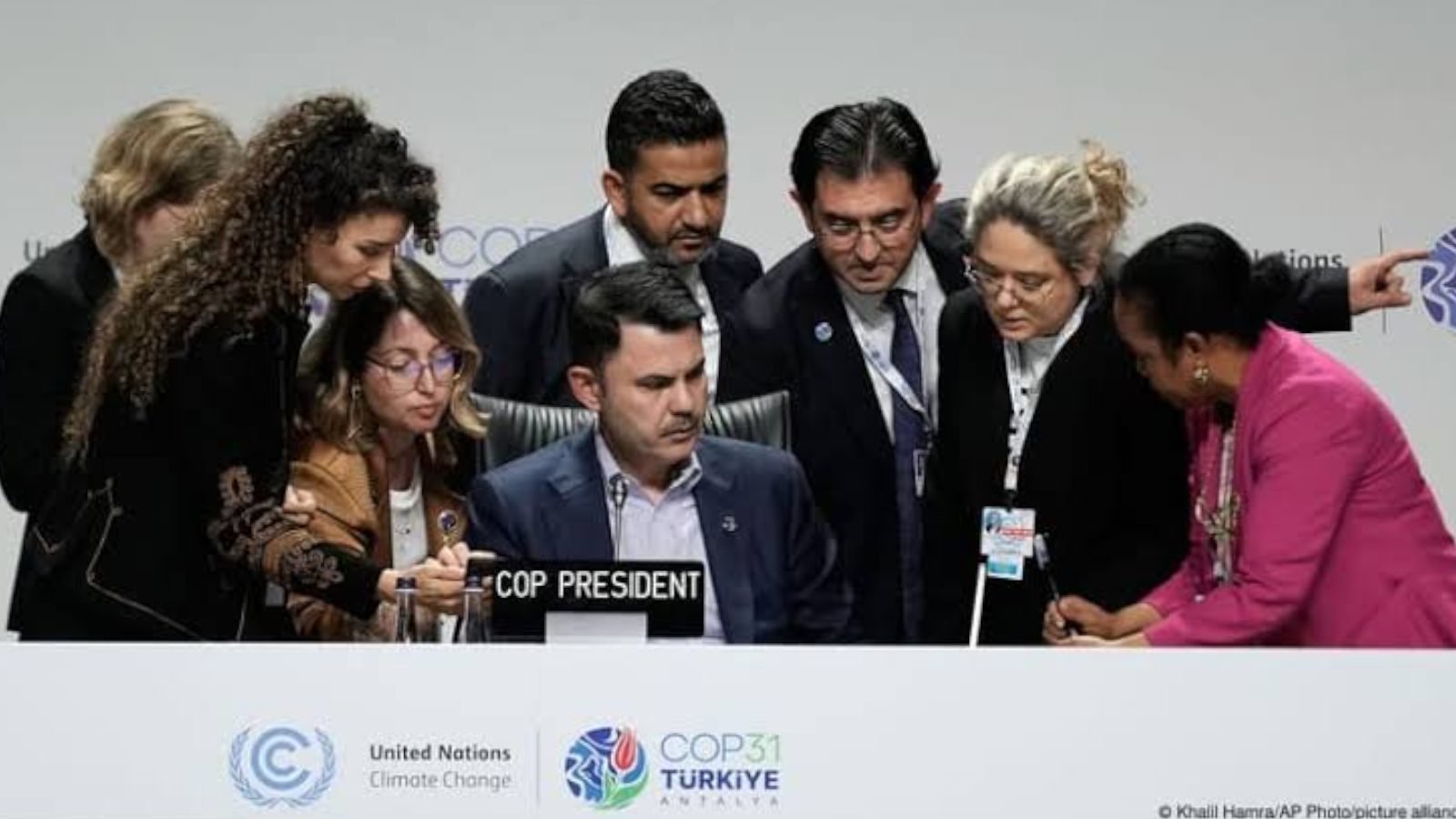
The European Union and its member states have refused to endorse the latest draft decision at COP31, accusing the conference presidency of failing to address the urgency of the climate crisis and weakening commitments to limit global warming.
In a joint statement issued by Minister O’Brien and Commissioner Wopke Hoekstra, the EU expressed “profound disappointment” with the proposed cover decision, arguing that it falls short of the scientific requirements and international commitments needed to keep the 1.5°C temperature goal within reach.
The statement said the draft failed to acknowledge the need for a transition away from fossil fuels, despite their central role in driving climate change. It also warned that the proposed text risked widening the gap between global climate pledges and the practical measures required to reduce emissions.
“We will not endorse a cover decision that does not respond to the science, that disregards the implementation gap, and risks deepening the chasm between global commitments and the action required,” the statement said.
The EU also criticised what it described as disproportionate emphasis on carbon capture, utilisation and storage (CCUS), arguing that the technology must not be presented as a substitute for reducing greenhouse gas emissions.
It further raised concerns over the draft’s treatment of adaptation and loss and damage, saying it did not adequately address the needs of developing countries and communities most exposed to the consequences of climate change.
The joint statement also questioned the draft’s recognition of scientific evidence and the role of the Intergovernmental Panel on Climate Change (IPCC).
Despite its objections, the EU stressed that climate finance was not the reason for its opposition. It said negotiations had included discussions on turning financial pledges into projects for vulnerable communities and advancing the commitment to triple adaptation finance.
According to the statement, EU representatives had engaged constructively with the COP presidencies and other parties, showing flexibility in an effort to reach common ground.
However, they warned that the requirement for consensus should not result in an agreement shaped by the lowest common denominator or the interests of a small number of countries.
“The need for consensus cannot become a driver for the lowest common denominator,” the statement said, adding that the EU would not sacrifice substance, credibility or effectiveness for an agreement lacking meaningful commitments.
The bloc reaffirmed its support for the UN Framework Convention on Climate Change (UNFCCC) and the Paris Agreement, insisting that climate ambition must advance alongside practical implementation.
It also said preparations for COP32 in Addis Ababa would begin immediately, while calling for a broader examination of how the international climate conference process operates.
The statement argued that future conferences could not simply become occasions to renegotiate commitments already agreed upon.
Despite the setback, the EU said the global transition towards renewable energy was accelerating and insisted that countries must continue moving away from fossil fuels for reasons of public health, economic security, energy sovereignty and climate protection.
It concluded that COP31 should ultimately be judged not by whether a decision was adopted, but by whether governments delivered a response proportionate to the scale of the climate emergency.