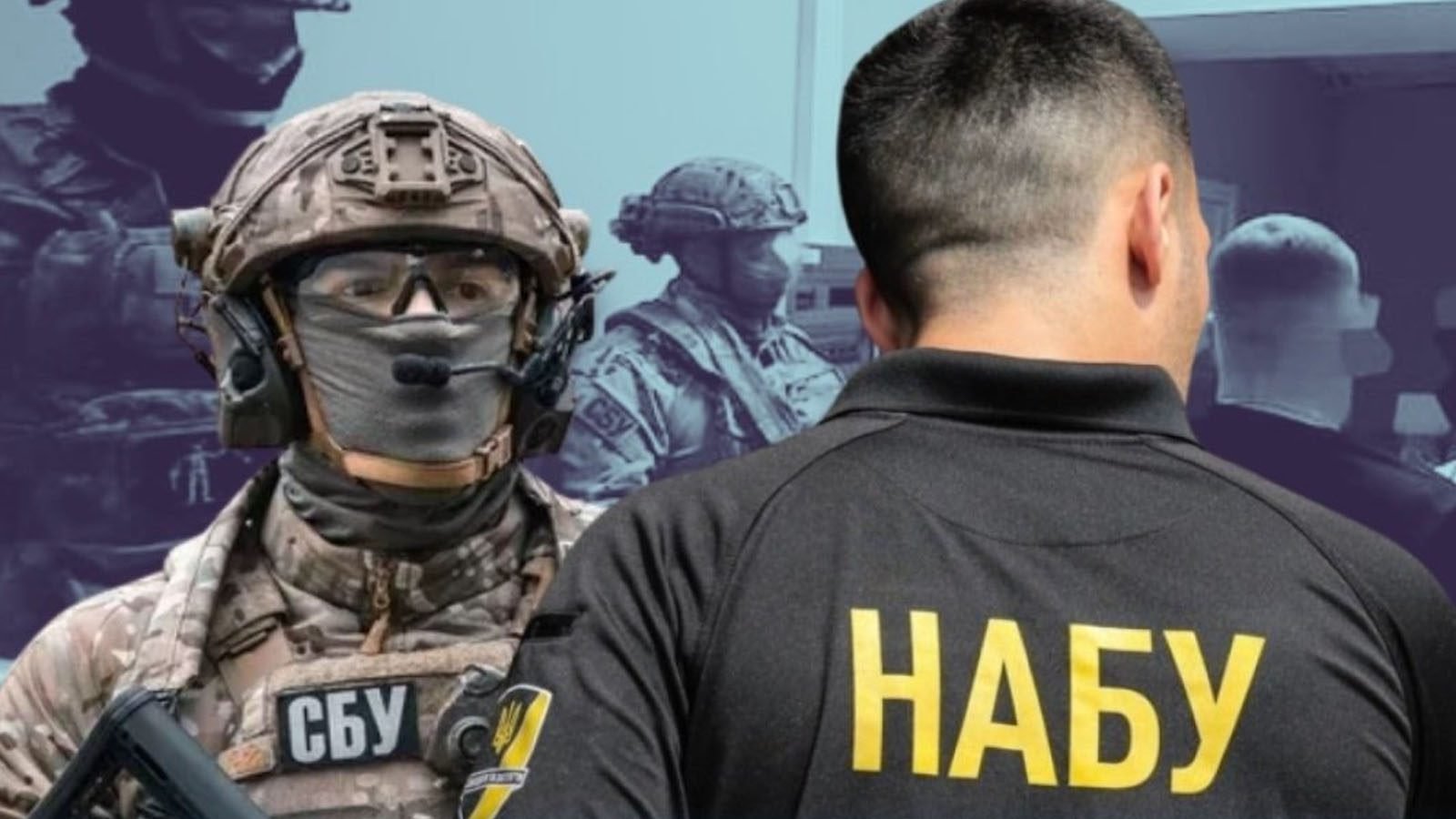
KYIV: Ukraine’s independent anti-corruption agencies have released explosive investigative materials alleging links between organised criminal networks, law enforcement officials and individuals with political connections, raising fresh questions about the penetration of state institutions by criminal groups.
The National Anti-Corruption Bureau of Ukraine (NABU) and the Specialised Anti-Corruption Prosecutor’s Office (SAPO) published the materials under Operation Carthage-2, exposing allegations of violent attacks, criminal activities and possible protection networks involving officials.
According to an assessment by a member of NABU’s Public Oversight Council, the released recordings contain discussions about attacking investigative journalists and activists with acid, assaulting a Mariupol defender and former prisoner of war with hammers, and brutally beating other individuals.
One account reportedly describes a woman being attacked with a metal pipe in the street at night.
The revelations have raised concerns about the extent to which organised crime may have penetrated Ukraine’s law enforcement and political institutions.
The assessment identified four major implications of the investigation, including the alleged involvement of law enforcement personnel in protecting criminal networks, links to Russian criminal figures, and possible political connections.
It argued that independent anti-corruption institutions were increasingly uncovering wrongdoing within the very state structures they were established to scrutinise.
The investigation has also raised questions about alleged connections involving Ukraine’s Security Service (SBU) and the Ministry of Internal Affairs. Previous investigative materials reportedly pointed to prosecutorial protection of fraudulent call centres, while the latest recordings refer to alleged criminal activities extending to drug trafficking, counterfeit currency and violent attacks.
Another significant aspect concerns possible Russian links. The recordings reportedly refer to the involvement of a Russian criminal figure and the alleged use of Russia’s Federal Security Service (FSB) by criminal actors to target a NABU detective.
The findings have renewed concerns over the legacy of Soviet-era criminal networks and their alleged connections with security and law enforcement structures.
Political associations have also emerged in the recordings, including references to a former interior minister, a former health minister and possible meetings involving Ukrainian parliamentarian David Arakhamia.
However, the references do not establish wrongdoing by the politicians concerned, and further investigation would be required to determine whether any political figures were involved in the alleged criminal activities.
The revelations have also reignited debate over the independence of NABU and SAPO, which were established to investigate high-level corruption involving powerful officials and business interests.
The member of NABU’s Public Oversight Council described the agencies’ independence as essential to Ukraine’s democratic resilience and national sovereignty, arguing that anti-corruption reforms were also part of the country’s effort to distance itself from its Soviet and Russian past.
The statement further highlighted peaceful public protests through which Ukrainians defended the independence of the two agencies during the ongoing war.
It stressed that investigators must be allowed to pursue powerful criminal networks regardless of their political or institutional connections.
The latest revelations have placed renewed focus on the scale of organised crime’s alleged influence within Ukraine’s state institutions and the role of independent investigative bodies in addressing it.