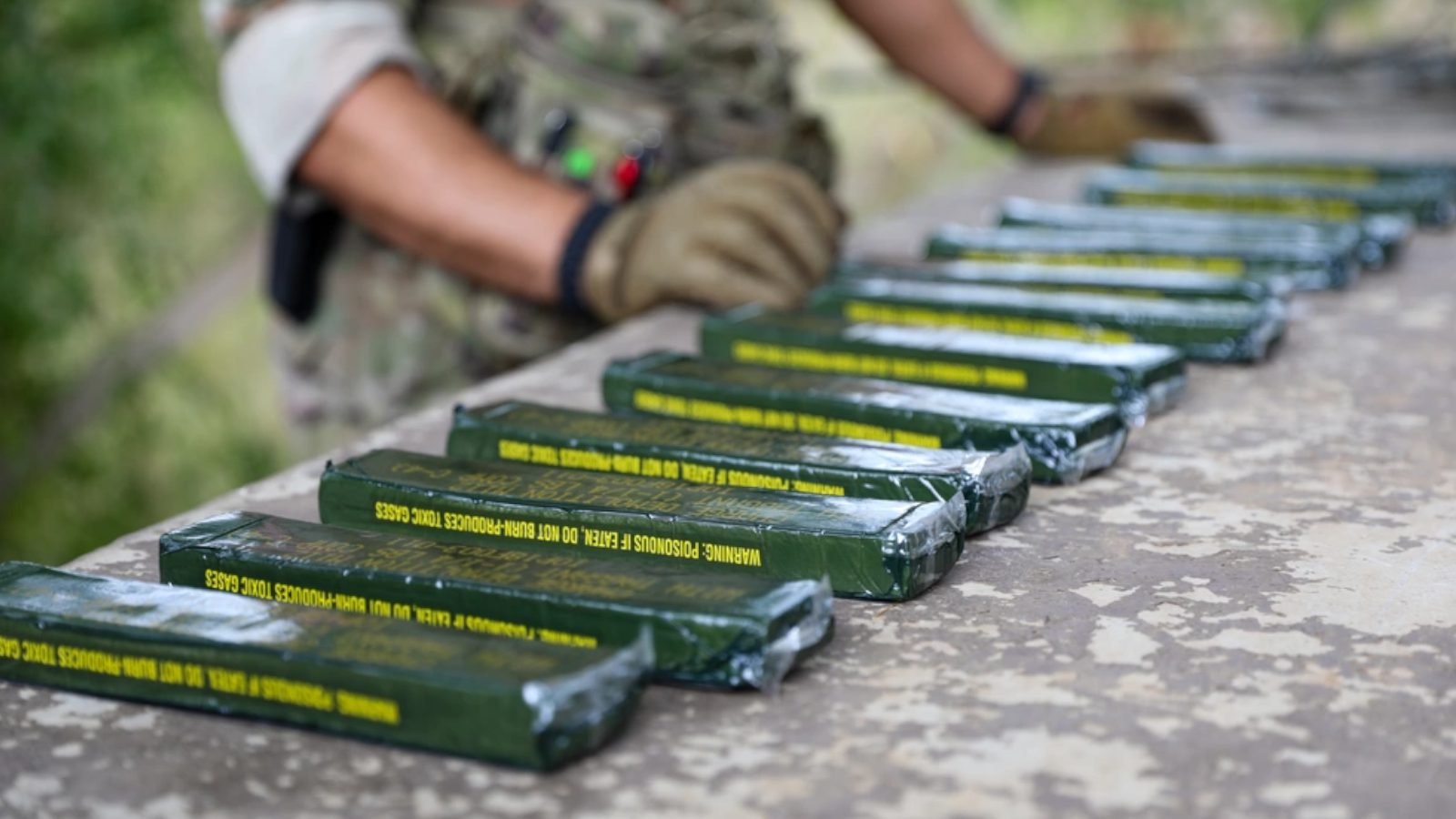
Britain’s Ministry of Defence (MoD) is facing serious questions over its procurement of explosives for Ukraine after a Financial Times investigation revealed that supplies marketed as an advanced form of C4 reportedly lacked a key ingredient used in conventional military-grade C4.
An investigation by Financial Times journalist Miles Johnson found that the British Government purchased large quantities of explosives from Pennsylvania-based arms supplier Tripwire South under Taskforce Kindred, a fast-track procurement programme established to accelerate military supplies to Ukraine.
The explosives, marketed under the name EDC-4, were presented as a powerful form of C4 containing RDX, a principal explosive ingredient. However, testing conducted by the British Ministry of Defence following an initial delivery reportedly detected no RDX in the material supplied.
According to the Financial Times investigation, the shipments contained PETN, a different explosive compound, rather than the advertised formulation. The findings have raised concerns about the accuracy of product descriptions, safety documentation and the potential risks to Ukrainian personnel handling the explosives.
Despite the test results, the investigation found that Britain continued purchasing the material for Ukraine, with contracts potentially involving millions of pounds in taxpayer money.
The controversy has prompted criticism from Liberal Democrat MP Mike Martin, a member of the House of Commons Defence Select Committee, who questioned why the Ministry of Defence continued purchasing the explosives after its own testing raised concerns about their composition.
Martin described the revelations as extraordinary, warning that the procurement decisions could have put Ukrainian soldiers at risk while wasting British taxpayers’ money.
He called on the Ministry of Defence to explain why it continued purchasing the material despite the reported test findings and questioned the department’s oversight of the procurement process.
The investigation also raised concerns about the role of Tripwire’s owner, Ryan Morris, and the company’s supply arrangements. Morris, who previously faced bankruptcy, secured contracts through the company’s involvement in Britain’s accelerated military procurement programme.
The Financial Times further reported that Tripwire and its legal representatives issued legal threats to the newspaper’s investigative journalist during the reporting process.
Martin said he had seen evidence suggesting that the Ministry of Defence passed information about communications between its officials and the journalist to Tripwire after becoming aware of the investigation.
According to Martin, the information was subsequently used by the company’s lawyers to challenge the journalist and threaten potential personal legal liability.
He questioned why a government department would share information about its communications with an investigative journalist with a private arms supplier whose contracts were under scrutiny.
The MP called for the Ministry of Defence to explain both its continued purchases of the explosives and its handling of the information shared with the supplier’s legal representatives.
The Financial Times investigation also highlighted discrepancies between safety documentation provided by Tripwire and information contained in the original manufacturer’s records. Such documents are particularly important for explosives because they provide instructions and warnings concerning composition, handling and storage.
The Ministry of Defence has defended its procurement decisions, telling the Financial Times that its independent tests identified PETN as the only high explosive present. However, the department maintained that the material was fit for purpose and said it had received positive feedback from Ukraine.
The MoD also argued that there was no contractual requirement for the product to contain a specified amount of RDX or PETN, disputing the suggestion that the test results necessarily demonstrated a breach of contract.
Tripwire and Morris have rejected allegations of misrepresentation, maintaining that, to their knowledge, every batch supplied to Britain contained RDX. The company has also disputed the suggestion that the material presented a safety risk or failed to meet performance expectations.
The controversy has intensified scrutiny of Taskforce Kindred and Britain’s fast-track defence procurement arrangements, particularly over supplier checks, product testing and accountability for public spending.
Martin has called for the Government to provide a full explanation, arguing that ministers must be held accountable if they knew about the test results but continued authorising purchases or facilitated efforts to intimidate the journalist investigating the matter.
He said any minister found to have knowingly approved such decisions should consider resigning.
The revelations have raised wider questions about Britain’s oversight of military supplies sent to Ukraine, particularly whether the urgency of wartime procurement came at the expense of proper quality controls, transparency and accountability.