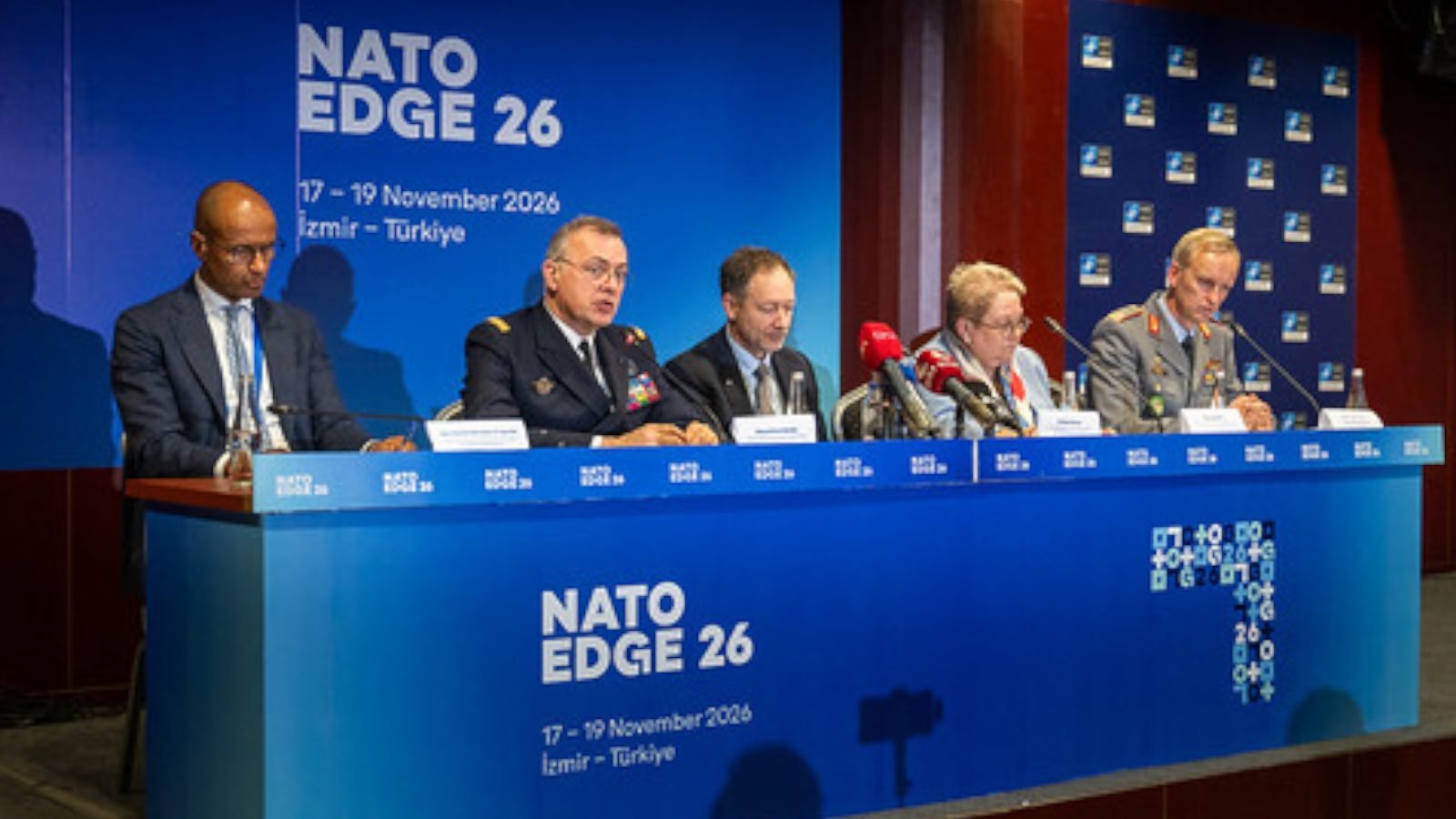
IZMIR, Türkiye: NATO is accelerating efforts to integrate artificial intelligence, digital technology and commercial space capabilities into its military operations as the alliance faces growing pressure to adapt to rapidly changing warfare.
The push was a central theme at NATO Edge 26, held in Izmir from November 17 to 19, where military leaders, government officials and defence industry representatives examined how emerging technologies and closer cooperation with the private sector could strengthen the alliance’s readiness and military advantage.
Organised by the NATO Communications and Information Agency (NCIA), the conference brought together thousands of participants to discuss faster capability development, improved interoperability and the adoption of advanced technologies across NATO forces.
Admiral Pierre Vandier, Supreme Allied Commander Transformation, used his keynote address to highlight the importance of artificial intelligence and digital interoperability in preparing NATO for evolving security challenges.
He said AI could fundamentally change how military systems communicate and operate together, potentially overcoming technical barriers that have traditionally made interoperability a lengthy process.
“For decades, interoperability has been a complex and lengthy process, driven by standards and technical agreements. Today, AI agents are changing the game,” Vandier said.
He referred to a demonstration at NATO FUSE in Latvia last month, where artificial intelligence was used to connect systems that had not originally been designed to work together.
According to Vandier, the demonstration showed how AI could help integrate different technologies within hours, potentially accelerating the delivery of new capabilities to military personnel.
The conference also highlighted the need to reduce delays between technological innovation and its adoption by armed forces.
Lieutenant General Marcus Annibale, Allied Command Transformation’s Deputy Chief of Staff for Capability Development, said early engagement with industry and military users was essential to making informed decisions and delivering practical solutions more quickly.
“Speed comes from disciplined choices made earlier,” Annibale said, stressing the importance of understanding operational requirements, assessing available technologies and selecting suitable solutions before development processes advance.
He argued that closer cooperation between NATO, defence companies and military users could help avoid unnecessary delays and ensure that new technologies address real operational needs.
One of the major announcements at NATO Edge 26 was the launch of NATO’s Global Data Marketplace for Space, an initiative designed to improve the alliance’s access to commercial space data and services.
The project was developed through cooperation involving Allied Command Transformation, the NATO Communications and Information Agency, the US Space Force and technology company Bluestaq.
The initiative aims to connect operational requirements with commercially available space capabilities, helping NATO access relevant data and services more efficiently.
The announcement reflects the growing importance of commercial space technology to military planning, surveillance and other defence-related activities.
Artificial intelligence also featured prominently in discussions about NATO’s future operational capabilities.
Major General Olivier Pernaudet, NATO’s Artificial Intelligence Champion at Allied Command Transformation, said the alliance needed to move beyond experimentation and incorporate reliable AI solutions into military systems and processes.
He highlighted the technology’s potential to help commanders process information more quickly, improve decision-making and maintain an operational advantage over potential adversaries.
“Artificial intelligence has enormous potential to transform how NATO operates, but its value depends on how effectively we put it to use,” Pernaudet said.
He added that integrating trusted and interoperable AI solutions into military operations would be essential to realising the technology’s benefits.
The discussions at NATO Edge 26 underscored the alliance’s growing focus on linking technological innovation with practical military requirements.
From AI-enabled interoperability and commercial space data to faster capability development and stronger industry partnerships, NATO is seeking to ensure that emerging technologies can be tested, integrated and delivered to its armed forces at the pace demanded by the changing security environment.