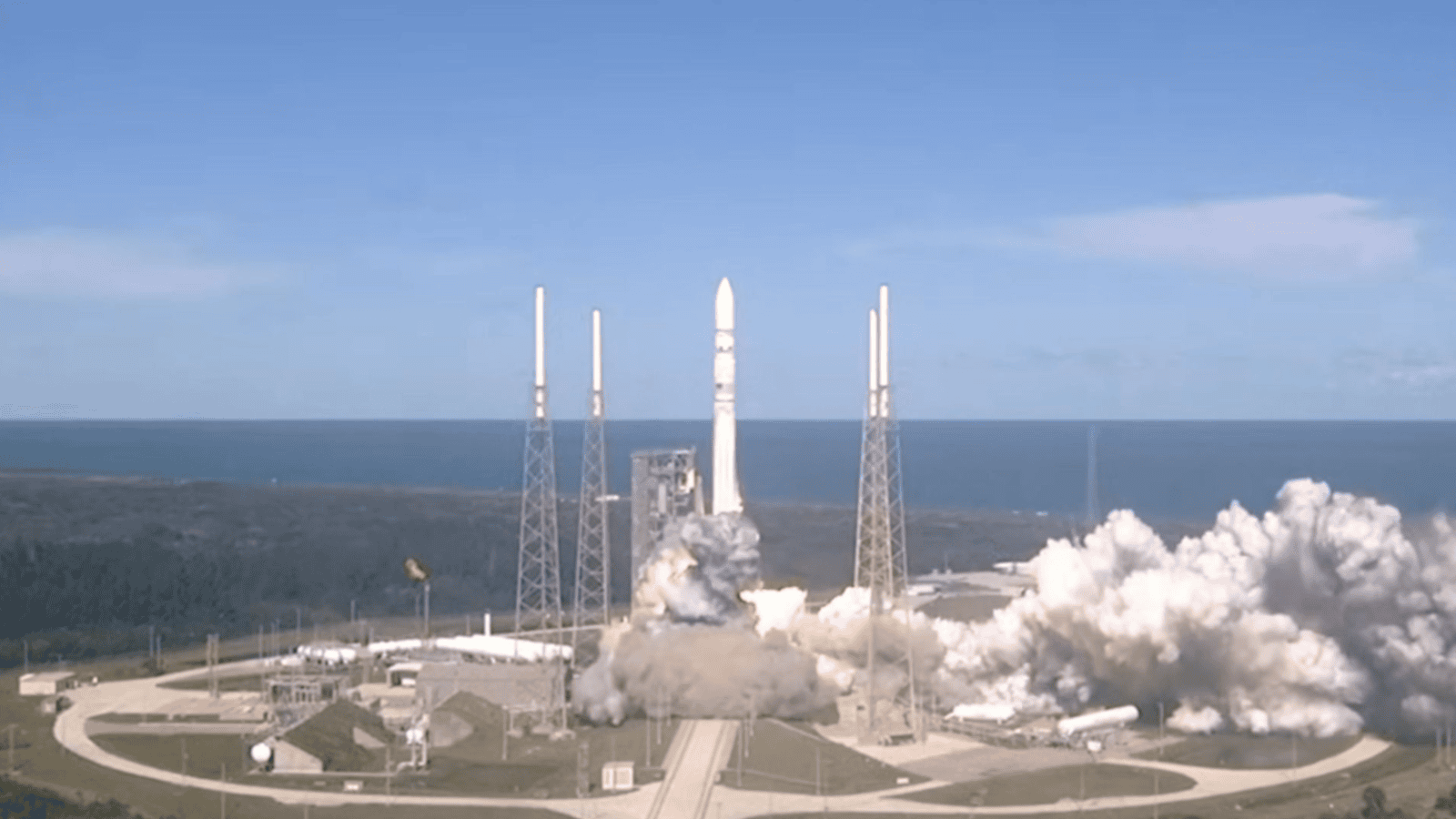
Amazon’s ambition to challenge SpaceX’s dominance in satellite internet has suffered a major setback after a United Launch Alliance (ULA) Vulcan rocket failed shortly after liftoff from Florida on Sunday, destroying all 40 satellites aboard.
The rocket experienced an anomaly approximately 10 minutes after launching from Cape Canaveral Space Force Station, preventing it from delivering the satellites for Amazon’s Leo internet network into orbit.
ULA, a joint venture between Boeing and Lockheed Martin, confirmed the failure, saying the vehicle had suffered an in-flight anomaly during its mission.
The company said its initial assessment was based on flight data received by its launch director, adding that the precise cause had yet to be established.
The incident marks the first mission failure in ULA’s history and represents a significant blow to its efforts to establish Vulcan as a reliable alternative for commercial and national security launches.
The failure is expected to trigger an extensive technical investigation, potentially grounding the rocket for months and adding pressure to an already constrained US launch industry.
“There is risk with any launch, and that’s especially true for inaugural missions like LV-01,” Amazon said in a statement, expressing confidence that ULA would learn from the incident.
Sunday’s launch was Vulcan’s fifth flight since its debut in 2024 and its first in nine months. Previous delays followed separate investigations into its solid rocket boosters and BE-4 engines, manufactured by Jeff Bezos’ Blue Origin.
Blue Origin is assisting ULA with the investigation into Sunday’s failure, according to a person familiar with the matter.
The rocket’s boosters had already faced scrutiny following issues during its previous two missions, including a February flight for the US Space Force. Although both missions successfully delivered their payloads, the Pentagon had yet to approve Vulcan for further national security launches pending the outcome of Sunday’s mission.
Blue Origin’s New Glenn rocket also experienced a launchpad incident in May, with a subsequent investigation identifying an engine problem. The company later modified BE-4 engines supplied to ULA.
It remains unclear whether the engines contributed to Sunday’s failure. Initial indications suggested the anomaly occurred after the separation of Vulcan’s second stage, which was carrying Amazon’s satellites, from the first-stage booster.
Founded in 2006 through the merger of Boeing’s Delta rocket programme and Lockheed Martin’s Atlas programme, ULA had maintained a record of mission success before Sunday’s incident.
Amazon struggles to close the gap with SpaceX
The failure presents another obstacle for Amazon as it attempts to build a global satellite internet network capable of competing with SpaceX’s Starlink.
SpaceX has established a substantial advantage through its own launch capabilities, while Amazon remains dependent on external providers to deploy its satellites.
Rocket failures and launch delays have repeatedly complicated Amazon’s expansion plans. The New Glenn incident in May also disrupted the company’s satellite deployment schedule.
Since 2025, Amazon has deployed 398 Leo satellites through 14 launches, representing approximately 12 per cent of the 3,236 satellites required for global service coverage.
The company had hoped to begin initial internet services this year as its constellation approached the 400-satellite mark.
Meanwhile, SpaceX’s Starlink network has expanded to more than 11,000 satellites and serves millions of customers worldwide.
The latest Vulcan failure threatens to widen that gap, highlighting the challenges facing companies attempting to compete with a satellite network backed by a dedicated rocket programme.
For Amazon, the loss of 40 satellites means another delay in its efforts to establish a competitive presence in the rapidly expanding global satellite internet market.