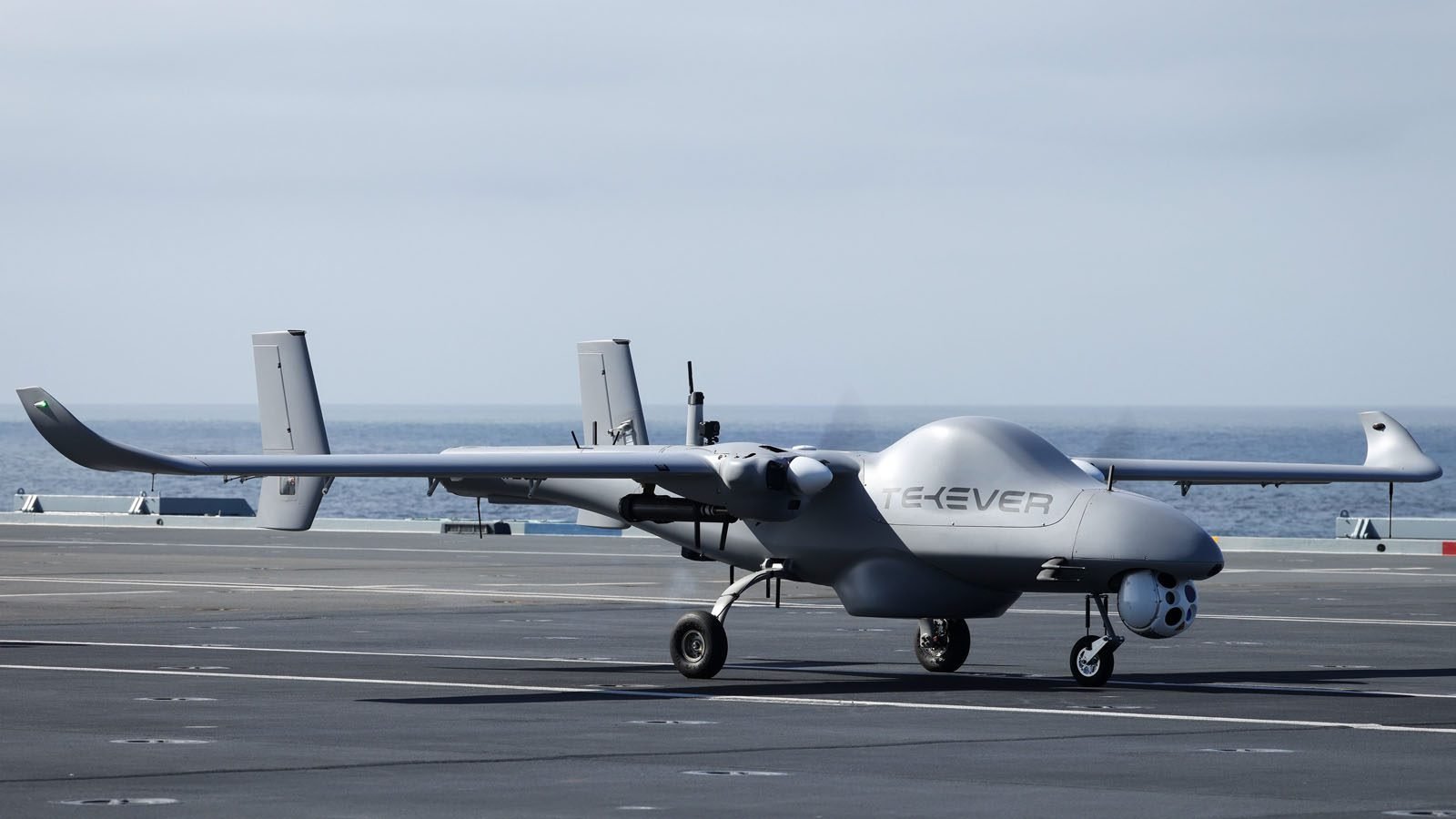
LONDON: Britain has successfully tested the AR5 long-endurance surveillance drone aboard its aircraft carrier HMS Queen Elizabeth, marking a significant step towards expanding the Royal Navy’s use of autonomous aircraft for maritime operations.
The National Armaments Director Group (NAD Group) announced that the drone, developed by aerospace and defence technology company Tekever, had completed trials aboard the carrier as part of efforts to strengthen the UK’s uncrewed military capabilities.
Capable of carrying up to 50 kilogrammes of cameras and sensors, the AR5 is designed to support intelligence gathering, surveillance and essential logistical missions at sea.
The trials demonstrated the potential of the aircraft to operate from a naval carrier and support operations in challenging maritime environments.
The development is linked to a wider contract worth up to £400 million between Tekever and the UK Ministry of Defence under Project CORVUS. The programme begins with an initial order of six aircraft, with the fleet expected to expand to as many as 24 by 2029.
The AR5 is also intended to replace the British Army’s ageing Watchkeeper surveillance drone, which has been in service since 2014.
The aircraft has previously been used by Ukrainian forces against Russia, providing operational experience that has contributed to its development and deployment plans.
The carrier trials form part of Britain’s wider effort to develop a hybrid military force combining crewed aircraft with autonomous systems.
The Royal Navy said the successful demonstration of the AR5 aboard HMS Queen Elizabeth could provide greater operational flexibility, extend the reach of carrier groups and support future logistics and intelligence missions.
The programme also supports Britain’s ambition to expand domestic defence manufacturing and strengthen its position in autonomous military technology.