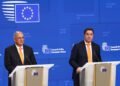
BRUSSELS: The European Union has reached an agreement on a €199.7 billion budget for 2027, with Ireland’s Tánaiste and Minister for Finance Simon Harris leading negotiations on behalf of the Council.
The agreement, reached between the Council of the European Union and the European Parliament, sets out the bloc’s financial priorities for next year and marks the seventh and final annual budget under the current 2021-2027 Multiannual Financial Framework (MFF).
The budget provides for €199.7 billion in commitments and €211.5 billion in payments, ensuring funding for agreed EU policies and programmes while maintaining the bloc’s capacity to respond to emerging crises and unforeseen challenges.
A further €710.1 million has been kept available within the current MFF expenditure ceilings to address unexpected financial requirements.
Funding for security and European priorities
The 2027 budget allocates significant resources to cohesion, resilience and values, which will receive €75.76 billion in commitments, while €57.11 billion has been earmarked for natural resources and the environment.
Other major allocations include €22 billion for the single market, innovation and digital programmes, and €15.53 billion for neighbourhood and international initiatives.
The budget also provides €5.81 billion for migration and border management and €3.07 billion for security and defence.
An additional €650 million has been allocated for the Ukraine support loan, reflecting the EU’s continued commitment to supporting the country amid Russia’s ongoing war.
Simon Harris highlights need for balanced spending
Harris said the budget needed to provide the EU with sufficient resources to respond to challenges while protecting taxpayers and avoiding additional pressure on national budgets.
He stressed the importance of directing funding towards initiatives that deliver practical results, strengthen collective resilience and safeguard peace, security and prosperity across Europe.
The agreement also maintains the EU’s capacity to respond to continuing crises in Ukraine and the Middle East, while allowing flexibility to address unforeseen circumstances.
Formal approval expected
The European Parliament and the Council now have 14 days to formally approve the agreement.
The Council is expected to endorse the deal on November 23, with adoption requiring a qualified majority among member states.
Once formally approved, the €2027 budget will provide the financial framework for the EU’s final year under its current seven-year spending programme.