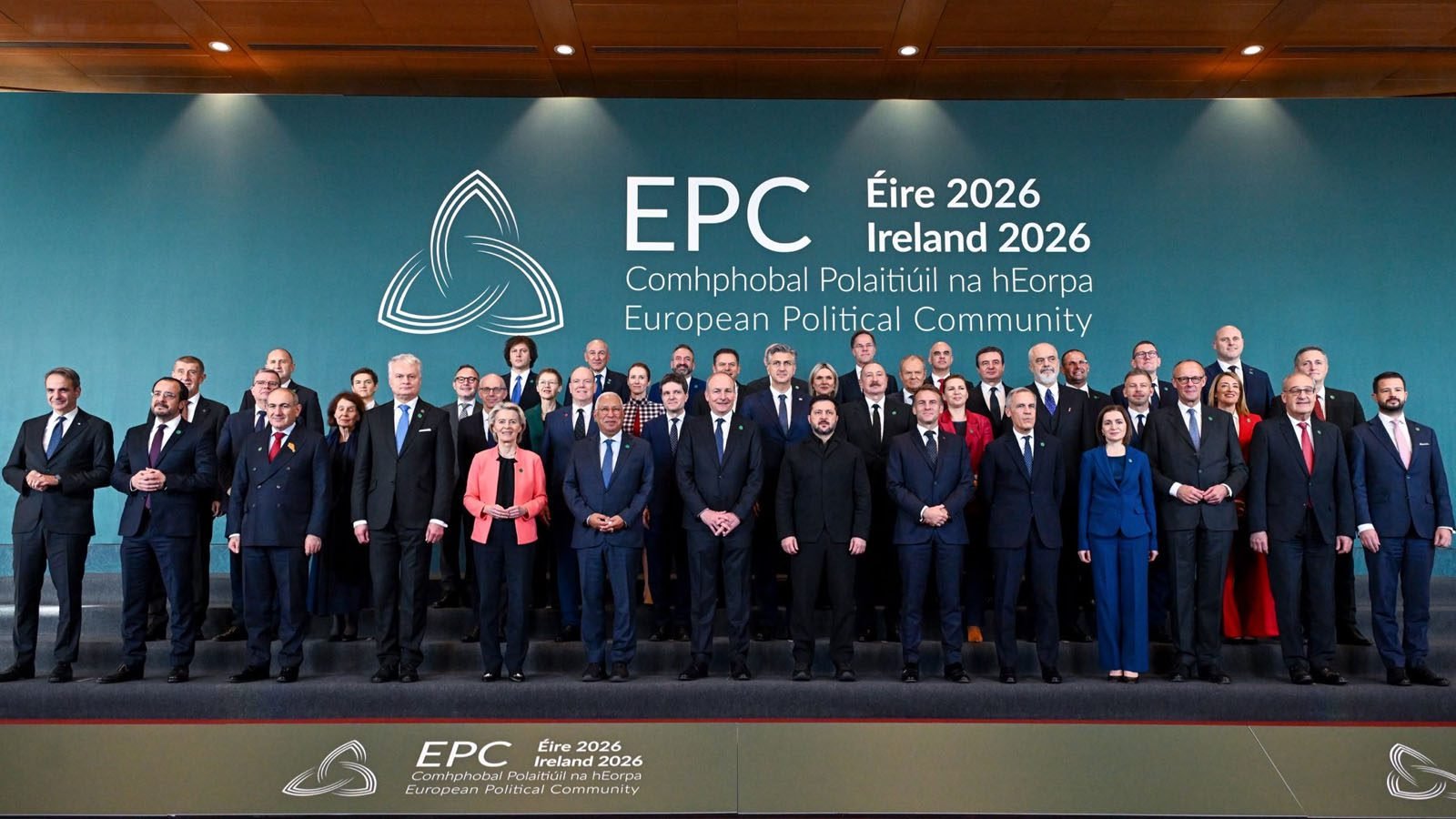
DUBLIN: European leaders have reaffirmed their commitment to Ukraine’s sovereignty and called for a stronger European role in efforts to end Russia’s war, as the ninth European Political Community (EPC) summit concluded in Dublin on November 12.
Hosted by Irish Taoiseach Micheál Martin and co-chaired by European Council President António Costa, the summit brought together around 50 leaders from across Europe under the theme “Europe – Strong, Secure and Connected”. Ukrainian President Volodymyr Zelenskyy, Canadian Prime Minister Mark Carney and NATO Secretary-General Mark Rutte were among the prominent participants. The gathering was the largest diplomatic event ever hosted by Ireland.
Russia’s continuing war against Ukraine dominated discussions, with leaders stressing that any settlement must respect Ukraine’s independence, sovereignty and territorial integrity. They also maintained that decisions affecting European security cannot be taken without European involvement.
The summit came amid renewed diplomatic activity following US-mediated discussions involving Ukrainian and Russian representatives. Zelenskyy urged European countries to become a regular part of negotiations, arguing that the continent must have a voice in decisions that will shape its future security.
A key question emerging from the discussions was who should represent Europe in any negotiations with Russia. Taoiseach Martin suggested that a group of European leaders could represent the continent rather than relying on a single spokesperson. European officials also discussed the possibility of coordinating their position before the next stages of diplomatic engagement.
The issue gained further attention after US envoys Steve Witkoff and Jared Kushner held talks with Zelenskyy in Dublin on the sidelines of the summit. The meeting followed discussions involving the US representatives and Russian President Vladimir Putin in Moscow. Zelenskyy said Europe needed to pay close attention to the emerging proposals and called for European participation in the peace process.
European leaders also reiterated their support for stronger and more credible security guarantees for Ukraine. A joint declaration emphasised the need to prevent future aggression and warned that Russian hybrid activities would strengthen, rather than weaken, European resolve to support Kyiv. The leaders underlined that Ukraine’s security is closely linked to the wider security of Europe.
Beyond the war, the summit addressed growing concerns over hybrid threats, including cyberattacks, disinformation and attempts to undermine democratic institutions. Leaders discussed closer cooperation to identify, prevent and respond to such activities, as European governments face increasing pressure to protect critical infrastructure and electoral processes.
Economic competitiveness, technological innovation, energy cooperation and stronger connections between European countries also featured on the agenda. Martin said the discussions had highlighted the importance of strengthening Europe’s economy, improving its capacity for innovation and ensuring access to clean and affordable energy for households and businesses.
Ireland also used the gathering to explore closer security cooperation with Ukraine. Zelenskyy said Kyiv was ready to pursue joint work with Ireland on drone technology, including possible co-production. The proposal could help strengthen Ireland’s defence capabilities while supporting Ukraine’s efforts to develop and expand its military technology industry. However, Irish officials indicated that discussions remained at an early stage and that no final agreement had been reached.
The participation of British Prime Minister Andy Burnham and Canadian Prime Minister Mark Carney also highlighted the EPC’s role in connecting EU and non-EU countries. Carney’s attendance reflected growing efforts to deepen Canada’s relationship with European partners, while Burnham’s visit came ahead of further UK-EU engagement following Britain’s departure from the bloc.
Established in 2022 following Russia’s full-scale invasion of Ukraine, the European Political Community provides a platform for political dialogue between EU and non-EU European countries. Unlike the European Union, it does not have the authority to adopt legally binding collective decisions. Its influence instead rests on diplomatic coordination, political commitments and bilateral agreements reached by participating governments.