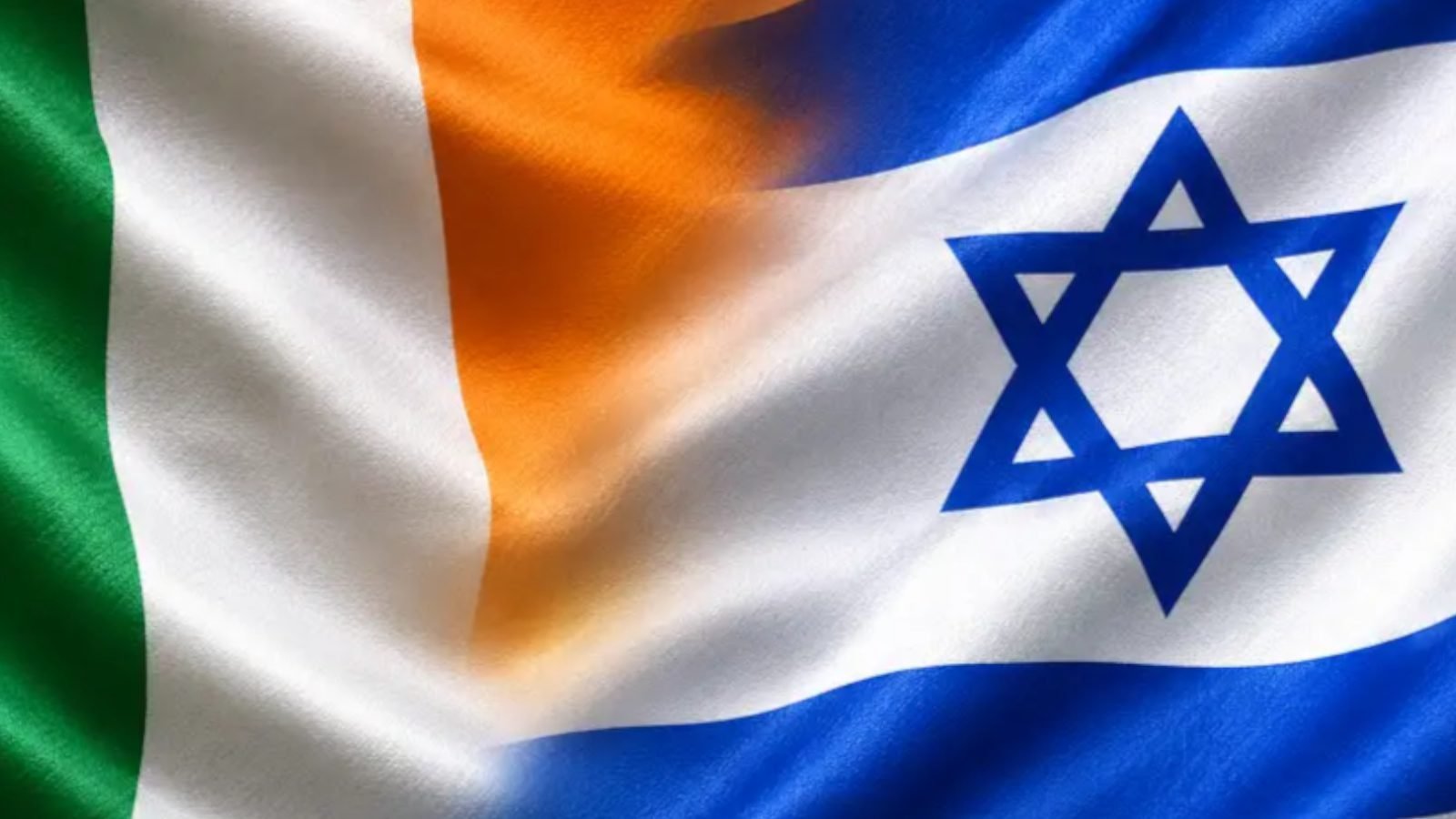
DUBLIN: Immigration, particularly from Israel, is playing a significant role in sustaining and reshaping Ireland’s small Jewish community, with nearly one-third of its members now estimated to have Israeli backgrounds, according to new research by the Institute for Jewish Policy Research (JPR).
The report, titled Jews in Ireland: A Century in Review – From Growth to Decline to Growth Again?, estimates that between 2,500 and 2,700 Jewish people currently live in Ireland, representing approximately 0.05 per cent of the country’s population.
One of the study’s key findings is that around 67 per cent of Ireland’s Jewish population was born outside the country, compared with approximately 20 per cent of the overall population.
The research identifies international migration as the principal factor behind the community’s recovery following decades of demographic decline, with Israeli-born residents making an increasingly significant contribution.
Around one-quarter of Ireland’s Jewish population was born in Israel. When their children are included, people with Israeli backgrounds account for approximately one-third of the community.
The number of Israel-born Jewish residents in Ireland has almost doubled since 2011, rising from 464 to 903 in 2022. Ireland now has the fourth-highest proportion of Israel-born Jews among European Jewish communities, behind Norway, Finland and Bulgaria.
A community recovering from historic decline
The research traces the changing size of Ireland’s Jewish population over more than a century, highlighting significant fluctuations in its numbers.
The community reached an estimated peak of approximately 3,900 people in 1946 before experiencing a prolonged decline. By 1991, its population had fallen to 1,581, its lowest recorded level in the period examined.
Census figures subsequently showed a recovery, with 2,557 people identifying as Jewish in 2016. The number stood at 2,484 in the 2022 Census, indicating a slight decline over the six-year period.
JPR’s current estimate of 2,500 to 2,700 reflects its broader demographic assessment rather than simply the latest census count.
Dr Daniel Staetsky, director of JPR’s European Jewish Demography Unit, said Ireland provided an important example of how migration was transforming Jewish communities across Europe.
He noted that immigration had brought renewed life to Ireland’s Jewish population after decades of decline, with Israelis playing a particularly important role.
However, he cautioned that low fertility meant the community’s demographic future would continue to depend heavily on migration.
The report estimates that Jewish fertility in Ireland stands at approximately 1.0 to 1.3 children per woman, below the level required to sustain the population without migration.
Predominantly secular and professionally employed
Beyond population numbers, the study also examines the religious, social and economic characteristics of Ireland’s Jewish community.
It found that the population is predominantly secular, with only around 24 per cent formally affiliated with a Jewish religious organisation.
The research also highlights relatively high levels of professional employment, with approximately 61 per cent of Irish Jews working in professional, managerial or technical occupations, compared with around 40 per cent of the wider population.
Around 60 per cent of the country’s Jewish population lives in Dublin and its surrounding areas, making the capital the principal centre of Jewish life in Ireland.
These findings demonstrate that population size alone does not fully capture the changing character of a community, as migration also influences its cultural identity, religious affiliations, employment patterns and social needs.
Researchers highlight importance of demographic planning
Dr Jonathan Boyd, executive director of JPR, said reliable demographic research was essential for understanding how communities evolve and identifying their changing requirements.
He explained that population changes also affect cultural characteristics, communal priorities and the services needed to support Jewish life.
The Ireland study forms part of JPR’s wider research into Jewish communities across Europe, following previous demographic assessments of Austria, Belgium and the Netherlands.
The findings underline how migration, fertility and population movement can reshape minority communities over generations, sometimes producing substantial changes in their composition even when their overall numbers remain relatively stable.
For Ireland’s Jewish population, immigration from Israel and other countries has become a defining feature of its modern demographic story, while low fertility and changing patterns of religious affiliation remain important considerations for its future.