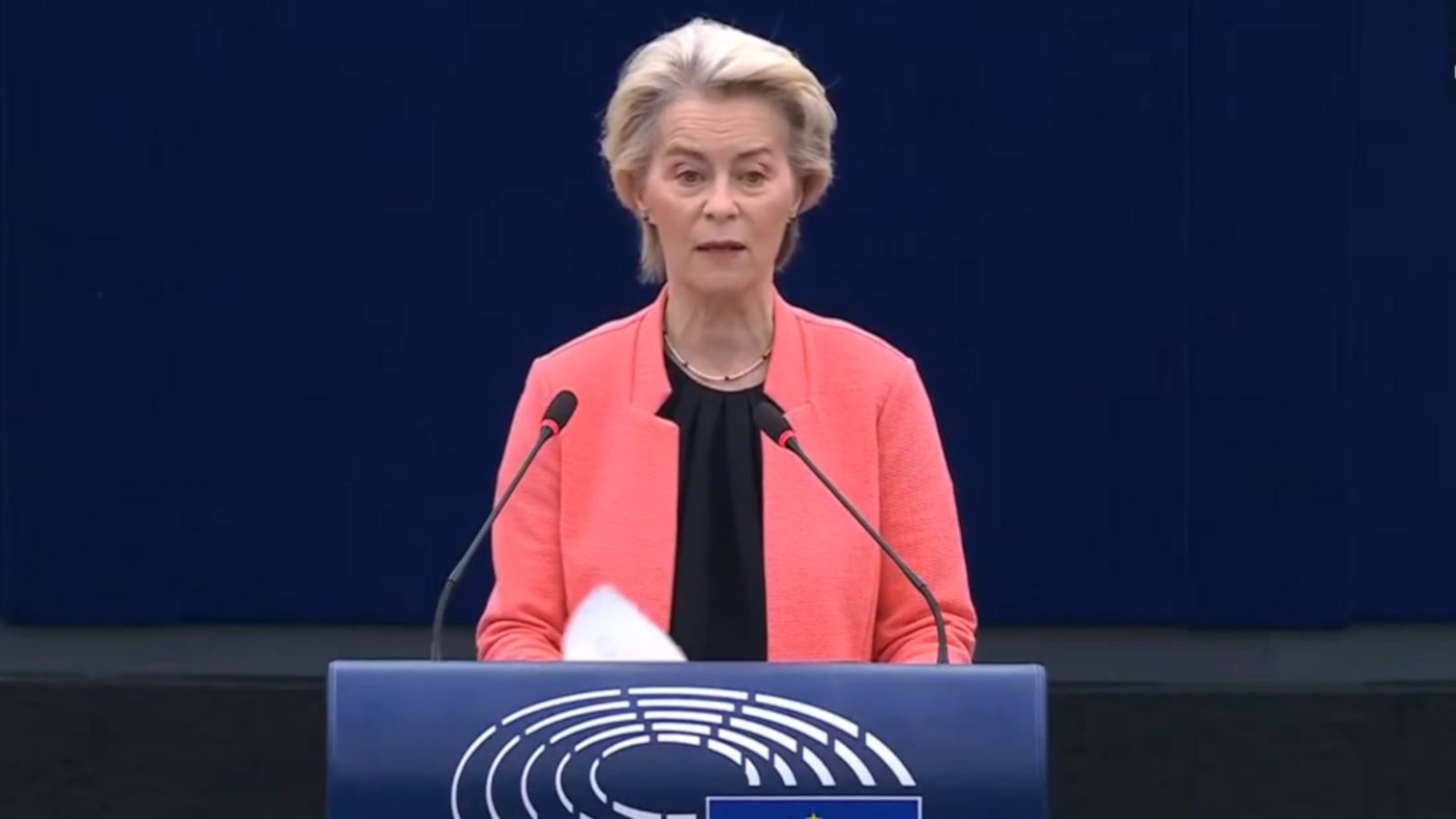
Under the proposed arrangement, €20 billion would be allocated for Ukraine’s budget support, while another €25 billion would be directed towards military requirements in 2027.
Von der Leyen said Ukraine would only be required to repay the assistance once Russia had paid compensation for the damage caused by its war. The proposal forms part of the EU’s broader efforts to maintain financial and military support for Kyiv as the conflict continues.
The Commission chief also highlighted the mounting costs of Russia’s military campaign, claiming that Russian forces had lost more territory than they gained during September and October.
She said Russia had suffered more than 50,000 casualties in October alone, describing the battlefield situation as increasingly costly for Moscow.
Von der Leyen further accused Russia of intensifying attacks on Ukrainian cities after failing to achieve its objectives on the battlefield. She said Russian forces had struck infrastructure more than 1,000 times since September, targeting power stations, heating networks and water supplies.
“Putin cannot break Ukraine’s resistance on the battlefield. So instead he tries to break Ukraine’s spirit,” she said.
The Commission president argued that continued attacks on essential services were intended to undermine civilian morale during the winter months, as Ukraine faces growing pressure to maintain electricity, heating and water supplies.
She also called on Russia to agree to a winter ceasefire covering energy infrastructure and a separate truce allowing food exports through the Black Sea.
Von der Leyen said a strong European team would participate in the next round of peace negotiations, stressing that Ukraine’s security was directly connected to the security of the European Union.
She maintained that Europe would remain involved in efforts to secure a lasting settlement, while continuing to provide financial and military assistance to Kyiv.
The EU chief also praised Ukraine’s progress on institutional reforms despite the pressures of the ongoing war.
She said Brussels was on track to open the final two clusters of Ukraine’s EU accession negotiations before the end of the year, describing the development as an important signal to the Ukrainian people about the country’s European future.
The proposed €45 billion package would cover approximately two-thirds of Ukraine’s estimated €70 billion financing gap. The remaining funding is expected to come from international partners.
The European Commission’s proposal is not yet a final disbursement decision and requires the relevant EU approval. The Commission has also said that budget support will be linked to continued reforms, including measures on the rule of law, anti-corruption efforts and public financial management.