

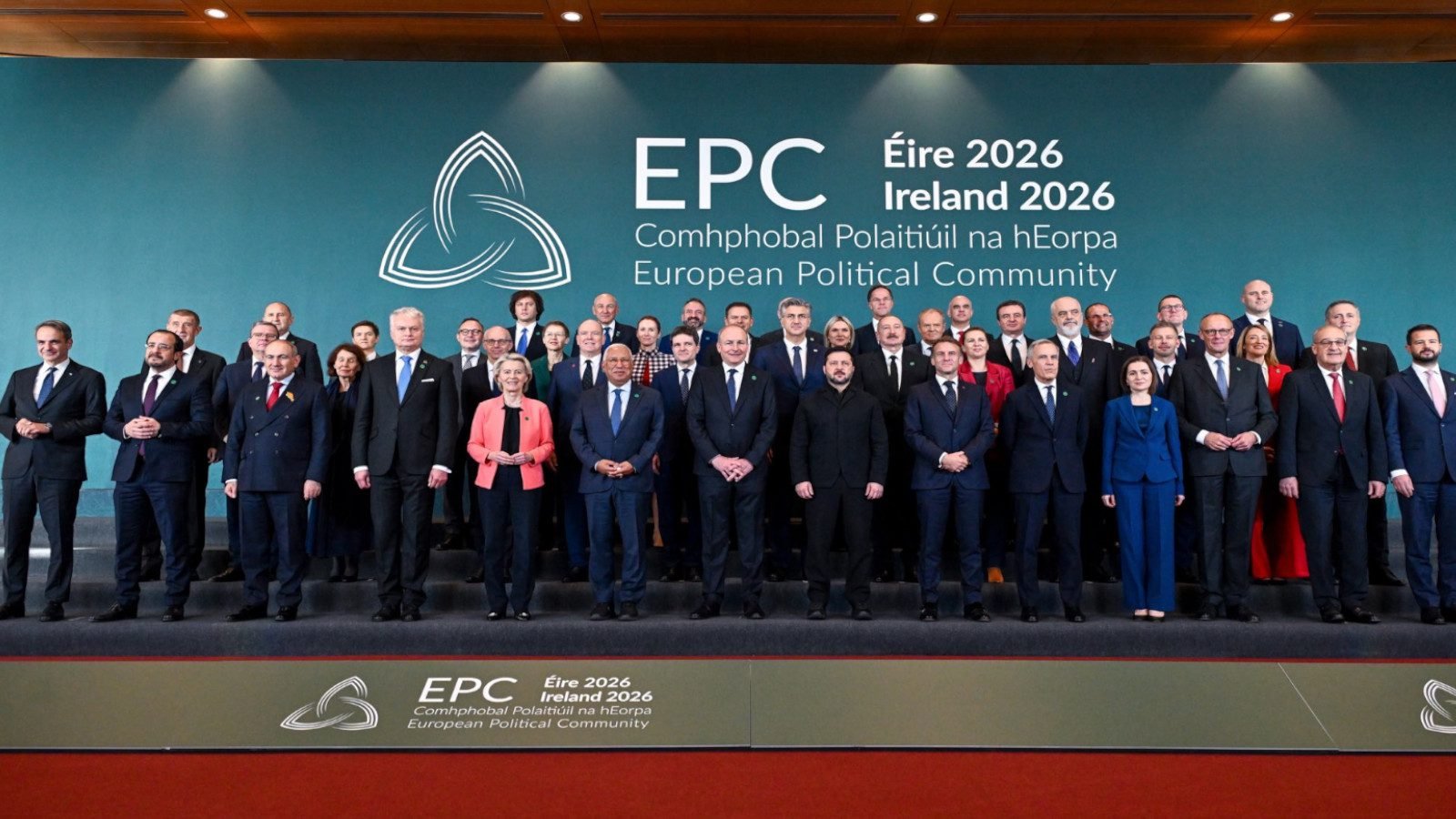
DUBLIN: Around 40 European countries have backed a declaration setting out common principles for the continent’s security, with signatories affirming that European nations must take greater responsibility for protecting their own security interests.
The Declaration on Key Principles of European Security was agreed at the ninth European Political Community (EPC) Summit in Dublin on November 12, bringing together leaders from across the continent to discuss the future of European security amid Russia’s ongoing war against Ukraine and wider geopolitical challenges.
The declaration recognises that European states bear primary responsibility for their continent’s security, while emphasising that stronger European security arrangements will also contribute to wider global and transatlantic stability.
A central message of the document is that decisions affecting European security must involve Europeans, while Ukraine’s path towards peace must be decided with Ukraine itself.
The signatories reaffirmed their support for Ukraine’s independence, sovereignty and territorial integrity within its internationally recognised borders. They also underlined the need for robust and credible security guarantees to prevent further aggression.
The declaration further warns that Russia’s hybrid campaigns and attempts to weaken international support for Ukraine will reinforce the signatories’ commitment to Kyiv.
Beyond the war, the document outlines broader priorities for European security, including stronger national defence capabilities, cooperation against cyberattacks and hybrid threats, protection of critical infrastructure, and efforts to reduce strategic dependencies.
It also reaffirms established principles of international law, including respect for national sovereignty, territorial integrity, the inviolability of borders and the right of countries to choose their own international partnerships and alliances.
The declaration does not establish a new military alliance or replace existing security organisations. Instead, it sets out shared principles and objectives intended to strengthen cooperation through existing frameworks, including the European Union and NATO.
The Dublin summit, co-chaired by Taoiseach Micheál Martin and European Council President António Costa, brought together more than 40 heads of state and government. Its broader theme was ‘Europe – Strong, Secure and Connected’.
The declaration marks a renewed effort by European countries to coordinate their security priorities and strengthen their role in shaping the continent’s future, particularly as diplomatic discussions over Ukraine and the wider European security order continue.









