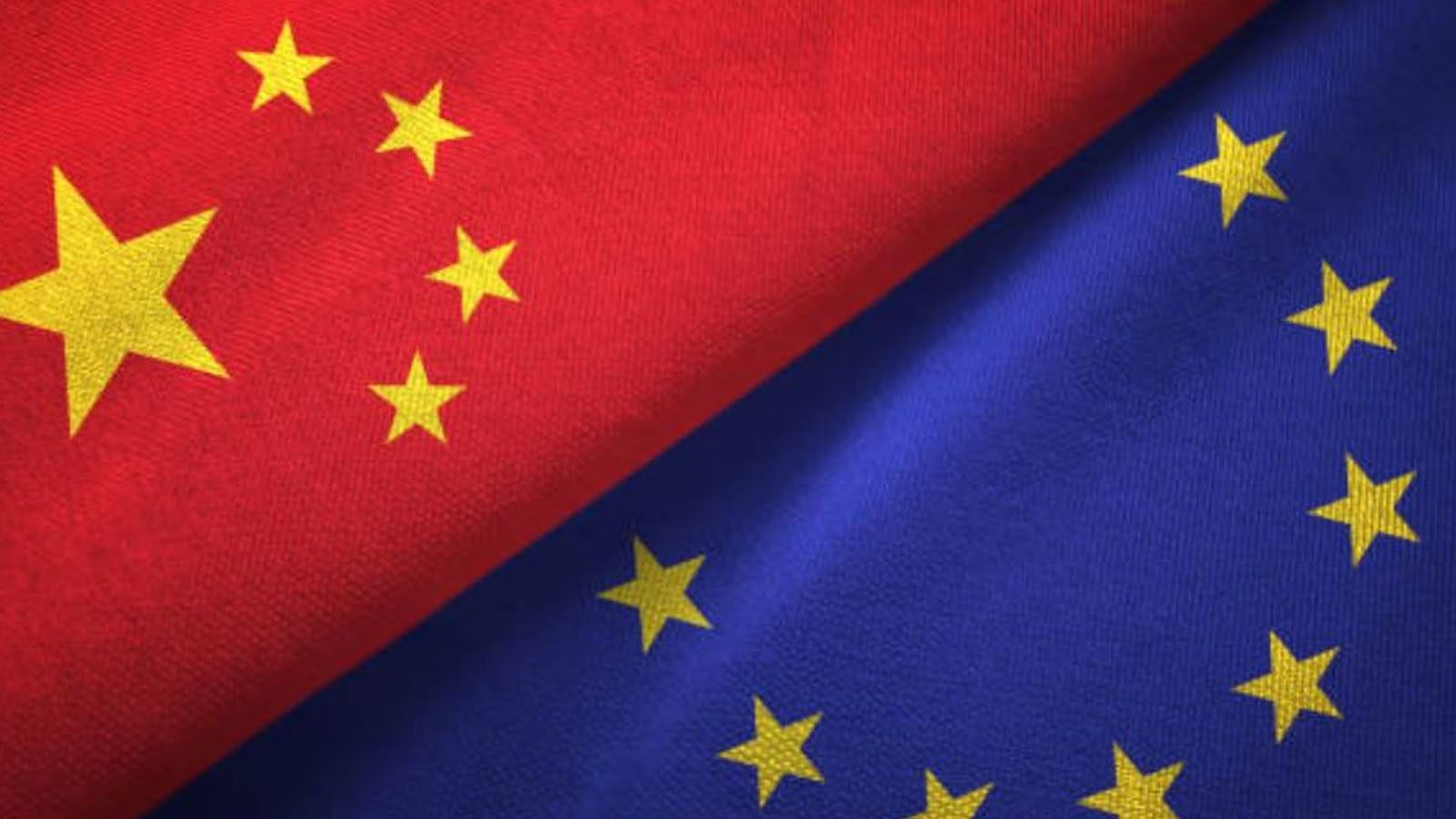
BRUSSELS: The European Parliament has called for a tougher and more balanced European Union policy towards China, raising concerns over Beijing’s position on Russia’s war against Ukraine, unfair trade practices and alleged security threats.
In a recommendation adopted on Wednesday, 454 lawmakers voted in favour, 86 opposed it and 110 abstained. The document urges EU institutions to combine dialogue with stronger safeguards for European economic interests, security and democratic values.
While stressing the importance of cooperation with China on global challenges, peace, climate change and human rights, lawmakers said bilateral relations had reached a critical point.
They expressed deep concern over verified reports that Chinese military personnel had trained Russian troops to fight in Ukraine. The EU was urged to coordinate its approach with the United States, G7 members and other like-minded partners, while pressing Beijing to use its influence over Moscow to help end the war.
Europe seeks to reduce dependence on China
The recommendation calls for urgent measures to prevent China from exploiting Europe’s economic dependence, urging a more rigorous strategy to reduce risks in critical raw materials, medicines, batteries, electric vehicles, semiconductors, information technology and other strategic sectors.
Lawmakers also demanded stronger investment screening and safeguards for critical technologies, infrastructure and supply chains.
They identified China’s industrial overcapacity, state subsidies and restrictions on European companies seeking access to its domestic market as growing challenges for the EU economy.
The Parliament called for reciprocal market access and fair competition, backing proportionate EU measures if Beijing fails to open its markets to European businesses.
It also advocated stronger partnerships under the EU’s Global Gateway initiative, particularly in Africa and Latin America, to offer an alternative to China’s Belt and Road Initiative.
Taiwan, human rights concerns
The recommendation reaffirmed the EU’s One China policy while opposing any unilateral change to the status quo in Taiwan through force or coercion.
Lawmakers also called for stronger European defences against cyberattacks, foreign interference, espionage and other hybrid threats.
On human rights, they urged reinforced dialogue and greater pressure on Beijing over repression, forced labour and policies in Tibet and Xinjiang.
The Parliament expressed particular concern over China’s Law on Promoting Ethnic Unity and Progress, warning of its potential to further institutionalise assimilationist policies. It also called for the unconditional release of political prisoners.
‘Cooperation where possible, firmness on values’
Rapporteur Hilde Vautmans said the vote marked a turning point in Europe’s approach to China, arguing that a broader consensus was emerging around the need for a more balanced economic relationship.
The report, she said, went beyond economic concerns by advocating cooperation with Beijing where possible while maintaining a firm stance on European security and values.
“As long as fundamental differences persist, systemic rivalry will also be part of our relationship,” Vautmans said.
Parliamentary contacts resume
Three European Parliament delegations visited China between March and June 2026, while a fourth visit was expected later in October.
Direct contacts between the Parliament and Chinese authorities resumed last year after being effectively frozen since 2021, when Beijing imposed sanctions on several European lawmakers in response to EU human rights sanctions against Chinese officials and organisations.