DUBLIN: Ireland has brought European policymakers, migration experts and labour market representatives together in Dublin to examine how international recruitment can help address persistent skills shortages and prepare the continent’s workforce for changing economic demands.
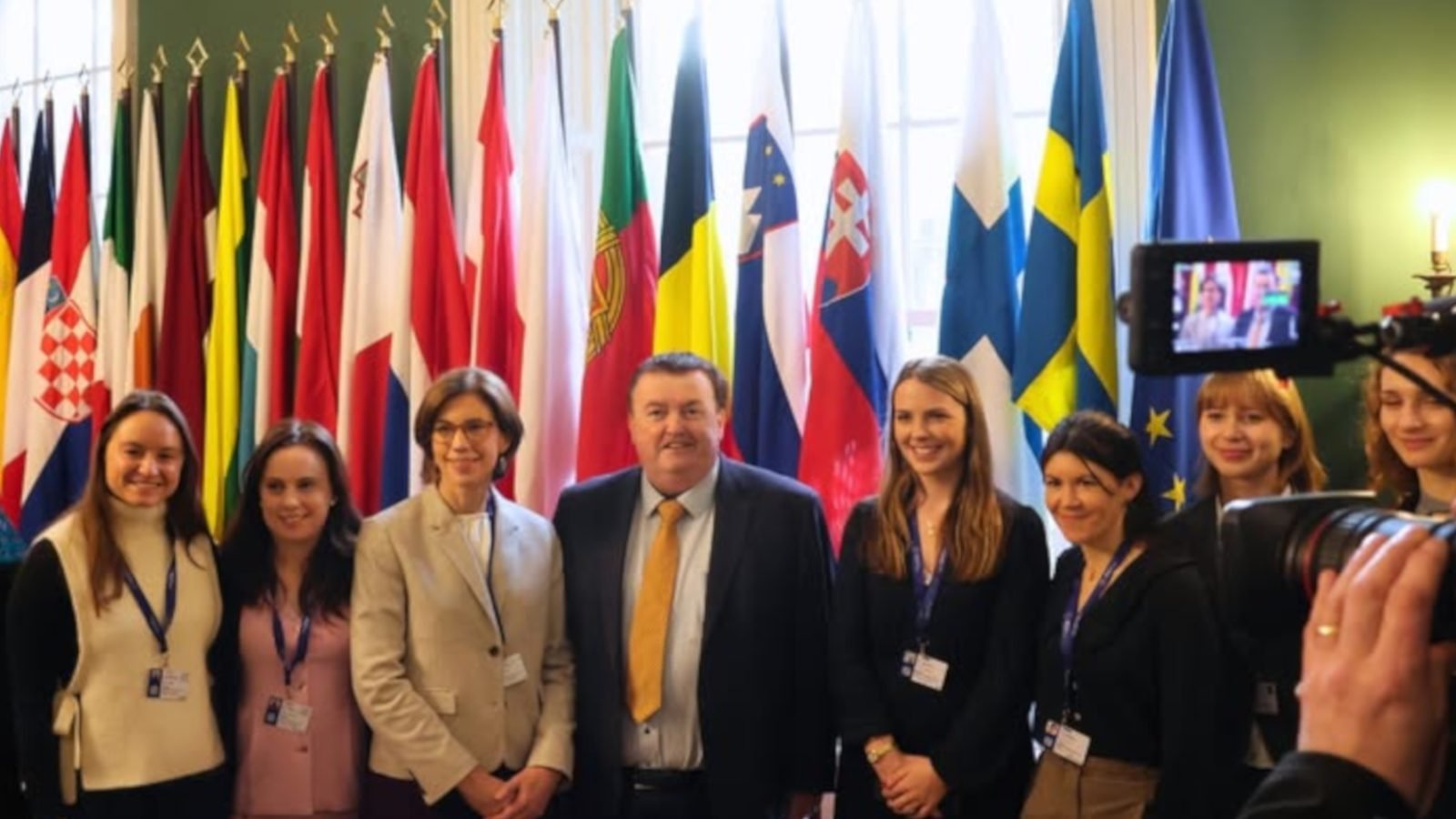
Minister of State for Migration Colm Brophy officially opened the European Migration Network (EMN) Ireland Presidency Conference at the Royal Hospital Kilmainham, where delegates discussed the future of labour migration policy amid demographic change, technological advances and the green and digital transitions.
Held as part of Ireland’s Presidency of the Council of the European Union, the one-and-a-half-day conference is titled Future-proofing Europe’s Labour Migration Policy: New Approaches to Managing Labour Immigration Amidst a Changing Labour and Skills Landscape.
Organised by EMN Ireland, the event brings together representatives of EU member states, the European Commission, international organisations, employers, researchers, recruitment specialists and civil society groups.
The conference is examining how European countries can attract skilled workers from outside the EU while ensuring fair employment conditions, supporting integration and retaining international talent.
Skills shortages put migration policy in focus
Opening the conference, Brophy highlighted the growing workforce challenges facing Ireland and other European economies as employers struggle to recruit workers in key sectors.
He said changing demographics, technological developments and evolving economic requirements were reshaping labour markets, making it increasingly important for governments to develop migration policies that are responsive, sustainable and fair.
“Across Europe, employers are experiencing persistent labour and skills shortages in key sectors, while changing demographics and everchanging economic demands are reshaping labour markets,” Brophy said.
He stressed that migration policies must protect workers’ rights, promote fair treatment and ensure that people arriving in European countries receive appropriate support to integrate into their new communities.
The Minister also emphasised that international recruitment should complement, rather than replace, investment in domestic education and workforce development.
“Investment in our domestic workforce’s education, training and lifelong learning remains fundamental. At the same time, international recruitment has a role to play in addressing immediate workforce needs and supporting economic growth,” he said.
Healthcare, construction and technology among priority sectors
Discussions at the conference are focusing on how the EU can attract workers with the skills needed in sectors including healthcare, information technology, construction and agriculture.
Delegates are also examining European initiatives such as the EU Talent Pool and Talent Partnerships, which are intended to improve international recruitment and cooperation with countries outside the bloc.
The EU Talent Pool is designed to help connect employers in participating member states with jobseekers from non-EU countries, while Talent Partnerships seek to strengthen cooperation with partner countries on skills development and labour mobility.
Brophy said successful migration policies must go beyond filling vacancies, arguing that protecting employment standards and helping international workers establish long-term careers are equally important.
“A successful labour migration system is not measured solely by the number of vacancies filled,” he said, adding that retaining skilled workers could be just as important as attracting them.
Ireland seeks wider European cooperation
The conference also provides an opportunity to exchange research, share international experience and identify practical responses to common migration challenges as Ireland develops its new National Migration and Integration Strategy.
Representatives from the International Organization for Migration, the Organisation for Economic Co-operation and Development and the World Bank are among those participating, alongside European institutions, labour standards authorities, academics and social partners.
Brophy highlighted the importance of cooperation between European countries, referring to the Irish Presidency’s guiding principle, Ní neart go cur le chéile — strength through unity.
He said collaboration would be essential in developing labour migration systems that support economic growth while protecting workers and strengthening communities.
The conference is being organised by EMN Ireland, the Irish National Contact Point of the European Migration Network, through a partnership between the Department of Justice, Home Affairs and Migration and the Economic and Social Research Institute (ESRI).
The discussions are expected to contribute to wider European policy conversations on how labour migration can respond to future workforce demands while balancing economic competitiveness, workers’ rights and social integration.