• About
  • Advertise
  • Careers
  • Contact
Thursday, November 26, 2026
No Result
View All Result
The News Peek
  • Home
  • International
  • Politics
  • Finance
  • Entertainment
  • Gen-Z
  • Sports
  • Technology
  • Lifestyle
  • Climate
  • Op-Ed
  • Home
  • International
  • Politics
  • Finance
  • Entertainment
  • Gen-Z
  • Sports
  • Technology
  • Lifestyle
  • Climate
  • Op-Ed
No Result
View All Result
The News Peek
No Result
View All Result
Home International

‘I Didn’t Kill All of Them’ Is No Defence: Pillay on Genocide Allegations Against Israel

by Staff Editor
November 13, 2026
in International
Reading Time: 2 mins read
0
‘I Didn’t Kill All of Them’ Is No Defence: Pillay on Genocide Allegations Against Israel
Share on FacebookShare on Twitter

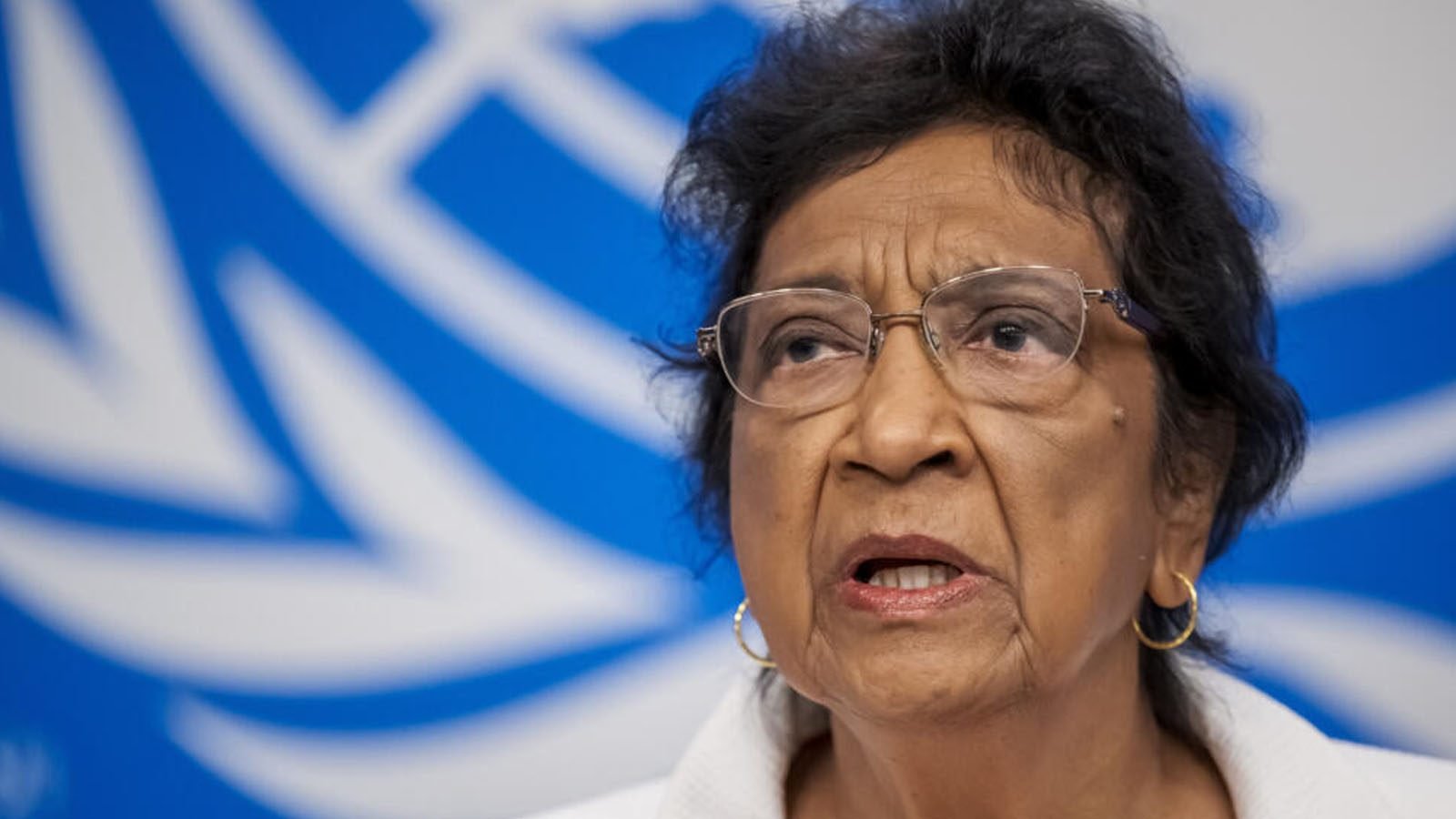
JERUSALEM: Nobel Peace Prize laureate Navi Pillay has defended the legal reasoning behind allegations of genocide against Israel over its military campaign in Gaza, arguing that the crime does not require the complete destruction of a population.

In an interview with Israeli newspaper Haaretz, Pillay was questioned about how genocidal intent could be established while Israel had also undertaken measures presented as efforts to protect Palestinian civilians, including facilitating humanitarian assistance, issuing evacuation instructions and supporting vaccination campaigns in Gaza.

Responding to the question, Pillay argued that the fact that an entire population had not been killed did not rule out genocide.

“It’s not a defence to genocide to say, ‘Yeah, but I didn’t kill all of them,’” she said.

Her response has drawn attention to the central legal dispute surrounding the genocide allegations: whether Israel’s military conduct and policies demonstrate an intention to destroy Palestinians, in whole or in part, as a protected national group.

How is genocidal intent established?

Under the 1948 Genocide Convention, genocide requires proof of specific intent to destroy, in whole or in part, a national, ethnic, racial or religious group. Such intent can be assessed through evidence including patterns of conduct, official policies and statements by political or military leaders.

Pillay, who chaired the United Nations Independent International Commission of Inquiry on the Occupied Palestinian Territory, including East Jerusalem, and Israel, has maintained that the commission’s conclusions were based on an examination of Israeli officials’ statements alongside actions carried out during the Gaza war.

In its September 2025 report, the commission concluded that Israel had committed genocide in Gaza, identifying four of the five acts listed under the Genocide Convention. It cited killings, serious bodily or mental harm, conditions of life calculated to bring about physical destruction, and measures intended to prevent births within the Palestinian population.

The commission also identified statements by senior Israeli leaders as evidence relevant to establishing intent and recommended that certain officials be investigated for genocide.

Israel rejects genocide allegations

Israel has repeatedly rejected the genocide accusations, describing the UN commission’s findings as false and distorted. Its position is that the military campaign was directed against Hamas following the October 7, 2023 attacks and that measures such as evacuation warnings and humanitarian coordination were intended to reduce civilian casualties.

The debate over those measures remains central to the competing interpretations of Israel’s conduct. Human rights organisations have questioned whether evacuation orders and humanitarian arrangements provided effective protection to civilians, while Israeli authorities have cited them as evidence of efforts to mitigate civilian harm.

Pillay’s response to Haaretz has therefore renewed debate over the distinction between the scale of civilian casualties and the specific intent required to establish genocide under international law.

The UN commission’s findings are not a criminal court judgment. Any final determination of individual or state responsibility would depend on the relevant judicial proceedings and assessment of evidence.


Related Posts

WSJ Article Questions Double Standards in Western Calls for Palestinian Statehood and Minority Rights
International

Latest News

WSJ Article Questions Double Standards in Western Calls for Palestinian Statehood and Minority Rights

by Staff Editor
November 25, 2026
0

Washington: A commentary published by The Wall Street Journal by legal scholar Eugene Kontorovich has questioned what it describes as...

Read moreDetails
One in Three Women Affected by Violence: EU Sounds Alarm Over Global Crisis

One in Three Women Affected by Violence: EU Sounds Alarm Over Global Crisis

November 25, 2026
Jordan’s Crown Prince Arrives in Ireland to Explore New Business and Investment Opportunities

Jordan’s Crown Prince Arrives in Ireland to Explore New Business and Investment Opportunities

November 24, 2026
UK Opens Secret Government Archives as Five Historians Begin Major Troubles Investigation

UK Opens Secret Government Archives as Five Historians Begin Major Troubles Investigation

November 24, 2026
NATO Military Chiefs Strengthen Transatlantic Defence Focus During Senior Command Visit to Virginia

NATO Military Chiefs Strengthen Transatlantic Defence Focus During Senior Command Visit to Virginia

November 24, 2026
Next Post
40 European Nations Unite Behind New Security Declaration Amid Russian Threats

40 European Nations Unite Behind New Security Declaration Amid Russian Threats

Leave a Reply Cancel reply

Your email address will not be published. Required fields are marked *

Recommended

Fake Purchase Orders Could Be Stealing Business Passwords as Formbook Malware Targets European Firms

Fake Purchase Orders Could Be Stealing Business Passwords as Formbook Malware Targets European Firms

7 days ago
Sinn Féin accuses Government of using unused school bus seats to justify fare hikes

Sinn Féin accuses Government of using unused school bus seats to justify fare hikes

3 days ago

Popular News

  • Caroline Fennell Named Chair of Ireland’s Legal Aid Board in Major Government Appointment

    Caroline Fennell Named Chair of Ireland’s Legal Aid Board in Major Government Appointment

    0 shares
    Share 0 Tweet 0
  • HSE Chief’s Sacking Sparks Political Storm as Sinn Féin Challenges Health Minister

    0 shares
    Share 0 Tweet 0
  • Five All-Irelands, 27 Years in Munster GAA: Hurling Legend Donie Nealon Dies

    0 shares
    Share 0 Tweet 0
  • Win a €42,000 Car for Just €20 as Carlow GAA Launches Major Fundraiser

    0 shares
    Share 0 Tweet 0
  • 700 Prisoners Above Capacity: Ireland Turns to Electronic Monitoring to Ease Pressure

    0 shares
    Share 0 Tweet 0

Connect with us

Facebook Twitter Instagram
The News Peek

Top Category

  • Breaking News
  • Politics
  • Entertainment
  • Finance / Business
  • International

Quick Links

  • About
  • Advertise
  • Careers
  • Contact

© 2026 The News Peek. All rights reserved.  |  Website developed by EireTech360.

No Result
View All Result
  • Home
  • International
  • Politics
  • Finance
  • Entertainment
  • Gen-Z
  • Sports
  • Technology
  • Lifestyle
  • Climate
  • Op-Ed
  • Letter to the Editor

© 2026 The News Peek. All rights reserved.  |  Website developed by EireTech360.

This website uses cookies. By continuing to use this website you are giving consent to cookies being used. Visit our Privacy and Cookie Policy.
IRELAND WEATHER⛅Weather forecast
Full forecast →