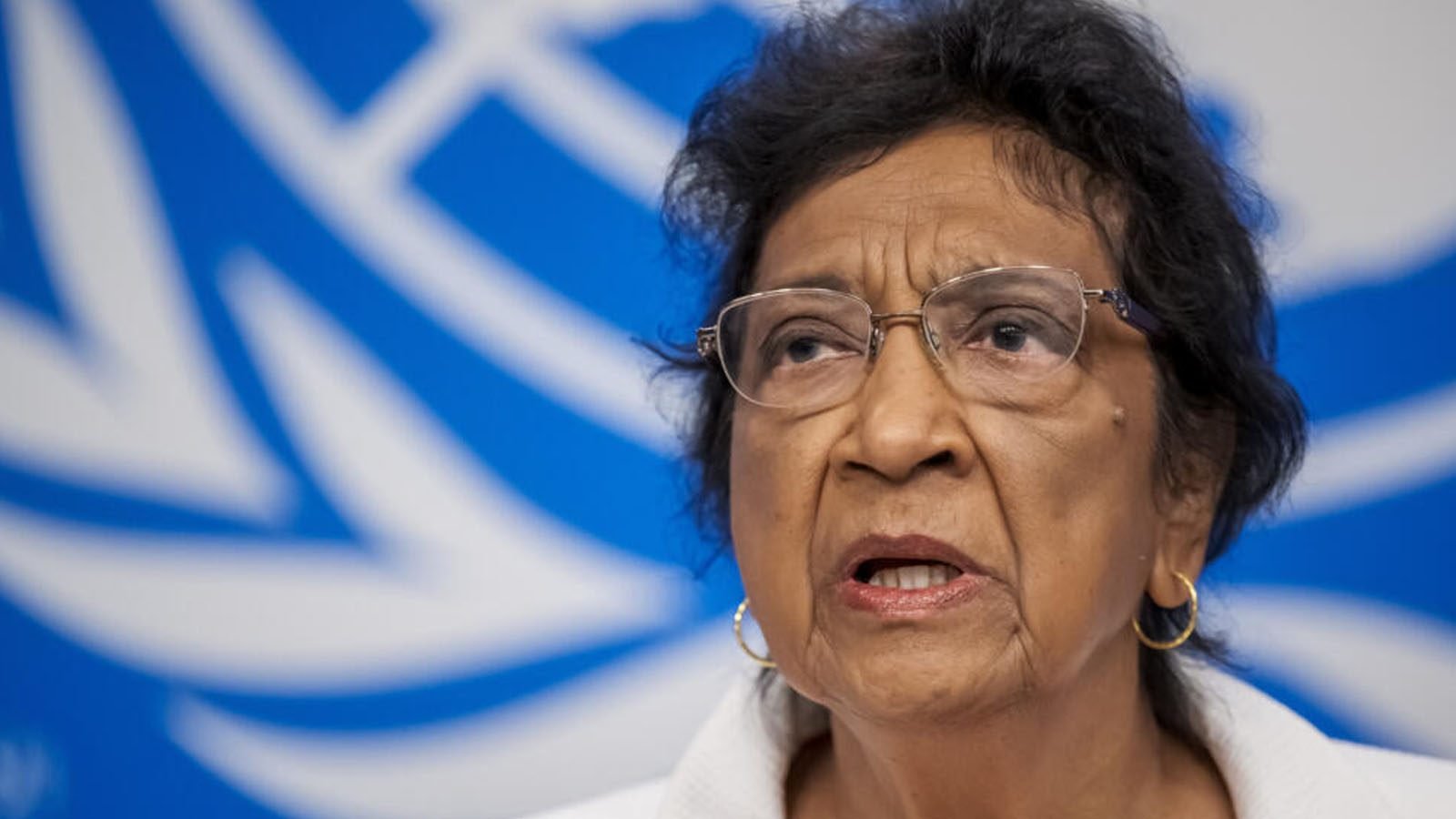
JERUSALEM: Nobel Peace Prize laureate Navi Pillay has defended the legal reasoning behind allegations of genocide against Israel over its military campaign in Gaza, arguing that the crime does not require the complete destruction of a population.
In an interview with Israeli newspaper Haaretz, Pillay was questioned about how genocidal intent could be established while Israel had also undertaken measures presented as efforts to protect Palestinian civilians, including facilitating humanitarian assistance, issuing evacuation instructions and supporting vaccination campaigns in Gaza.
Responding to the question, Pillay argued that the fact that an entire population had not been killed did not rule out genocide.
“It’s not a defence to genocide to say, ‘Yeah, but I didn’t kill all of them,’” she said.
Her response has drawn attention to the central legal dispute surrounding the genocide allegations: whether Israel’s military conduct and policies demonstrate an intention to destroy Palestinians, in whole or in part, as a protected national group.
How is genocidal intent established?
Under the 1948 Genocide Convention, genocide requires proof of specific intent to destroy, in whole or in part, a national, ethnic, racial or religious group. Such intent can be assessed through evidence including patterns of conduct, official policies and statements by political or military leaders.
Pillay, who chaired the United Nations Independent International Commission of Inquiry on the Occupied Palestinian Territory, including East Jerusalem, and Israel, has maintained that the commission’s conclusions were based on an examination of Israeli officials’ statements alongside actions carried out during the Gaza war.
In its September 2025 report, the commission concluded that Israel had committed genocide in Gaza, identifying four of the five acts listed under the Genocide Convention. It cited killings, serious bodily or mental harm, conditions of life calculated to bring about physical destruction, and measures intended to prevent births within the Palestinian population.
The commission also identified statements by senior Israeli leaders as evidence relevant to establishing intent and recommended that certain officials be investigated for genocide.
Israel rejects genocide allegations
Israel has repeatedly rejected the genocide accusations, describing the UN commission’s findings as false and distorted. Its position is that the military campaign was directed against Hamas following the October 7, 2023 attacks and that measures such as evacuation warnings and humanitarian coordination were intended to reduce civilian casualties.
The debate over those measures remains central to the competing interpretations of Israel’s conduct. Human rights organisations have questioned whether evacuation orders and humanitarian arrangements provided effective protection to civilians, while Israeli authorities have cited them as evidence of efforts to mitigate civilian harm.
Pillay’s response to Haaretz has therefore renewed debate over the distinction between the scale of civilian casualties and the specific intent required to establish genocide under international law.
The UN commission’s findings are not a criminal court judgment. Any final determination of individual or state responsibility would depend on the relevant judicial proceedings and assessment of evidence.