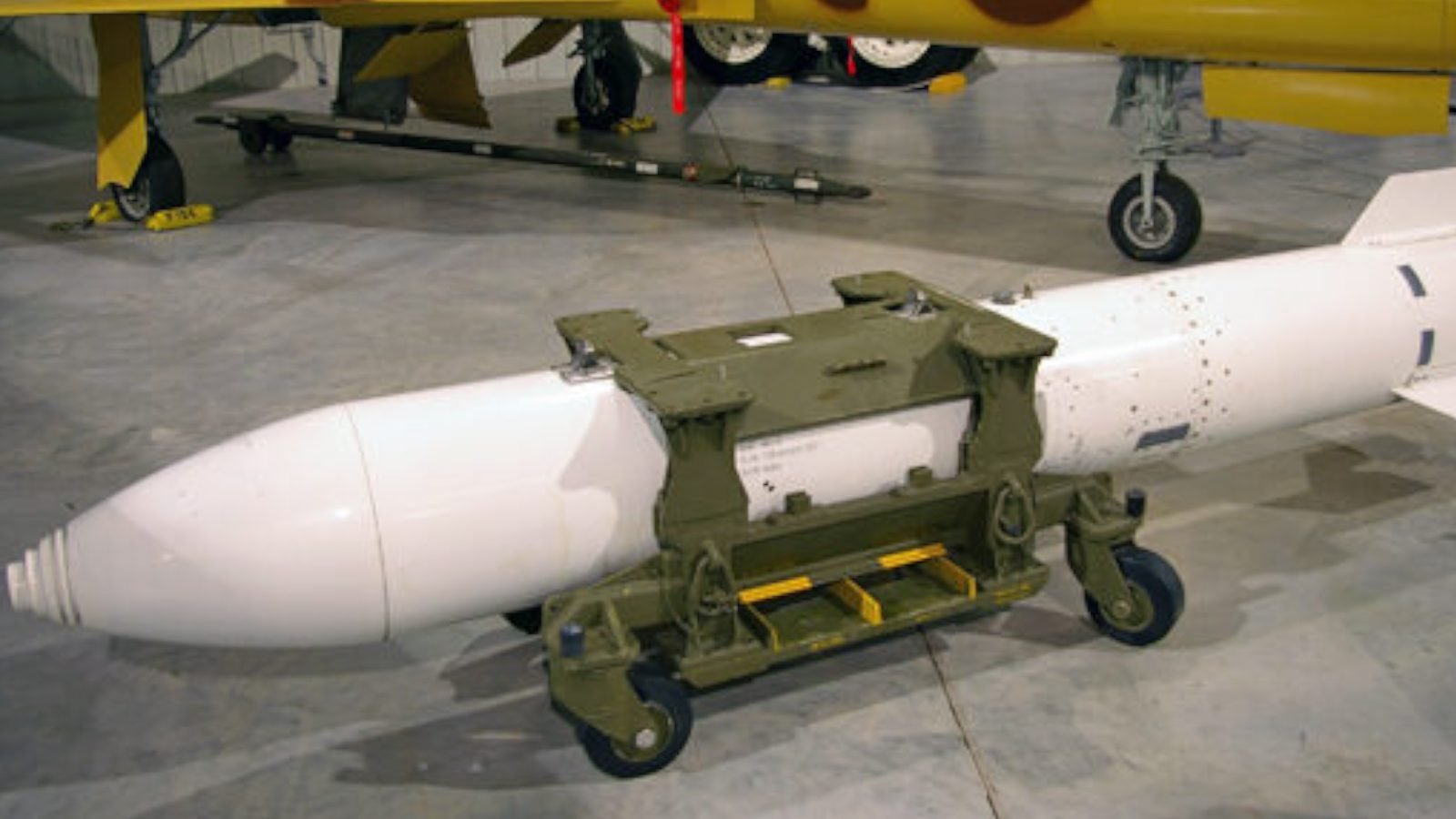
WASHINGTON: A previously undisclosed US nuclear weapons programme designated B94 has emerged in a Senate spending document, raising questions about Washington’s plans to develop a new air-delivered nuclear bomb capable of targeting heavily fortified underground facilities.
The proposed weapon was identified in a draft fiscal 2027 spending plan released by the US Senate Appropriations Committee. The document recommends approximately $77.1 million for the B94 under the National Nuclear Security Administration’s (NNSA) stockpile modernisation programme, despite allocating no funding under the designation for the 2026 fiscal year.
The Senate document does not provide technical specifications, explain the weapon’s intended operational role or identify its development timeline.
However, defence analysts believe the designation could be linked to the Nuclear Deterrent System-Air-delivered (NDS-A), a previously identified US programme intended to provide additional nuclear options against hard and deeply buried targets.
According to defence publication Breaking Defense, arms control expert Jeffrey Lewis suggested that the B94 could represent a new designation for the NDS-A programme and potentially replace the ageing B83-1 thermonuclear bomb.
The possibility has attracted attention because the United States is seeking to maintain the ability to target military installations, command centres and other strategic facilities buried deep underground.
New capability against underground targets
James Acton, co-director of the Nuclear Policy Programme at the Carnegie Endowment for International Peace, described the B94 as a significant development in US nuclear capabilities.
Speaking to Breaking Defense, Acton said the weapon appeared to be an air-delivered gravity bomb designed to destroy deeply buried targets that existing American weapons might struggle to reach.
He explained that several underground facilities currently remain beyond the reliable destructive capability of US weapons.
The proposed system could therefore expand the number of targets that Washington believes it could hold at risk.
However, the weapon’s actual effectiveness remains uncertain because its explosive yield, penetration technology and technical specifications have not been publicly disclosed.
Acton also referred to a 2005 National Academies assessment, which found that conventional penetrators could not reliably destroy targets buried deeper than approximately 700 metres.
He acknowledged that penetration technology may have improved since then but cautioned that the effectiveness of a new weapon would depend on its design and explosive yield.
A higher nuclear yield could increase the destructive effects against underground installations, although the precise capabilities of the proposed B94 remain unknown.
B83-1 replacement raises questions
The emergence of the B94 designation has also renewed attention to the planned retirement of the B83-1, one of the most powerful nuclear weapons in the US arsenal.
The B83-1 is an air-delivered thermonuclear gravity bomb with a maximum explosive yield of approximately 1.2 megatons.
The Biden administration had planned to retire the weapon as part of broader changes to the US nuclear arsenal, with the B61-13 developed to provide additional options against certain hardened and large-area military targets.
However, analysts have questioned whether the B61-13 alone can replace all the capabilities associated with the B83-1 and other specialised nuclear bunker-busting weapons.
The B61-11, another US nuclear gravity bomb, already has an earth-penetrating capability, although it is unguided.
The proposed B94 could potentially address gaps in the existing arsenal by combining a nuclear payload with improved penetration capabilities.
Nevertheless, there has been no official confirmation that the programme is intended to replace the B83-1, the B61-11 or both.
Experts warn of expanding nuclear arms competition
Acton also raised concerns about the broader strategic implications of developing another nuclear weapon without a clearly explained policy framework.
He argued that continually identifying new missions for nuclear weapons could create an open-ended process unless programmes were guided by a broader national security strategy.
Describing the developments as part of both qualitative and quantitative nuclear arms racing, he called for greater transparency and a clearer explanation of why the new capability was considered necessary.
The proposed B94 programme would form part of a much wider US nuclear modernisation effort.
Other projects include the W87-1 warhead for the forthcoming LGM-35A Sentinel intercontinental ballistic missile, the B-21 Raider strategic bomber, the Columbia-class ballistic missile submarine programme and modernisation of existing nuclear delivery systems.
These initiatives are intended to update the US nuclear triad, which consists of land-based intercontinental ballistic missiles, submarine-launched ballistic missiles and strategic bombers.
The B94 designation has therefore emerged at a time when Washington is reviewing how its nuclear arsenal should respond to increasingly sophisticated underground military infrastructure and changing strategic competition.
Funding proposal still requires approval
Although the Senate Appropriations Committee’s draft includes approximately $77.1 million for the B94 in fiscal 2027, the funding is not yet equivalent to a completed congressional appropriation.
The spending legislation must proceed through the wider legislative process, including consideration by the Senate and reconciliation with the House of Representatives.
The NNSA and Senate committee had not publicly provided a detailed explanation of the B94 designation when Breaking Defense published its report on November 17.
For now, the weapon’s exact design, explosive yield, intended targets and development schedule remain undisclosed.
The appearance of the B94 in the Senate document nevertheless signals a potentially significant addition to America’s nuclear modernisation programme, while raising fresh questions about the future direction of global nuclear competition.