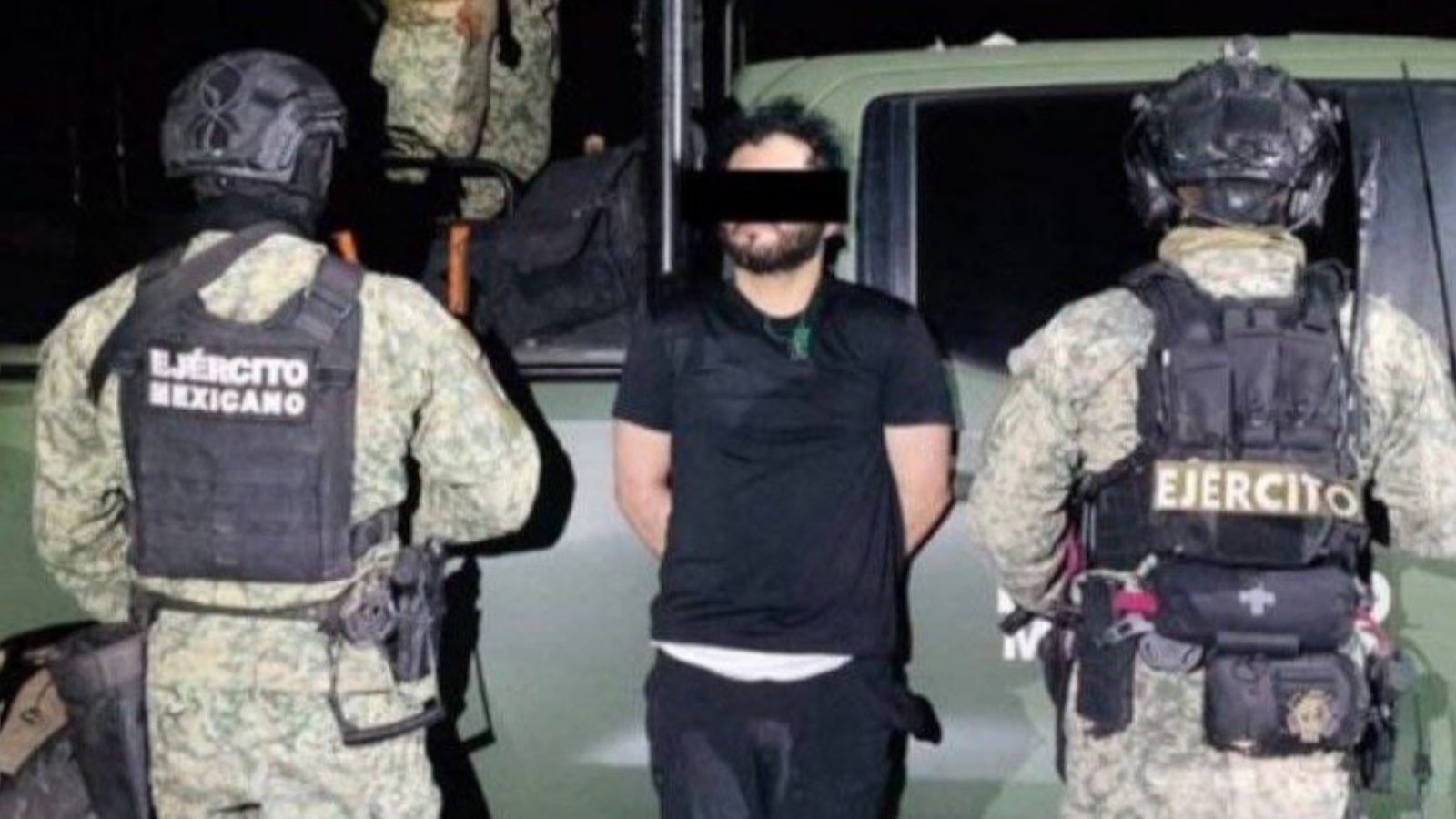
A weeks-long intelligence operation involving US surveillance drones, intercepted communications and an elite Mexican military unit culminated in the capture of one of the FBI’s most-wanted fugitives, Fausto Isidro Meza Flores, better known as ‘El Chapo Isidro’.
The raid, carried out in the city of Guasave in Mexico’s north-western Sinaloa state on Friday night, November 20, triggered fierce clashes that left four Mexican soldiers and seven suspected cartel gunmen dead.
According to a detailed account published by The New York Times, US and Mexican authorities had spent weeks sharing intelligence to locate Meza Flores, who was wanted by Washington for allegedly leading a major drug-trafficking organisation.
US drones conducted surveillance flights over the area when weather conditions permitted, with the missions authorised by the Mexican government. Mexican military analysts combined the footage with intercepted phone and radio communications to establish the fugitive’s movements and daily routine.
Investigators also reportedly monitored messages exchanged between Meza Flores and members of his family, including his mother, wife and sister. The communications helped identify meetings and gatherings he was expected to attend.
At the suspected hideout, analysts reportedly identified him through his voice, physical build and distinctive walking style.
The final assault involved more than two dozen undercover soldiers from the Mexican Army’s elite Joint Special Force, who entered Guasave while additional troops secured the surrounding area and blocked possible escape routes.
The operation was met with heavy gunfire. Two Mexican Army Black Hawk helicopters provided aerial support, firing on suspected cartel gunmen as the confrontation intensified. Cartel fighters reportedly returned fire using heavy weapons, including .50-calibre machine guns mounted on armoured vehicles.
Mexican authorities also organised diversionary operations, including activity towards Los Mochis, a city north-west of Guasave. After Meza Flores was seized, two military helicopters flew towards Los Mochis as decoys, while another helicopter remained overhead to engage cartel gunmen.
Meanwhile, ground troops moved the captured drug lord out of the area in an armoured vehicle.
Meza Flores was subsequently flown to Mexico City, arriving at approximately 5.20am on Saturday, November 21, aboard a military transport aircraft, according to Mexico’s Defence Ministry.
The operation resulted in eight arrests, including Meza Flores, his cousin, described by authorities as his second-in-command, and his brother-in-law, identified as a financial operative. Seven suspected cartel members were killed, while four Mexican soldiers also lost their lives.
Authorities said there had been no reported civilian fatalities, although the fighting caused widespread disruption. Armed men reportedly set vehicles alight and established roadblocks, while residents sought shelter amid the gunfire.
Who is El Chapo Isidro?
Meza Flores is associated with the Beltrán Leyva criminal organisation and leads the Meza-Flores criminal network, which US authorities accuse of trafficking large quantities of heroin, methamphetamine, cocaine and marijuana into the United States.
The FBI had placed him on its Ten Most Wanted Fugitives list and offered a reward of up to $5 million for information leading to his arrest.
His capture marks a significant development in US-Mexican security cooperation, particularly as President Donald Trump has increased pressure on Mexico to intensify its campaign against powerful drug cartels.
US officials praised the operation, with the US ambassador to Mexico, Ronald Johnson, saying intelligence-sharing between the two countries had helped make the capture possible.
The arrest also comes amid continuing violence linked to cartel rivalries in Sinaloa, where security forces have faced repeated confrontations with heavily armed criminal groups.
Mexican authorities have described the operation as a major step towards weakening the organisation, although the wider security consequences of removing a senior cartel figure remain uncertain.