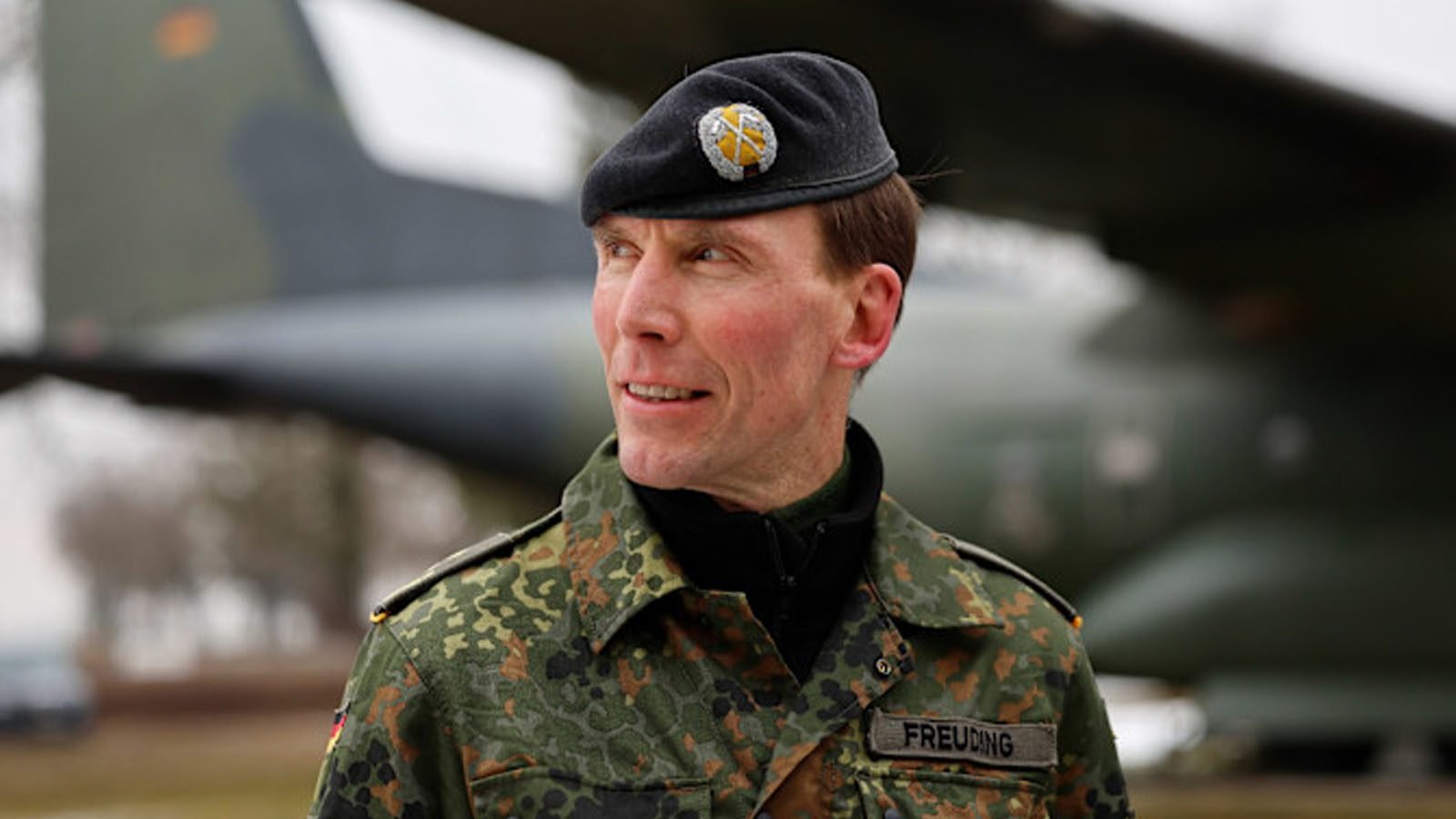
Germany has appointed Lieutenant General Christian Freuding, the military officer who played a central role in coordinating weapons supplies to Ukraine, as the next head of its armed forces, as Berlin accelerates its military expansion amid growing concerns over a potential Russian threat to NATO.
Freuding, 55, is due to take charge of the Bundeswehr in February, succeeding the current military leadership at a time when Germany is planning an unprecedented defence spending programme worth approximately €780 billion by the end of 2030.
Following Russia’s full-scale invasion of Ukraine in 2022, Freuding established the military unit responsible for sourcing, coordinating and financing German weapons deliveries to Kyiv. He frequently travelled to Ukraine to oversee military assistance and assess the country’s battlefield requirements.
German Defence Minister Boris Pistorius described Freuding as the “strong, intelligent and persuasive leader” needed to guide the Bundeswehr through its military transformation.
A major priority for Freuding is modernising Germany’s armed forces by incorporating lessons from the war in Ukraine, particularly the growing importance of unmanned aerial vehicles and counter-drone technology.
He has argued that every German soldier should develop the ability to operate drones or defend against them. Last month, he also helped drive plans for an independent Bundeswehr drone regiment, scheduled to be established in 2027.
Although Freuding has cautioned that Ukraine cannot serve as a direct blueprint for NATO forces, he has repeatedly urged Western militaries to learn from Kyiv’s battlefield experience and adapt to the changing nature of modern warfare.
A reconnaissance officer by training, Freuding previously served in the Balkans and Afghanistan and worked as an adjutant to former German Defence Minister Ursula von der Leyen. He later assumed responsibility for Germany’s land forces.
Christian Mölling of the Edina think-tank described him as an “A-grade soldier”, highlighting his ability to engage with political leaders and communicate military priorities to the public.
One of Freuding’s biggest challenges will be expanding the Bundeswehr’s personnel strength from approximately 190,000 active soldiers to 260,000 by 2035 without introducing compulsory military service.
Germany introduced a voluntary military service programme this year, but attracting enough recruits remains a significant challenge. The country also aims to increase its reserve forces from around 60,000 to 200,000 personnel.
The appointment comes as German intelligence assessments warn that Russia could possess the military capability to launch a major attack against NATO by 2029.
Berlin is therefore racing to improve its military readiness, modernise equipment and strengthen its capacity to respond to potential threats before the end of the decade.
Germany has also committed to establishing a permanent 5,000-strong military brigade in Lithuania, with the formation expected to become fully operational by the end of next year.
Meanwhile, German leaders have increasingly accused Moscow of conducting an unprecedented campaign of hybrid attacks, including cyber operations, sabotage and other activities targeting the country’s security infrastructure.
Chancellor Friedrich Merz has warned that Germany faces an increasingly uncertain security environment, saying: “We are not at war, but we are also no longer living in peace.”
Freuding’s appointment signals Berlin’s determination to accelerate military reform, strengthen its NATO commitments and prepare its armed forces for a more challenging European security environment.