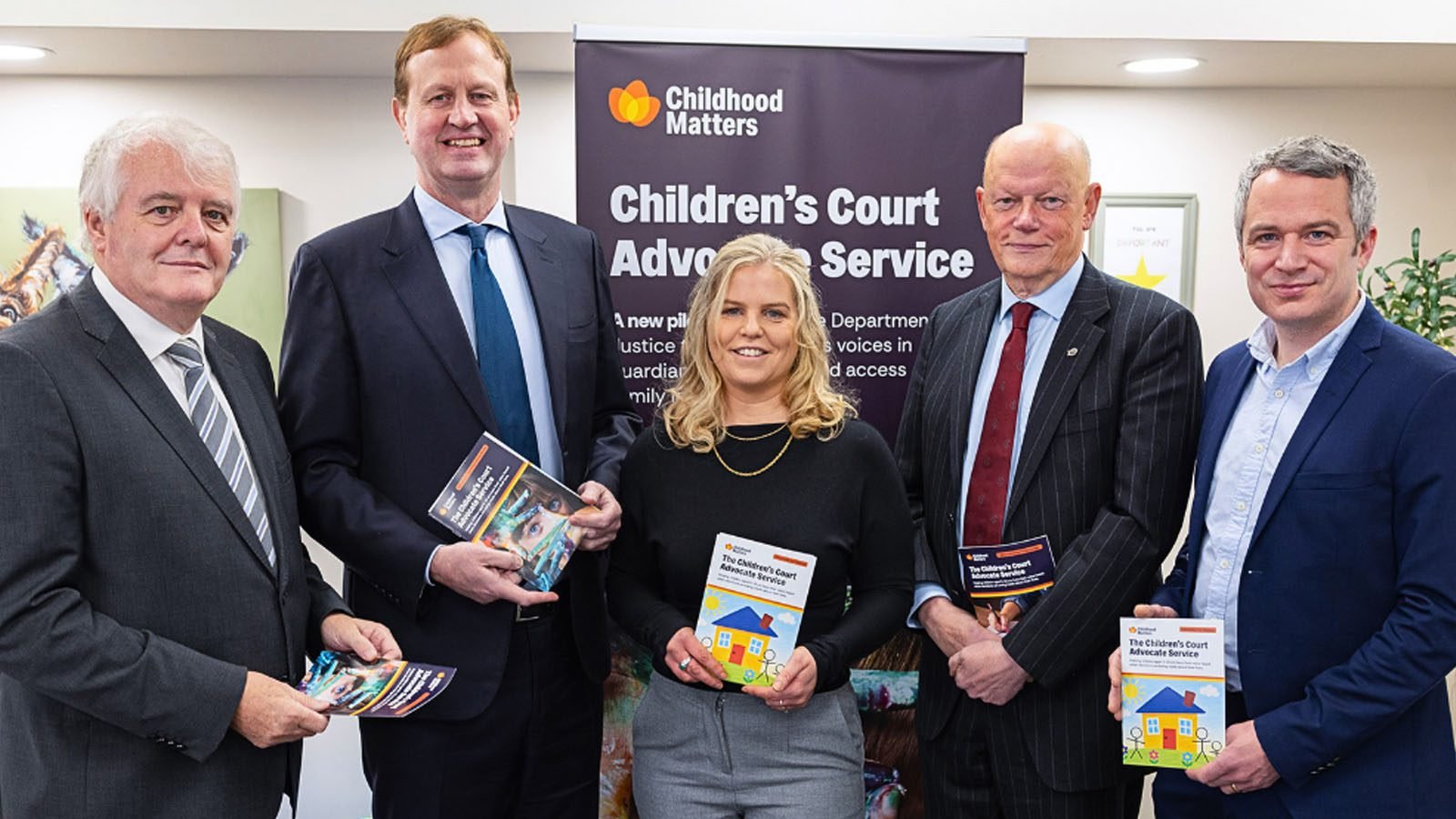
DUBLIN: Government has launched its first Children’s Court Advocate Pilot Service, a landmark initiative aimed at ensuring children have a meaningful opportunity to express their views in private family law proceedings.
Minister for Justice, Home Affairs and Migration Jim O’Callaghan formally launched the initiative in Clonmel, with the pilot initially operating in Clonmel and Waterford.
The service is designed to support children involved in guardianship, custody and access proceedings, helping them communicate their perspectives on decisions that directly affect their lives.
Announcing the initiative, O’Callaghan said the pilot marked an important milestone towards developing a more child-centred family justice system, where children’s voices are heard and their interests properly considered.
“Children’s voices can be drowned out in contentious disputes and their interests overlooked,” the minister said, adding that providing additional support would help ensure children’s participation rights were realised in practice.
The initiative follows recommendations contained in the Department of Justice’s Review of Expert Reports in the Family Law Process, published in June 2024. The review identified measures to improve how children’s views are heard and represented in private family law cases.
To advance these recommendations, the department established the Voice of the Child Working Group, bringing together experts and stakeholders from across the family justice sector to develop practical proposals for improving children’s participation.
The pilot will be based on the Lundy Model of Participation, which identifies four essential elements of meaningful participation: space, voice, audience and influence.
Under this approach, children will be provided with a safe environment to develop and express their views, while ensuring those views are heard by decision-makers and appropriately considered in court proceedings.
Following an open procurement process, Childhood Matters was awarded the contract to deliver the advocacy service throughout the pilot.
Dr Calem De Burca, chief executive of Childhood Matters, said children should understand what is happening in family court proceedings and have confidence that their views will be heard.
He said the organisation was committed to helping children express their concerns and priorities in their own words, ensuring their perspectives were faithfully represented before the courts.
The initiative will also undergo an independent evaluation by a team from the University of Limerick. The assessment will examine the effectiveness of the model, identify lessons from its implementation and inform future policy decisions on children’s participation in family justice.
An Implementation Group comprising representatives of the judiciary, the Courts Service, the Department of Justice, Childhood Matters and the University of Limerick evaluation team will oversee the pilot.
Emer Darcy, Assistant Secretary for Strategy and Reform at the Courts Service, said the initiative formed part of the organisation’s 10-year Modernisation Programme, which aims to improve services for families and children.
She said the Courts Service looked forward to working with the judiciary, advocates, Childhood Matters and the Department of Justice to implement the initiative and learn from its outcomes.
O’Callaghan also acknowledged the contributions of the judiciary, the Courts Service, Childhood Matters, the University of Limerick evaluation team, the Voice of the Child Working Group and departmental officials.
He particularly commended the children and young people whose experiences and insights helped shape the pilot, describing their contribution as invaluable.
The initiative represents a further step in Ireland’s efforts to make family court proceedings more inclusive and ensure that children affected by legal decisions have an opportunity to be heard.