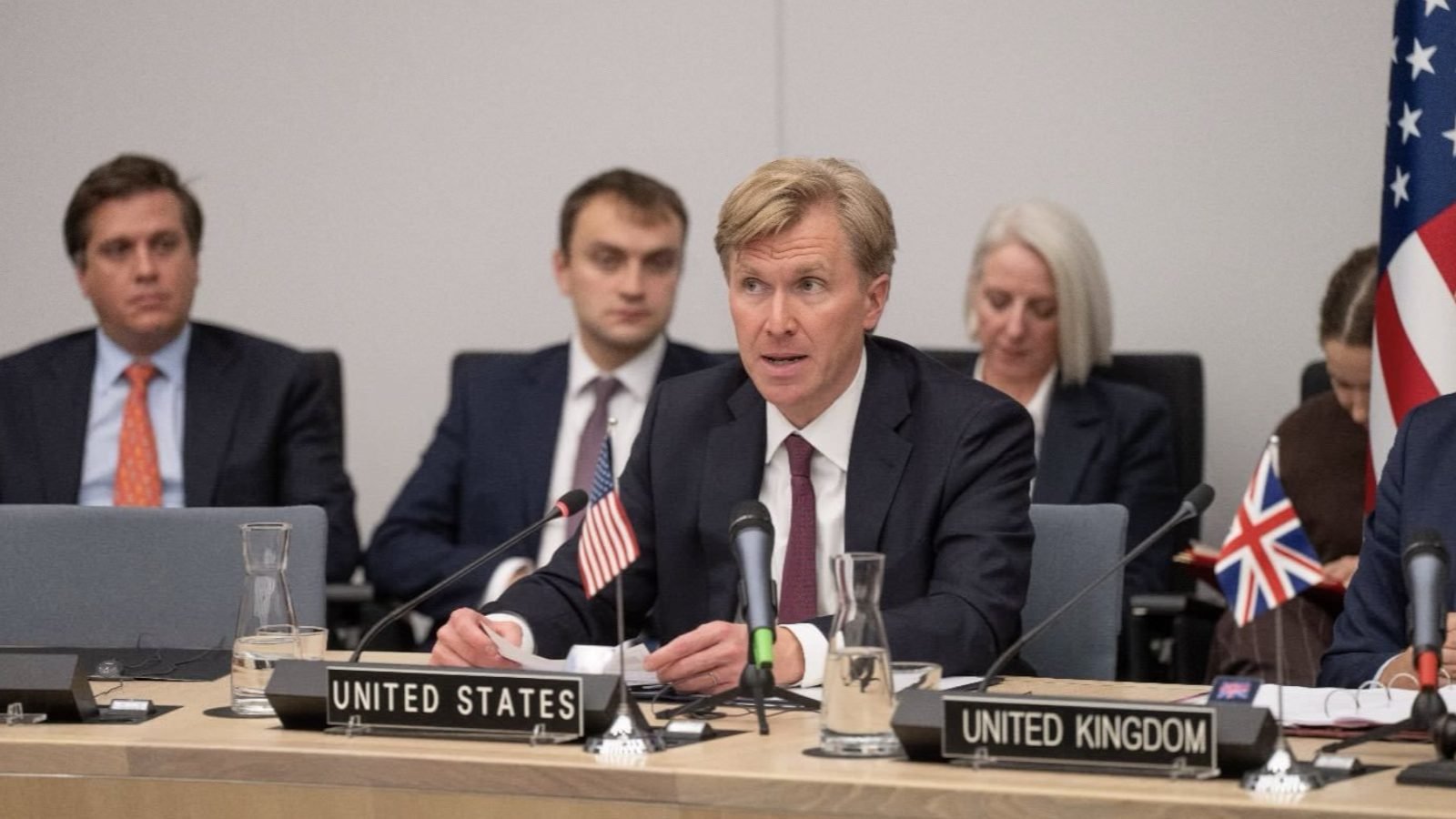
The United States has stepped up its push for a reshaped NATO in which European allies assume primary responsibility for the continent’s conventional defence, praising Germany, Poland, Romania and Finland for expanding their military capabilities and taking a greater role in collective security.
Under Secretary of War Elbridge Colby said the transition towards what he described as “NATO 3.0” was gaining momentum, with Washington holding intensive discussions with European partners to establish a stronger, more balanced and self-reliant alliance.
In a series of statements, Colby stressed that conversations with allies were intended to be frank and constructive, allowing Washington to understand different national perspectives while advancing a shared approach to European security.
He singled out Germany for what he described as a historic transformation in its defence policy, saying no NATO ally had progressed further or faster in recent years.
Colby praised German Defence Minister Boris Pistorius for helping restore Germany to a central position in Europe’s collective defence, adding that Washington was working to enable Berlin to become one of the leading military powers as Europe takes greater responsibility for conventional security.
Poland was also highlighted as a key pillar of the emerging NATO structure. Colby praised Defence Minister Władysław Kosiniak-Kamysz and Secretary of State Paweł Zalewski for their leadership, describing Poland as a model ally because of its growing defence expenditure, expanding military industry and efforts to strengthen national self-reliance.
He noted Poland’s ambition to move defence spending towards five per cent of gross domestic product, presenting the country’s military expansion as an example for other European allies.
Romania was described as another critical NATO partner. Referring to his recent visit to Bucharest, Colby said he had held discussions with President Nicușor Dan, Prime Minister Luca Niculescu and Defence Minister Radu Miruță, according to the statement’s references to Romanian leadership.
He welcomed Romania’s stated path towards spending five per cent of GDP on defence by 2031, saying Washington valued its contribution to NATO and its bilateral relationship with the United States.
Colby also praised Finland’s defence model, highlighting its societal resilience, military preparedness and ability to deter potential aggression. Following a recent discussion with Finnish Defence Minister Antti Häkkänen, he said Helsinki had continued accelerating its defence efforts since joining NATO.
He described Finland as an example of the self-reliant and capable European ally envisaged under the NATO 3.0 approach.
The US official also emphasised the importance of NATO Secretary-General Mark Rutte, describing his leadership as essential to strengthening deterrence and building a more balanced alliance. Colby said the Pentagon and the US ambassador to NATO were working closely with alliance staff to advance the transition.
Ukraine strategy and differences among allies
Beyond the wider restructuring of NATO, Colby addressed differences among allies over military strategy, including the effectiveness of deep strikes in the war in Ukraine.
Referring to his recent meeting with Pistorius, he said disagreements over strategy were normal among allies and should be discussed openly and respectfully.
On Ukraine, Colby outlined Washington’s preference for prioritising support that enables Kyiv to hold its front lines, with European countries taking the lead.
He argued that concentrating assistance on frontline defence and related medium-range strikes would offer the most effective way to strengthen Ukraine’s ability to deny Russian advances and create conditions for a lasting peace.
Colby said US and European officials had already held several discussions on the approach during the previous week and expected further consultations.
Washington pushes for a stronger European defence role
Colby’s remarks underline the US administration’s continued effort to shift more conventional defence responsibilities towards European NATO members while maintaining the alliance’s collective strength.
He argued that European countries were demonstrating both the industrial capacity and political determination needed to take a leading role in defending the continent.
“The transition to a European-led conventional defence is no longer merely a concept — it is taking hold and producing tangible results,” Colby said.
He added that a stronger and more self-reliant Europe would ultimately contribute to a stronger NATO.
The comments signal Washington’s intention to turn the NATO 3.0 concept into a practical defence arrangement built around increased European military spending, expanded weapons production and greater responsibility for regional security.