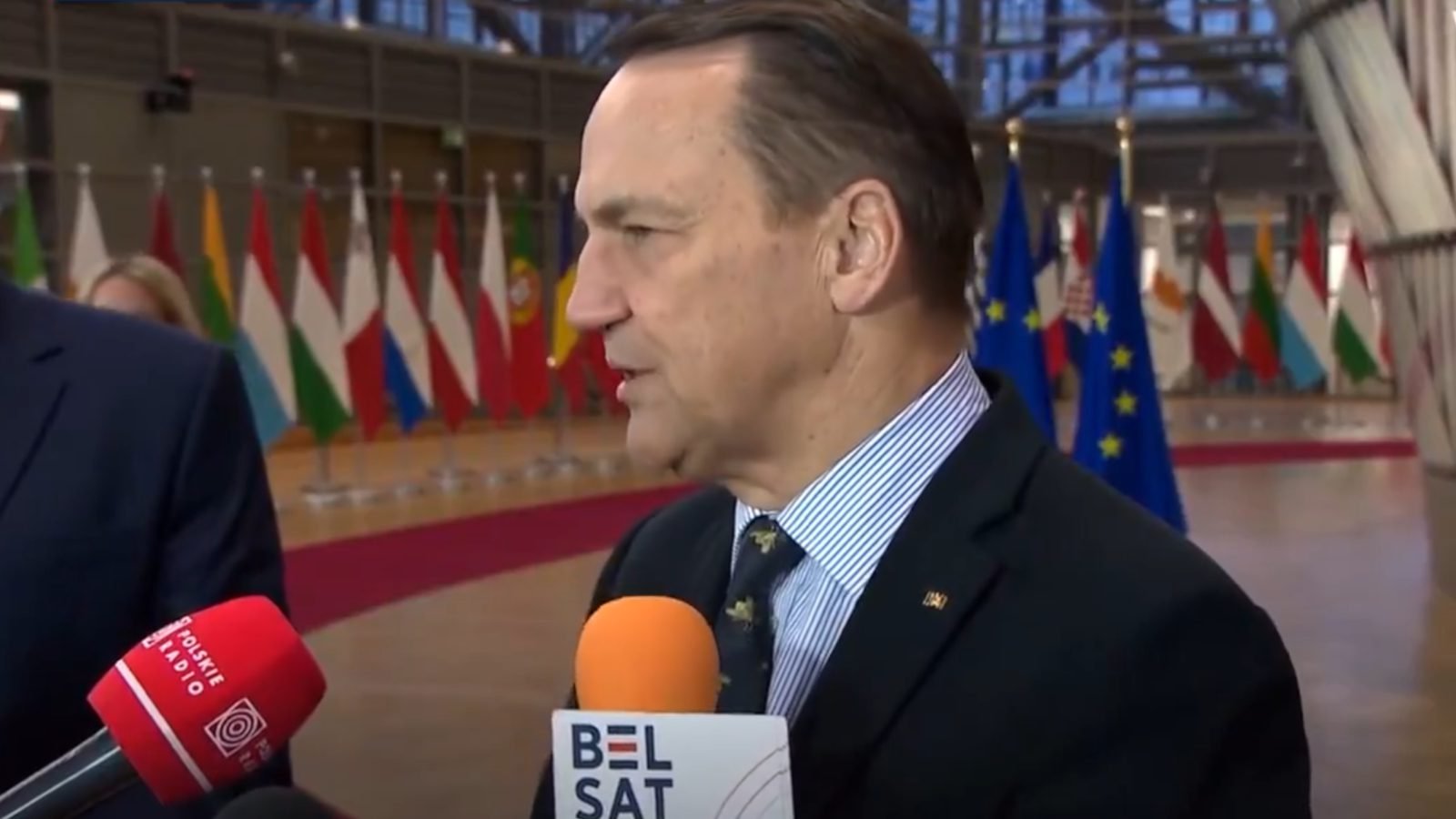
BRUSSELS: Polish Foreign Minister Radosław Sikorski has called for the European Union to replace Russia in a proposed three-way meeting involving China and the United States, arguing that giving Moscow a place at the table would unnecessarily elevate its global standing.
Speaking ahead of the EU Foreign Affairs Council meeting in Brussels on November 16, Sikorski said discussions involving the two major powers should instead take place in a China-US-EU format.
He argued that Russia had long ceased to be a global superpower and that its inclusion in such a meeting would give it a status he believes it no longer holds.
Sikorski’s comments come amid growing debate over Europe’s role in shaping international security arrangements and negotiations aimed at ending Russia’s full-scale invasion of Ukraine.
The Polish foreign minister also challenged the characterisation of US support for Ukraine, claiming that Washington had stopped directly financing assistance nearly two years ago, while European countries continued to shoulder much of the financial burden.
He pointed to the Prioritised Ukraine Requirements List (PURL) programme, through which European countries fund purchases of American weapons and ammunition for Ukraine.
Under the arrangement, billions of dollars’ worth of US military equipment are being supplied to Kyiv using European funding, according to Sikorski.
His remarks highlight the changing structure of Western assistance to Ukraine, with European governments taking on a greater financial role in securing military supplies while continuing to rely on American defence production.
Sikorski also pointed to Europe’s efforts to reduce its dependence on Russian energy, saying imports of Russian oil and gas were declining each year.
Although replacing Russian supplies has presented logistical challenges, he argued that Moscow was now selling less oil and receiving lower prices, placing additional pressure on its ability to finance the war.
The Polish minister stressed that the impact of sanctions and reduced energy trade should not be underestimated, while calling for continued efforts to restrict Russia’s ability to generate revenue from oil exports.
His comments come as European governments continue to debate the continent’s security responsibilities, the future of transatlantic cooperation and the level of support required to help Ukraine defend itself.
The proposed China-US-EU format would also underline Europe’s demand for a direct role in major international discussions affecting its security and the future of the war in Ukraine.