WASHINGTON: US Secretary of State Marco Rubio has launched a sweeping criticism of international law and global institutions, arguing that the United States must retain the freedom to pursue its national interests without being constrained by international bureaucracies or what he described as an imposed global consensus.
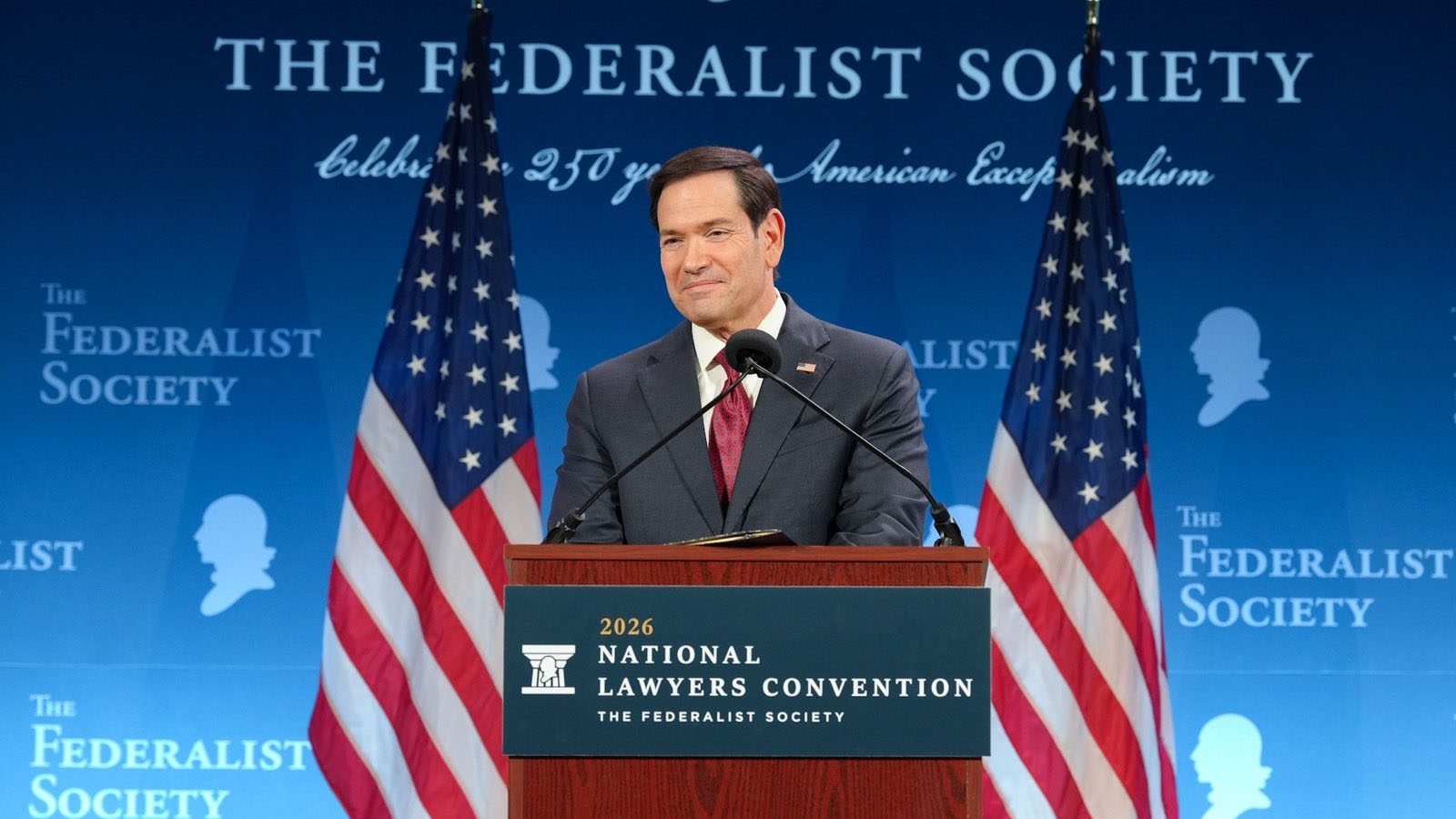
Speaking at the Federalist Society’s National Lawyers Convention in Washington on November 13, Rubio defended President Donald Trump’s America-first approach to foreign policy and challenged the idea that Washington should subordinate its national priorities to international rules and institutions.
Rubio said American leaders were increasingly being told that the country could not impose its will on the international stage and must accept its position as merely one nation among many.
He criticised international lawyers, non-governmental organisations and United Nations officials, accusing them of attempting to restrict the Trump administration’s ability to implement policies on trade, immigration and foreign affairs.
Rubio challenges international law
The secretary of state argued that international legal frameworks were increasingly being used by global institutions and activists to challenge decisions made by elected American leaders.
He maintained that such restrictions threatened national sovereignty and undermined the ability of the US government to act in accordance with the interests of its citizens.
Rubio also criticised what he regarded as excessive reliance on international legal principles, arguing that the United States should not surrender responsibility for its own future to international institutions.
His remarks reflected the Trump administration’s broader opposition to international bodies it considers capable of limiting American sovereignty, including the International Criminal Court.
‘Spirit of Marx’ still alive, Rubio claims
In another striking part of his address, Rubio invoked the legacy of Karl Marx, arguing that although Soviet communism had been defeated, Marxist ideas continued to influence modern political thinking.
He claimed that contemporary international doctrines sought to subordinate national decision-making to global consensus and weaken the distinctions between independent nations.
Rubio framed the issue as a fundamental question about the United States’ right to maintain its distinct national identity and pursue policies that prioritise American interests.
He argued that Americans were entitled to demand a government that placed the country’s security, sovereignty and prosperity above competing international priorities.
Criticism of immigration and historical guilt narratives
Rubio also challenged critics who emphasise the historical injustices associated with the United States and Western civilisation.
He accused some political movements of portraying America as uniquely burdened by historical wrongdoing and of demanding sweeping political concessions as a form of atonement.
According to Rubio, those demands included relaxing border restrictions, abandoning established laws and allowing external ideological movements to reshape American society.
His remarks linked immigration enforcement and national identity to a broader argument about sovereignty and the limits of international authority.
Wider debate over American global leadership
The speech highlighted a longstanding disagreement over the relationship between national sovereignty and international law.
Supporters of Rubio’s position argue that elected governments must retain the authority to protect national interests and should not be subject to decisions by international institutions lacking direct democratic accountability.
Critics of this approach maintain that international legal commitments and multilateral institutions are essential to preventing abuses of power, resolving disputes and maintaining cooperation between countries.
Rubio’s address underscored the Trump administration’s determination to challenge international constraints it considers incompatible with American sovereignty, while raising broader questions about Washington’s future relationship with global institutions.