Northern Ireland First Minister Michelle O’Neill has challenged the British Government over its handling of the region’s budget, insisting she will not approve a financial plan that fails to provide fair wages for healthcare workers, teachers and other public sector employees.
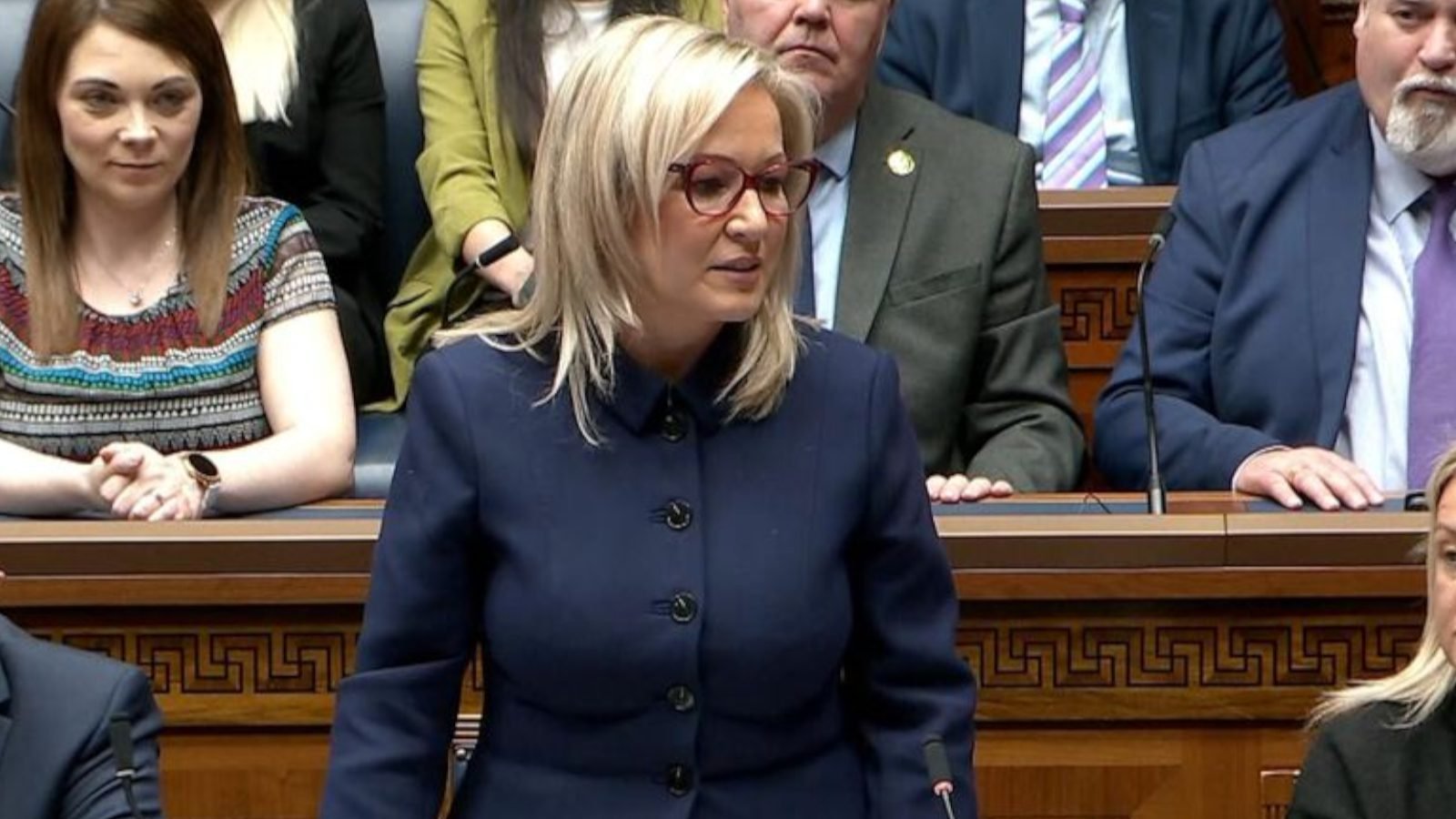
Speaking in the Northern Ireland Assembly at Stormont, the Sinn Féin vice-president said her responsibility was to the people of Northern Ireland rather than Secretary of State Chris Bryant, accusing the British Government of continuing to withhold the funding required to meet public sector pay commitments.
O’Neill said she would not agree to a budget that could not afford fair wages for workers across healthcare, education and other public services.
She also criticised what she described as the continued treatment of Northern Ireland’s public sector employees as second-class workers, arguing that the region needed adequate financial support to maintain essential services.
The First Minister revealed that she had asked Deputy First Minister Emma Little-Pengelly to join her in seeking an urgent meeting with Prime Minister Andy Burnham to challenge Westminster over the funding dispute.
The intervention comes amid an ongoing budget deadlock between the Northern Ireland Executive and the British Government, with ministers warning that the available financial allocation is insufficient to meet the region’s spending requirements.
The Executive has been unable to agree a budget for the 2026-27 financial year, with government departments operating under contingency arrangements that limit spending to 95 per cent of the previous year’s allocations.
The British Government has offered approximately £1.5 billion in additional funding over three years, including £525 million for the current financial year. However, Northern Ireland ministers have argued that the package does not adequately address the region’s financial pressures.
The dispute has also intensified following warnings that the absence of an agreed budget could place further pressure on public services and limit the Executive’s ability to meet pay commitments.
O’Neill has maintained that securing sufficient funding is essential to ensuring fair treatment for workers and protecting healthcare, education and other vital public services.
Her latest appeal highlights the growing political tensions between Stormont and Westminster over the financial arrangements governing Northern Ireland.