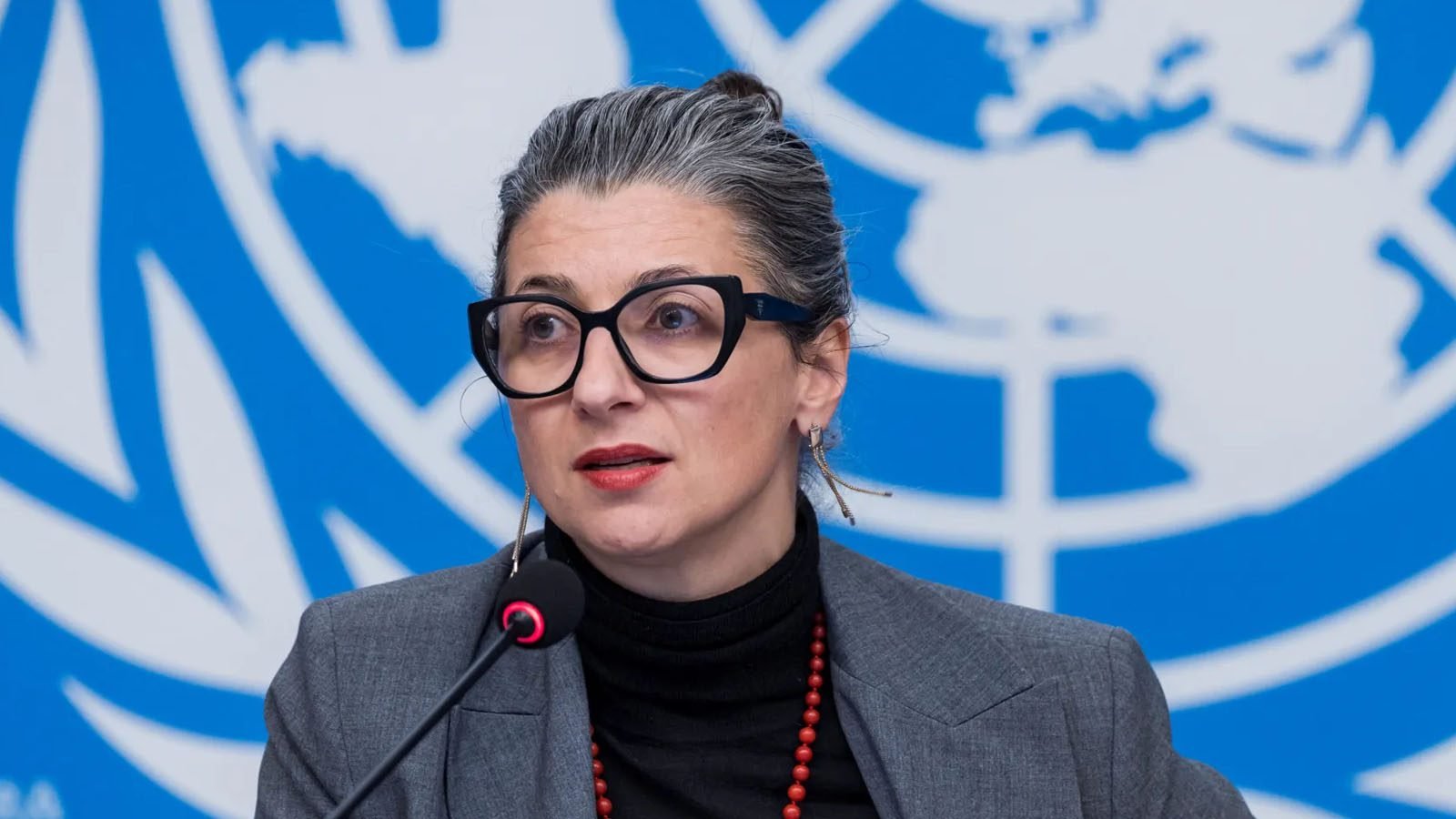
DUBLIN: Francesca Albanese, the United Nations Special Rapporteur on the occupied Palestinian territories, has come under renewed scrutiny following her appearance on RTÉ Radio 1, where she was interviewed by David McCullagh on November 3.
During the interview, Albanese dismissed the significance of a report commissioned by the Jewish Representative Council of Ireland (JRCI), which documented 143 reported antisemitic incidents over a six-month period between July 2025 and January 2026.
The findings, published in March 2026, recorded incidents involving verbal abuse, threats, intimidation, discrimination, vandalism and antisemitic messaging. The report highlighted concerns about the experiences of Ireland’s Jewish community and called for a dedicated national strategy to tackle antisemitism.
Albanese’s response during the broadcast has raised questions about the treatment of antisemitism in public discourse and the scrutiny afforded to international figures appearing on Irish media.
The controversy comes amid longstanding criticism of Albanese’s statements concerning Israel, Jewish identity and the Holocaust.
In September 2026, Albanese apologised after making remarks suggesting that Jewish prisoners in Nazi concentration camps had been referred to as Muslims. She acknowledged misunderstanding the historical term ‘Muselmann’, which described severely emaciated prisoners nearing death in concentration camps. She also conceded that antisemitism was specifically coined to describe hatred of Jews, rather than discrimination against all Semitic peoples.
Her remarks prompted renewed debate over Holocaust historical accuracy and the responsibilities of international human rights officials when discussing antisemitism.
Albanese has also faced criticism over her statements on Israel and the October 7, 2023, Hamas attacks. In February 2026, her participation in an Al Jazeera forum in Doha alongside Hamas political leader Khaled Meshaal and Iran’s Foreign Minister further intensified questions about her public positioning.
Several European governments, including France, Germany and Italy, have raised objections to her statements and conduct. The United States has also taken action against her, imposing sanctions in July 2025.
Despite the controversy, Albanese continues to serve as the UN Special Rapporteur on the situation of human rights in the Palestinian territories occupied since 1967.
Her engagements in Ireland, including her welcome by the National Union of Journalists, the Irish Government and Trinity College Dublin, have brought renewed attention to the debate surrounding her public statements and the impartiality expected of UN-appointed human rights experts.