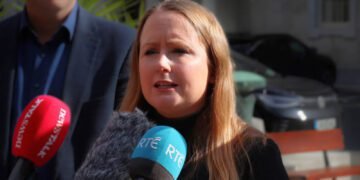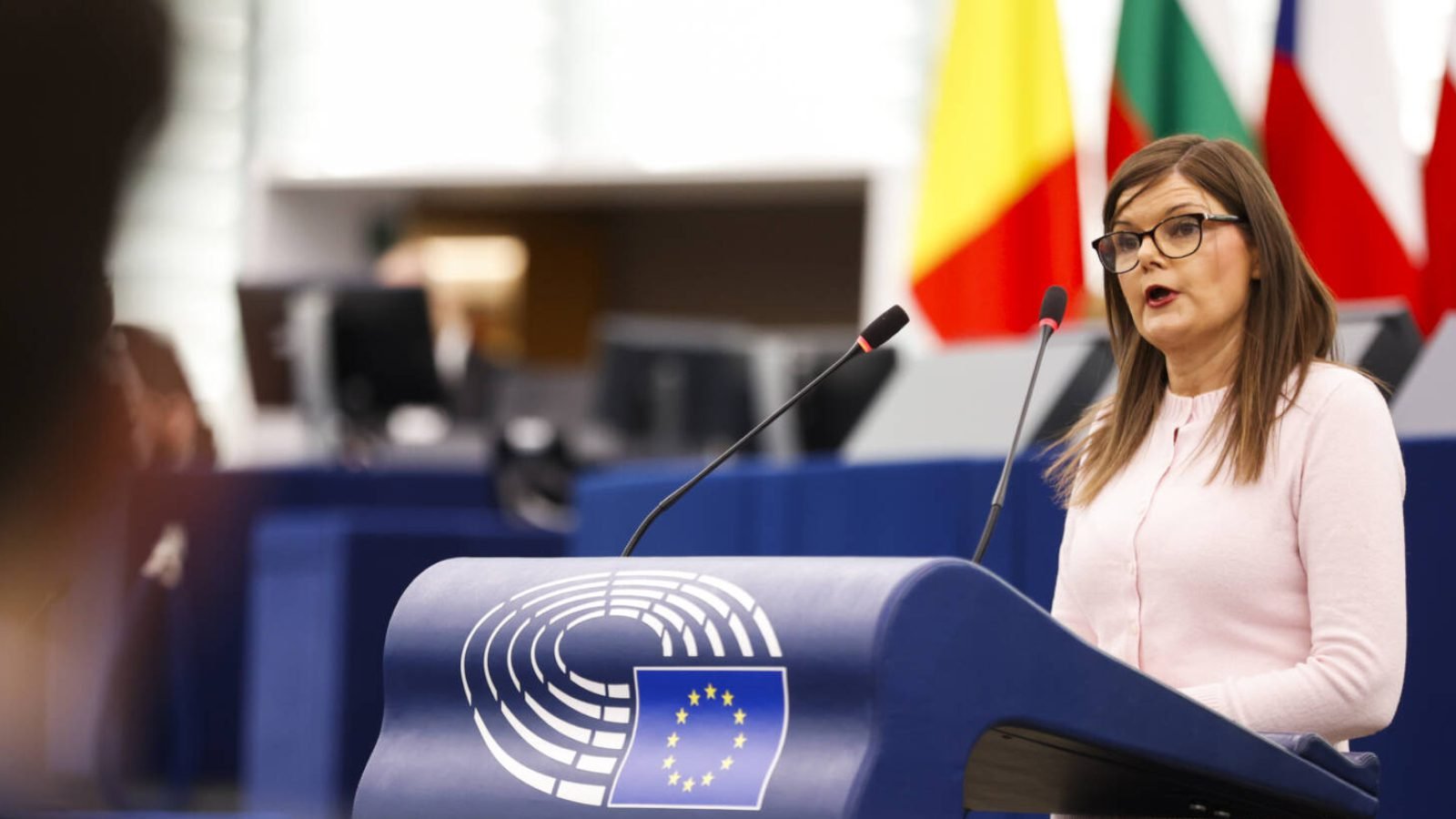
Sinn Féin MEP Kathleen Funchion has sharply criticised the European Union’s latest proposal for its 2028–2034 long-term budget, warning that farmers, workers and regional communities could face substantial funding reductions as spending on defence and competitiveness increases.
The Ireland South representative said the proposed budget, put forward by European Council President António Costa, placed greater emphasis on militarisation and big business while weakening support for traditional EU programmes that have benefited communities across member states.
Her criticism comes as EU leaders negotiate the next Multiannual Financial Framework (MFF), which will determine the bloc’s spending priorities and funding allocations from 2028 to 2034.
Funchion welcomed the inclusion of a dedicated funding stream for the PEACE PLUS programme in Costa’s latest proposal, but said the overall package offered little reassurance to farmers, workers and regions dependent on European funding.
According to the MEP, the proposal maintains a nominal reduction of €90 billion in funding for the Common Agricultural Policy (CAP) and €26 billion in regional and social spending, while allocations for defence and militarisation increase by 232 per cent. She also said funding for competitiveness would double.
“The proposal maintains the €90 billion nominal cut to CAP and the €26 billion nominal cut to regional and social spending, while funding for militarisation and defence rises by 232%, and funding for competitiveness doubles,” Funchion said.
She argued that the reductions could have serious consequences for Ireland’s agricultural sector and communities that rely on EU investment for regional development, employment and social programmes.
Funchion further argued that the EU had sufficient financial resources to maintain existing levels of agricultural and community funding and increase allocations to account for inflation.
She criticised the proposed restructuring of traditional funding programmes, warning that combining agricultural, cohesion and other support into a single national funding framework could leave local organisations and communities competing for a smaller pool of resources.
The MEP also questioned the EU’s changing spending priorities, saying that programmes which had historically accounted for more than two-thirds of EU expenditure would represent only around two-fifths under the latest proposal.
The Council President’s proposal sets the overall 2028–2034 budget at €1.582 trillion in constant prices, approximately 10.2 per cent below the European Commission’s original proposal.
According to the European Council, funding for defence would increase by 232 per cent compared with the current budget, while competitiveness spending would rise by 120 per cent.
The share allocated to agriculture, fisheries and cohesion would fall from 59.1 per cent of the current budget to 42.4 per cent under the latest proposal, although the Council maintains that these established policies would remain the largest spending category.
Funchion also criticised reductions in foreign aid and compared the direction of EU spending with policies pursued by US President Donald Trump.
She said the Irish Government had missed an opportunity to advocate for a more progressive European budget, arguing that the latest proposal would leave beneficiaries facing reduced support and more complicated competition for funding.
“What all this really means for those who rely on EU funds is that the EU will be increasing its revenues, you will be getting less funding, and you will have to fight harder to receive it,” she said.
EU leaders discussed Costa’s proposal at a special European Council meeting on November 26 and 27 but failed to reach an agreement.
The negotiations focused on the overall size of the budget, the distribution of funding between spending priorities and proposals for new EU revenue sources.
Leaders are expected to return to the issue in December, with discussions continuing over how to balance defence and competitiveness ambitions against traditional support for agriculture and regional development.
The next long-term budget will shape funding for farmers, businesses, research, infrastructure and communities across the bloc from January 2028.