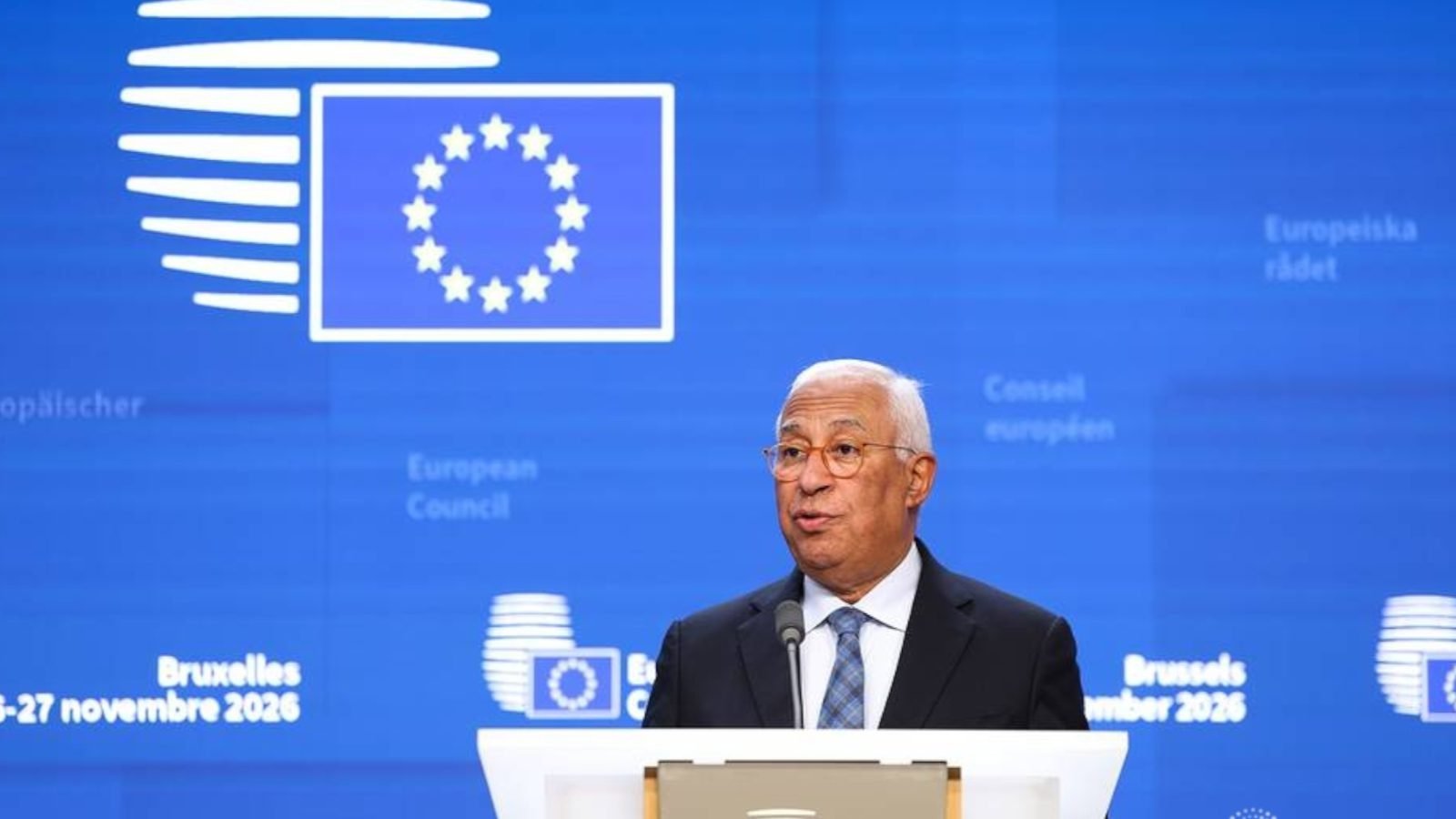
Speaking at a press conference following the special European Council meeting on November 26, European Council President António Costa said discussions had focused on three major issues: the overall size of the EU budget, the distribution of funding between policy areas and a balanced package of new sources of revenue for the bloc.
Despite what Costa described as constructive discussions in plenary sessions and smaller working groups, leaders were unable to reach a compromise.
The proposed multiannual financial framework (MFF) will determine how the EU allocates its resources across major policy priorities during the seven-year period from 2028 to 2034.
On the overall size of the budget, Costa said some member states had called for further reductions, while most opposed additional cuts. Others had even proposed reversing certain reductions, particularly those affecting cohesion funding.
Agriculture and regional development emerged as major points of concern, with a large majority of member states arguing that funding for the Common Agricultural Policy and cohesion programmes should not be squeezed.
The cohesion policy supports economic and social development across EU regions, particularly those facing structural disadvantages, while agricultural funding remains central to supporting farmers and maintaining food production across the bloc.
Costa said discussions on new EU own resources — revenue sources intended to help finance the Union’s budget — would continue, with leaders yet to settle on a balanced package.
The special summit also addressed the European Commission’s proposal for an additional loan to Ukraine.
Costa said 24 member states had supported the proposal, while Bulgaria indicated that it would participate only in the non-military component, with a particular focus on regions linked to its national minority.
EU leaders are expected to return to the issue in December as discussions continue over financial assistance for Ukraine.
The meeting also addressed recommendations for appointments to the European Central Bank’s Executive Board.
Costa said leaders had received the Council’s recommendation to designate Pablo Hernández de Cos as the next President of the ECB, alongside Laurence Boone and Markus K. Brunnermeier as proposed members of its Executive Board.
The European Council agreed to begin the consultation process with the European Parliament and the Governing Council of the ECB before taking a final decision at its next meeting in December.
Costa also acknowledged the work of outgoing ECB President Christine Lagarde, whom leaders had met for the final time during the gathering.
The discussions underline the challenges facing EU leaders as they attempt to balance competing national interests, protect established funding programmes and identify new financial resources for the Union’s future priorities.
With no agreement reached, negotiations over the 2028–2034 budget and other major financial commitments are set to continue in December.